
Why Is 3D Prototyping Essential for Product Development?
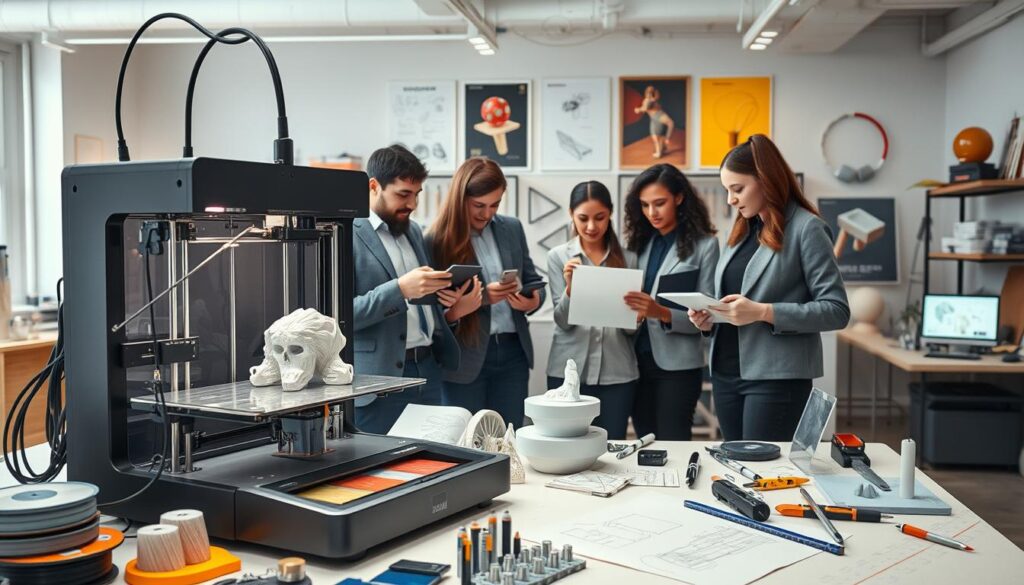
Can traditional manufacturing keep up with the needs of today’s products? Yes, thanks to a new process. We design and make things differently now that we can make 3D prototypes. It lets us make shapes and designs that were too hard to make before.
What is 3D prototyping, then? It’s a quick way to turn digital files into three-dimensional objects. This method has sped up the process of making products. It lets us quickly test and improve the designs of our products.
3D prototyping plays a huge role in making new products. It has changed how we make things. It’s a cheap and quick way to make prototypes, which speeds up the process of developing them.
Key Takeaways
- 3D prototyping makes it possible to make shapes and designs that are very complicated.
- It speeds up the process of making new products.
- 3D prototyping is a cheap way to make prototypes.
- It makes it possible to test and change product designs more quickly.
- This technology is changing the way things are made today.
Introduction to 3D Prototyping
In many fields, 3D prototyping is changing the game. It speeds up and lowers the cost of making new products. This technology lets businesses make detailed designs and prototypes quickly, which older methods can’t do.
3D prototyping has a lot of benefits. It saves a lot of money and speeds up the time it takes to get to market. It helps designers and engineers quickly test and make designs better. This makes it easier and faster to get products to market.
3D prototyping is helping a lot of fields come up with new ideas and make new products. The aerospace industry, for instance, uses it for parts with complicated shapes. The healthcare field gets medical devices and implants made just for them. The automotive industry uses it to quickly make prototypes and car parts, which speeds up the process of making new cars.
In many ways, 3D prototyping has changed the game. It’s important for making things quickly and making better products.
What Is 3D Prototyping?
Turning digital designs into real things is called 3D prototyping. It makes something real by stacking layers of material on top of each other.
This method of additive manufacturing makes it simple to make shapes and designs that are hard to make. It starts with a digital model made with CAD (Computer-Aided Design) software.

There are many different types of 3D printing, such as Fused Deposition Modeling (FDM), Stereolithography (SLA), and Selective Laser Sintering (SLS). Each has its own unique features that work best with certain materials and uses.
| Technology | Description | Common Applications |
|---|---|---|
| FDM | Fused Deposition Modeling | Prototyping, production parts |
| SLA | Stereolithography | High-resolution prototypes, jewelry |
| SLS | Selective Laser Sintering | Functional prototypes, aerospace components |
3D prototyping is a useful tool for making new products. It helps designers quickly test and make their designs better. Businesses can improve their product development by learning about the different types of 3D printing.
Key Concepts in 3D Prototyping
CAD design and file preparation are the first steps in a 3D prototyping project. To make good prototypes, you need to know these basics.
Digital Model & CAD Preparation
The first thing to do is make a CAD design file. CAD software helps make a digital version of the product. This model tells the 3D printer what to do.
To get the CAD ready for 3D printing, you need to design the model, make sure it’s solid, and get it ready. Some of the most popular CAD tools are Autodesk Inventor, SolidWorks, and Fusion 360.
File Formats (e.g., STL, OBJ)
You need to save the CAD design in a format that works with 3D printing after you’re done. The most popular formats are STL and OBJ.
STL files show the outside of a 3D object, but they don’t show color or texture. OBJ files, on the other hand, can have information about color and texture.
| File Format | Description | Common Use |
|---|---|---|
| STL | Describes surface geometry | 3D Printing, Rapid Prototyping |
| OBJ | Includes geometry, color, texture | 3D Modeling, Animation |
You should know about these file types and how to use them. The right format makes sure that your prototypes are made quickly and correctly.
Types of 3D Prototyping Technologies
FDM, SLA, SLS, and DLP are just a few of the technologies that 3D prototyping uses. These have changed how we make things, making it faster and less expensive.
Fused Deposition Modeling (FDM)
A common way to print in 3D is FDM. It puts down melted plastic in layers. FDM is a great choice for quick prototypes and production because it is cheap and easy to use.
FDM is cheap and fast. But its prints can be rough. It’s not the best for shapes that are very complex.
Stereolithography (SLA)
SLA uses a laser to harden liquid resin one layer at a time. SLA is known for its high resolution and accuracy, which makes it great for making detailed prototypes.
SLA can make smooth surface finishes and complicated shapes. But its prints can break easily and need to be cured after printing.
Selective Laser Sintering (SLS)
A laser is used by SLS to fuse powdered material. People like SLS because it can make parts that last a long time and work well without support structures.
SLS is very strong and can handle shapes that are hard to make. It is used in cars and planes.
Digital Light Processing (DLP)
DLP uses a projector to harden the resin one layer at a time. DLP is known for being fast and having a high resolution, which makes it great for making quick, detailed prototypes.
DLP is quick and correct. But its prints can be sensitive to light and need to be cured afterward.

| Technology | Key Features | Applications |
|---|---|---|
| FDM | Affordable, easy to use | Prototyping, production |
| SLA | High resolution, accurate | Detailed prototypes |
| SLS | Durable, complex geometries | Aerospace, automotive |
| DLP | Fast, high resolution | Detailed prototypes |
3D Prototyping Process Steps
The 3D prototyping process makes real prototypes out of digital designs. It takes a lot of important steps to make a model that works and is correct.
Design and CAD Modeling
The first step is to design and make a CAD model. CAD software is used to make a digital model of the product here. The design needs to be very detailed and exact for the final prototype to meet the standards.
CAD modeling lets you make detailed designs and shapes that are hard to make. People often use software tools like Autodesk Inventor and SolidWorks to do this.
Slicing and Support Generation
The next step is to cut up the CAD model and make support. Slicing breaks the digital model into thin layers that the 3D printer can use. For models with parts that stick out, support generation is very important because it helps with printing.
- The CAD file is changed into a format that the 3D printer can read by slicing software.
- Support structures are made to keep parts from breaking while they are being printed.
Printing and Build Execution
The prototype starts to come to life during the printing and building phase. The 3D printer makes the prototype by following the sliced files layer by layer.
The material and the finish you want will determine what kind of 3D printing technology you use, such as FDM, SLA, or SLS. Every technology has its own pros and cons and is best for certain tasks.
Post‑Processing Techniques
After printing, the prototype is improved with post-processing methods. This could mean sanding, painting, or putting on a coat to make it look better and work better.
| Post-Processing Technique | Description | Application |
|---|---|---|
| Sanding | Smoothing out the surface to remove layer lines | Improving surface finish |
| Painting | Applying paint to match specific colors or finishes | Aesthetic enhancement |
| Coating | Applying a protective or decorative coating | Enhancing durability or appearance |
Materials for 3D Prototyping
There are a lot of different things that can be used to make 3D prototypes. This gives developers the chance to choose the best one for their project. One of the best things about 3D prototyping is that it lets you make prototypes that look like the real thing.

Polymers & Plastics
Plastics and polymers are the best materials for 3D prototyping. They can do a lot of things and have a lot of properties. A lot of thermoplastic polymers are used in Fused Deposition Modeling (FDM). Depending on what you need, these can be made strong, flexible, or heat-resistant.
These materials help make shapes that are too hard for old methods to make. You can also make them stronger by adding things like carbon fiber. Or use materials that conduct electricity for electronics.
Resins
Resins are very important for 3D printing, like in Stereolithography (SLA) and Digital Light Processing (DLP). They work well for smooth, detailed finishes. This is great for things where looks are very important.
You can make resins that are clear, flexible, or resistant to heat. They are great for making exact models, like jewelry or dental pieces.
Metals & Composites
For advanced 3D prototyping, use metals and composites. They need to be strong and exact. Selective Laser Sintering (SLS) and Direct Metal Laser Sintering (DMLS) are two ways to make metal prototypes with complicated shapes.
People also like composite materials. They combine different materials to make them stronger and lighter. This makes them great for hard jobs like building airplanes and cars.
Benefits of 3D Prototyping
3D prototyping is changing the way we make things. It helps businesses with design and production.
Rapid Iteration & Time-to-Market
One big benefit of 3D prototyping is that it lets you make changes quickly. It helps businesses quickly test and make their designs better. This means they can get things to market more quickly.
This quick process improves products and gives businesses an edge. It helps them get to market faster than other people.
Cost Savings Over Traditional Methods
3D prototyping is also cheaper. It costs less than the old ways of making things. This is because it doesn’t need tools and molds that cost a lot of money.
| Cost Factor | Traditional Methods | 3D Prototyping |
|---|---|---|
| Mold and Tooling Costs | High | Low |
| Production Time | Long | Short |
| Material Waste | High | Low |
Design Flexibility & Complex Geometry
3D prototyping is great for designs that are complicated or have a lot of details. It lets designers make new and complicated things. Things that were hard or impossible before.
Functional and Visual Testing
You can test products before making a lot of them with 3D prototyping. This makes sure they look good and work well.
It helps you find and fix problems early on. This saves money and makes the process go more smoothly.
Applications of 3D Prototyping
3D prototyping is changing a lot of fields, including cars and healthcare. It speeds up and improves the process of designing, testing, and improving products.
Automotive & Aerospace
In the world of cars and planes, 3D prototyping makes very detailed parts that are hard to make. It speeds up the process of making prototypes, which saves time and money.
Benefits in Automotive and Aerospace:
- Quickly making prototypes
- Customized parts and complicated shapes
- Less waste of materials

Healthcare & Medical Devices
3D prototyping helps the healthcare field a lot, like when it comes to making custom implants and prosthetics. It makes treatments more personal.
Applications in Healthcare:
| Application | Benefit |
|---|---|
| Custom Implants | Personalized fit, improved patient comfort |
| Surgical Models | Enhanced pre-surgical planning, reduced surgery time |
| Prosthetics | Customized design, improved functionality |
Consumer Products & Electronics
3D prototyping helps with design and development in the world of electronics and consumer goods. It helps you try out new ideas faster.
Advantages:
- Faster design iteration
- Complex product designs
- Cost-effective production
Architecture & Construction
In architecture and building, 3D prototyping makes models of buildings and projects in real life. It helps you make better plans and avoid mistakes.
Benefits:
- Enhanced visualization
- Improved project planning
- Reduced construction errors
Challenges and Limitations
We make things differently now that we have 3D prototyping, but it has some problems and limits. One big problem is the properties of the materials and what’s available. The right materials can make a big difference in how well a prototype works.
The size limits of 3D printing are another issue. Because printers can only make things so big, big models have to be broken up into smaller pieces. This makes the whole thing take longer and be more difficult.

Also, 3D prototypes often need to be worked on after they are made. To look right, this means doing extra things like sanding or painting. It takes more time and money to make a prototype.
But new technology is improving 3D printing. Improvements in printer technology and materials science are helping. They’re improving the materials and making the printers bigger, so there are fewer steps to take.
The future of making 3D prototypes looks good. It will be even more important in making things because of new technology and better ways of doing things. We will have better materials, bigger printers, and easier ways to finish prototypes.
Future Trends in 3D Prototyping
3D prototyping is changing the way we make things because of new trends. These changes mean that prototypes will be faster, more accurate, and better. People are working on new technologies and materials.
These changes are being driven by improvements in 3D prototyping technologies. Fused Deposition Modeling (FDM), Stereolithography (SLA), and Selective Laser Sintering (SLS) are all getting better. They can now make prototypes that work and shapes that are complicated.

Using artificial intelligence (AI) and machine learning (ML) in 3D prototyping is another big trend. AI and ML help design better, spot problems early, and make prototyping more efficient.
People are also making new materials. Scientists are working to make materials stronger, more flexible, and better able to handle heat. These new materials will make it possible to use 3D prototyping in more areas.
| Trend | Description | Impact |
|---|---|---|
| AI and ML Integration | Optimizes design and predicts failures | Improved efficiency and reduced costs |
| New Materials | Enhanced properties for various applications | Expanded industry applications |
| Advanced Technologies | More sophisticated FDM, SLA, SLS | Complex geometries and functional prototypes |
These trends will have a big impact on how we make things. They will help businesses get their products to market faster and better.
Conclusion
3D prototyping changes the game for making new products. It has a lot of benefits and is used in a lot of different areas. This technology speeds up, lowers the cost of, and makes products more flexible.
We have looked at the most common types of 3D printing, such as FDM, SLA, and SLS. These are used in a lot of different things, like cars, planes, and healthcare. They help things get better and faster.
3D prototyping is important for getting products to market quickly and for less money. It also gives designers more freedom to be creative. As technology gets better, 3D prototyping will be used in even more cool ways.
In short, 3D prototyping is essential for making products better and faster. It lets us create complex designs and test them easily. As it keeps getting better, it will change many industries for the better.
FAQs
What does it mean to prototype in 3D?
You can make a real object from a digital design with 3D prototyping. It makes shapes that old methods can’t by using 3D printing.
What are the benefits of making 3D prototypes?
3D prototyping is a cost- and time-saving method. It lets you quickly make shapes that are hard to make. This means you can quickly test and make your designs better.
What kinds of 3D printing technologies are out there?
There are a lot of ways to print in 3D. Some are FDM, SLA, SLS, and DLP. Each has its own uses and strengths.
What kinds of things do you use for 3D prototyping?
In 3D prototyping, you can use metals, polymers, resins, and composites. The right material depends on what you need to do your project.
What are the problems and limits of making 3D prototypes?
There are problems with 3D prototyping, such as limits on materials and sizes. But these areas are always getting better thanks to new technology.
Which fields benefit from 3D prototyping?
3D prototyping is used in a lot of different fields. This includes things like cars, planes, health care, and more. It helps make parts and products.
How does 3D prototyping make the process of making new products faster?
3D prototyping speeds up the process of making new products. It lets you make quick changes and doesn’t require expensive tools. This means that products come out sooner.
What does CAD design do for 3D prototyping?
CAD design is very important for making 3D models. It helps make digital models that are very accurate. After that, these models become real prototypes.