
What’s Annealing: A Guide to Strengthening Materials
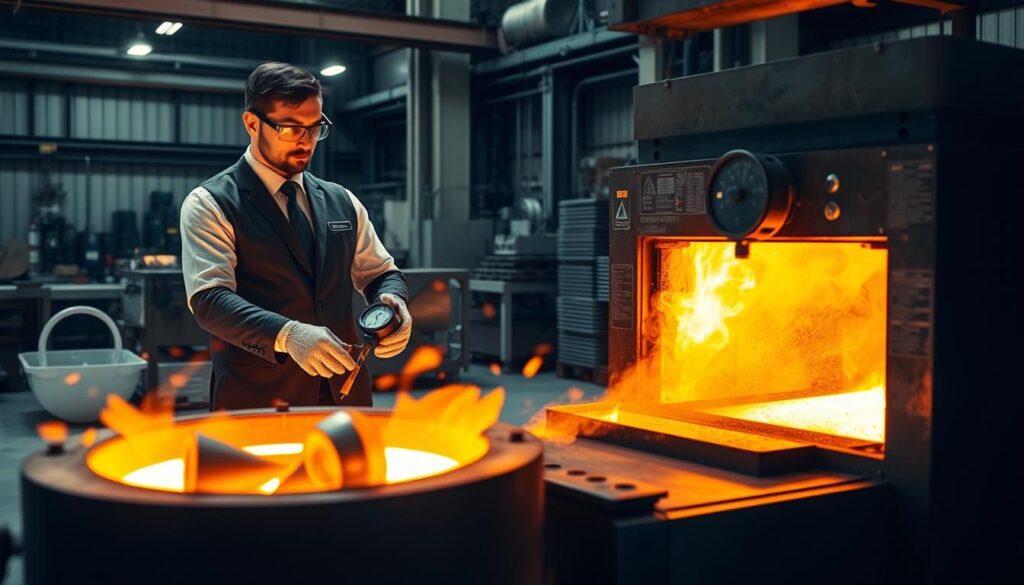
Ever wondered how materials in construction and manufacturing get stronger? The secret is a process that changes their properties. This makes them better for different uses.
Annealing is a heat treatment that makes materials more flexible and strong. It helps industries make better products.
Key Takeaways
- Annealing is a heat treatment process used to strengthen materials.
- It relieves internal stresses and increases ductility.
- The process improves the overall structure of materials.
- Annealing is key in industries like construction and manufacturing.
- Knowing about annealing helps make products of higher quality.
What is Annealing?
Annealing is key for changing the state of materials like metals and glass. It helps change their properties.
Definition and Purpose of Annealing
Annealing is a heat treatment. It heats a material to a certain temperature and then cools it slowly. This relieves internal stresses and improves its structure.
The main purpose of annealing is to make materials more ductile. This makes them better for many uses.
Knowing about annealing definition and its effects on material properties helps industries. They can use materials better for their needs.
| Material | Annealing Temperature | Resulting Properties |
|---|---|---|
| Steel | 800°C | Increased ductility |
| Glass | 500°C | Reduced stresses |
| Copper | 600°C | Improved conductivity |
This table shows how annealing purpose changes different materials. It highlights the property changes.
How Annealing Works: Three Stages
Annealing is a heat treatment that changes a material’s structure. This process affects its strength and hardness. It involves three main stages.
The Three Stages of Annealing
The annealing process has three key stages: recovery, recrystallization, and grain growth. Each stage is important for improving the material’s properties.
Recovery
In the recovery stage, the material is heated. This helps to reduce internal stresses without changing its structure much. It lowers the material’s internal energy.
Recrystallization
The recrystallization stage is when new grains form. This stage is vital as it leads to a new microstructure. It improves the material’s properties.
Grain Growth
In the grain growth stage, the grains get bigger. This stage further enhances the material’s properties. The size and orientation of grains affect the material’s strength and ductility.
The three stages of annealing work together. They make the material better suited for different uses.
| Stage | Description | Effect on Material |
|---|---|---|
| Recovery | Relieves internal stresses | Reduces internal energy |
| Recrystallization | Forms new grains | Enhances microstructure |
| Grain Growth | Grains grow in size | Improves strength and ductility |
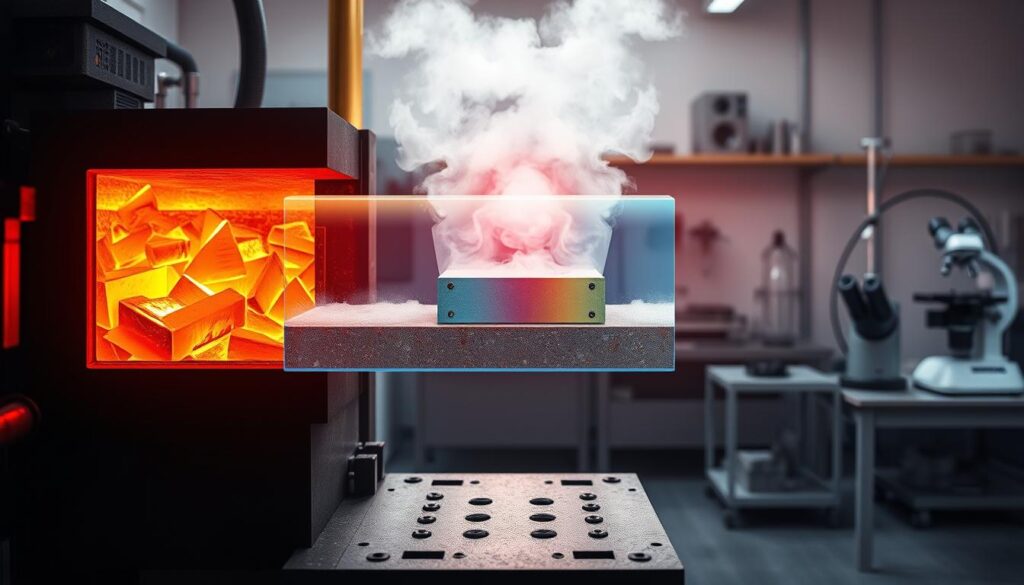
What are the Types of Annealing?
Knowing the types of annealing is key to picking the right heat treatment for materials. Annealing covers a wide range of processes for various materials and uses.
Different Types of Annealing Processes
There are many annealing processes, like full annealing, process annealing, and normalizing. Each has its own use and benefits. The right choice depends on the material and the needed result.
Full Annealing heats the material high and cools it slowly. It helps relieve stresses and boosts ductility.
Process Annealing heats the material lower to regain ductility. It’s for materials that have been worked cold.
Normalizing heats the material to a certain point and cools it in air. It refines the grain structure and enhances mechanical properties.
https://www.youtube.com/watch?v=ChFcTUN–CY
Each annealing process offers unique advantages. They are tailored for different materials and uses. By knowing these processes, manufacturers can pick the best one for their needs.
How much Time is Required for Annealing?
Knowing how long annealing takes is key to improving material properties. The time needed for annealing changes based on the material type, thickness, and the annealing method used.
The annealing time can range from a few hours to days. This difference comes from the varied heating and cooling rates needed for different materials and sizes. Thicker materials, for example, need more time to be fully treated.

The heat treatment process heats the material to a certain temperature and then cools it slowly. The speed of heating and cooling greatly affects the annealing time. A slower cooling, for instance, might take longer but can improve material quality.
In short, the time for annealing is influenced by many factors. Understanding these factors is vital for achieving the best material properties.
What Are the Advantages of Annealing?
Annealing is a key process that strengthens materials. It’s used to improve the properties of metals and alloys. This makes them better for many uses.
Benefits of Annealing
Annealing brings many benefits. It improves ductility, reduces internal stresses, and enhances machinability. It makes materials less likely to crack or warp.
“Annealing is a critical step in ensuring the structural integrity of materials.”
It also makes materials better for different uses. For example, in car parts, annealing boosts durability and performance.
- Improved ductility, allowing materials to be shaped and formed without breaking.
- Reduced internal stresses, minimizing the risk of cracking and warping.
- Enhanced machinability, making it easier to cut and shape materials.
Knowing the benefits of annealing helps manufacturers make better products. It also makes products last longer.
Does Annealing Increase the Machinability of Metals?
Annealing is key in making metals easier to work with. It relieves internal stresses and improves the metal’s structure. This makes metals softer and easier to machine, reducing tool wear and improving product quality.
When metals are annealed, they become softer and more ductile. Softer metals are easier to machine because they don’t strain cutting tools as much. Experts say annealing is essential in metalworking for better machinability and quality.
“Annealing is a heat treatment that alters the microstructure of a material, causing it to soften and become more ductile, which in turn enhances its machinability.”

Annealing involves heating the metal, holding it at a certain temperature, and then cooling it slowly. This relieves internal stresses that can cause problems during machining. It keeps the metal stable and accurate.
The benefits of annealing on machinability are clear:
- Improved ductility and reduced hardness
- Enhanced dimensional stability during machining
- Reduced tool wear due to softer metal
- Better surface finish and overall quality of the machined part
In conclusion, annealing greatly improves the machinability of metals. By understanding how annealing affects metalworking, manufacturers can get better results and improve efficiency.
What Are the Disadvantages of Annealing?
Annealing has its downsides, like using a lot of energy and the chance of material distortion. It’s good for improving material properties but has some big limitations. These need to be thought about when deciding if annealing is the best choice.
Limitations of Annealing
One big problem with annealing is how much energy it uses. It heats materials up really high, which costs a lot of energy. Also, if it’s not done right, it can mess up the material.
Energy Consumption: Annealing heats materials to very high temperatures. This uses a lot of energy. It makes the process more expensive and can harm the environment.
Potential Distortion: If annealing isn’t done carefully, it can warp the material. This can mess up its size and quality. It might not work for some uses.
| Limitation | Description | Impact |
|---|---|---|
| Energy Consumption | High energy required for heating | Increased cost and environmental impact |
| Potential Distortion | Distortion due to improper control | Affects material dimensions and quality |
| Limited Applicability | Not suitable for all materials or applications | Restricts the use of annealing in certain contexts |
In summary, annealing has many benefits for materials. But, its downsides like energy use and material distortion are important to think about. Knowing these can help decide if annealing is right for a specific job.
What Are the Applications of Annealing?
Annealing is used in many industries to improve material properties. This heat treatment process is key for achieving the right material characteristics. It’s a critical step in making products.
The industrial applications of annealing cover a wide range. It’s used in steel, copper, and aluminum production. In steel, annealing makes the material softer and less stressed, perfect for many uses.
Industrial Applications of Annealing
In steel making, annealing makes steel easier to machine. This leads to more precise and efficient work. For copper and aluminum, annealing boosts their ability to conduct electricity and bend.
In the glass industry, annealing removes stresses and makes glass stronger. Glass is heated to a certain point and then cooled slowly. This makes the glass more stable and long-lasting.

Annealing offers many benefits across industries. It helps create better products. For example, annealed steel is used in building construction. Annealed copper is great for electrical wiring because it conducts electricity well.
In short, annealing has many uses in different fields. It helps manufacturers make materials with better properties. This leads to products that perform and last longer.
When is Annealing Required? The purpose
Annealing is a key process in materials science. It’s needed when materials must become more ductile or when internal stresses need to be eased. This is very important after materials have been cold worked or welded. These processes can cause a lot of stress.
By annealing, the material’s structure and properties can get better. This makes it more useful for different uses. The main goal of annealing is to boost the material’s ductility and how well it can be machined.
- After cold working, to restore ductility
- Following welding, to relieve internal stresses
- Before machining, to improve machinability
In short, annealing is essential. It helps improve materials’ properties. This makes them better for many industrial uses.
Final Words
Annealing is key to improving material properties. It’s vital for industries needing materials with certain traits, like being flexible and not cracking easily.
By using annealing, makers can make metals easier to work with. This makes them better for many uses. Annealing also cuts down on internal stresses and boosts material performance.
- Enhanced ductility
- Reduced internal stresses
- Improved machinability
Annealing is a big deal in materials science. It brings many benefits. By learning and using annealing, industries can make materials better. This helps advance many areas.
The annealing summary shows its big role in material processing. As industries grow, annealing will keep being important for better materials.
FAQs
Understanding annealing can be complex, but clarifying some frequently asked questions can help. These questions often focus on its purpose, types, and how it affects material properties.
The main goal of annealing is to improve material properties. It makes materials better for different uses. By easing internal stresses and lowering hardness, annealing makes materials easier to work with.
There are different types of annealing processes. Each one is designed for specific material needs. Full annealing, process annealing, and spheroidize annealing each have their own benefits and uses.
Annealing greatly improves the machinability of metals. It changes their structure, making them more flexible and less likely to crack. This makes them easier to work with.
By learning the answers to these annealing FAQs, readers can understand the annealing process better. This knowledge helps them grasp the importance of annealing in materials science. It also enhances their understanding of material properties.
FAQ
What is the primary purpose of annealing?
Annealing’s main goal is to reduce internal stresses. It also makes materials more ductile. This improves their structure for various uses.
What are the three stages of the annealing process?
The annealing process has three stages. First, recovery relieves internal stresses. Then, recrystallization forms new grains, replacing the old structure. Lastly, grain growth makes the grains larger, improving the material’s properties.
What are the different types of annealing processes?
There are several annealing processes. Full annealing heats the material to a high temperature and cools it slowly. Process annealing heats it to a lower temperature to restore ductility. Normalizing heats it to a specific temperature and cools it in air.
How long does the annealing process take?
The annealing time varies by material and thickness. It can take from a few hours to several days.
What are the benefits of annealing?
Annealing improves ductility and reduces internal stresses. It also makes materials easier to machine. This reduces the risk of cracking and warping.
Does annealing improve the machinability of metals?
Yes, annealing makes metals easier to machine. It relieves internal stresses and improves the material’s structure. This makes metals more workable.
What are the limitations of annealing?
Annealing has its drawbacks. It can be energy-intensive and may cause distortion if not controlled. It’s not suitable for all materials or uses.
What are the industrial applications of annealing?
Annealing is used in many industries. It’s used in steel, copper, aluminum, and glass production. It improves the material’s structure and properties.
When is annealing required?
Annealing is needed when materials need to be more ductile. It’s used after cold working or welding to relieve stresses.