
Automotive Die Casting: A Guide to Die Casting for Automotive Industry
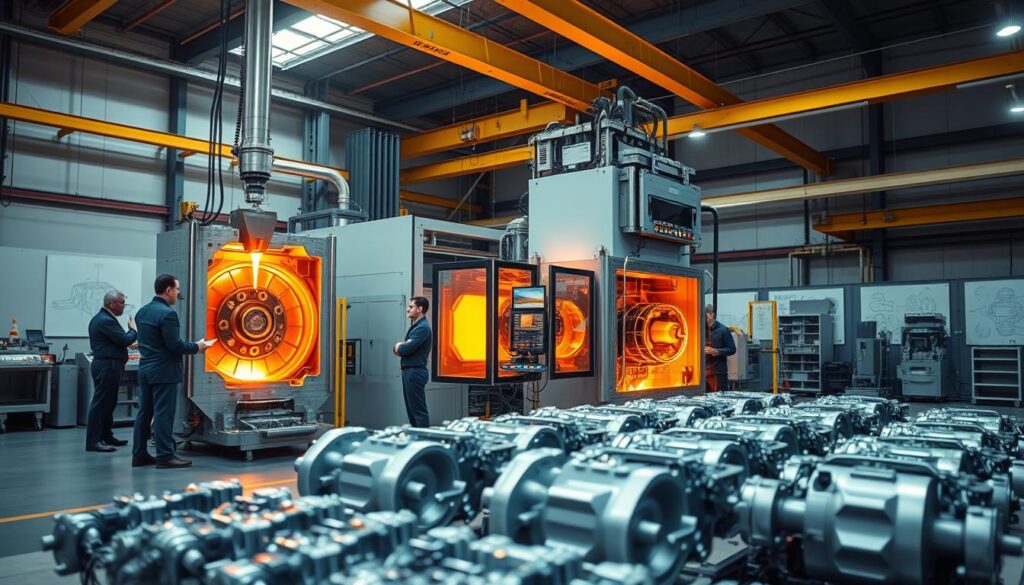
The automotive world is always changing, and makers are looking for new ways to make parts better and faster. Why is die casting becoming the preferred choice? It’s because it makes parts that are light, strong, and very detailed.
Die casting is now a key way to make parts, thanks to its high precision. It’s getting more popular in the automotive industry because it saves materials and makes products more consistent.
Key Takeaways
- The use of die casting in the automotive industry is on the rise due to its ability to produce high-quality parts.
- Die casting enables the creation of complex, lightweight, and durable components.
- The process reduces material waste and improves product consistency.
- Die casting is critical for making detailed automotive parts.
- The automotive industry benefits from die casting’s precision and efficiency.
Introduction to Automotive Die Casting
Die casting is a key method in the car industry. It makes metal parts by pushing molten metal into a mold under high pressure. This method is essential for creating many car parts, combining complexity and precision.
Automotive die casting is important because it makes parts with high accuracy and detail. This is vital for the car industry. The process can make complex shapes and structures that other methods can’t.
Some key aspects of automotive die casting include:
- High precision and accuracy in part production
- The ability to create complex geometries
- Efficient production process with minimal waste
- Capability to produce parts with thin walls and intricacies
The die casting process has several stages, from designing the mold to ejecting the final part. It needs careful planning and execution to meet quality standards.
In summary, automotive die casting is a critical process for making high-quality metal parts for cars. Its importance is shown by its ability to create complex parts with precision and efficiency.
What Is Die Casting?
Die casting is a method where molten metal is pushed into a mold under high pressure. It’s known for making complex, precise parts with a great finish.
Definition and Principle of Die Casting
Die casting is a way to make metal parts by pushing molten metal into a mold under high pressure. It’s fast and can create parts with detailed designs.
Key aspects of the die casting process include:
- Mold design: The mold is made to handle high pressure and is usually steel.
- Molten metal: The metal is melted and then injected into the mold.
- High pressure: The molten metal is pushed into the mold under high pressure to fill it completely.
Importance in the Automotive Industry
Die casting is vital in the automotive world. It makes lightweight, strong parts. This is key for making engine blocks, transmission housings, and more.
Common materials used in die casting for the automotive industry include:
- Aluminum alloys, known for their lightweight and corrosion resistance.
- Zinc alloys, which offer high strength and excellent surface finish.
- Magnesium alloys, valued for their exceptional strength-to-weight ratio.

Die Casting Processes Used in Automotive Manufacturing
Die casting is key in making car parts. It helps create detailed components. The car industry uses these methods for precise and efficient parts.
High-Pressure Die Casting (HPDC)
High-Pressure Die Casting is a top choice for car parts. It makes parts with great detail and accuracy. HPDC uses high pressure to pour molten metal into a die, leading to parts with a smooth finish and exact shape.
This method is great for making lots of parts. It’s perfect for engine parts and structural elements because it’s fast and consistent.
Cold-Chamber Die Casting
Cold-Chamber Die Casting is important for strong and reliable parts. It injects molten metal into a die after it’s poured into a chamber.
This method is best for parts made from alloys like aluminum and copper. These materials are common in cars.
Other Variants / Specialized Casting Methods
There are more specialized methods too. Vacuum die casting, squeeze casting, and semi-solid metal casting are some. They offer benefits like less porosity and better strength.
| Die Casting Process | Key Characteristics | Typical Applications |
|---|---|---|
| High-Pressure Die Casting (HPDC) | High accuracy, excellent surface finish | Engine components, structural parts |
| Cold-Chamber Die Casting | High integrity, suitable for high-melting-point alloys | High-strength components, aluminum and copper alloy parts |
| Vacuum Die Casting | Reduced porosity, improved mechanical properties | High-reliability components, aerospace parts |
Choosing the right die casting method is important. It depends on the part’s material, complexity, and how many are needed. Knowing the different methods helps manufacturers make high-quality parts efficiently.
Materials for Automotive Die Casting
In the automotive world, the right materials for die casting are key. They decide how well and long vehicle parts last. The material choice also shapes the making process.
Aluminum Alloys
Aluminum alloys are a top pick for die casting in cars. They conduct heat well, resist corrosion, and are strong yet light. These traits make them perfect for engine parts, transmission boxes, and more.
Magnesium Alloys
Magnesium alloys are light, which helps cars use less fuel and pollute less. They also cast well and are used for gearboxes, engine blocks, and other parts.
Zinc Alloys
Zinc alloys are known for being flexible, resistant to corrosion, and easy to shape. They’re great for making precise parts like door handles and exterior trim.
Copper & Steel Alloys
Copper and steel alloys are strong, conduct electricity well, and resist wear. Though rare in die casting, they’re used where these qualities are needed most, like in electrical parts and strong structural pieces.

| Material | Properties | Typical Applications |
|---|---|---|
| Aluminum Alloys | High strength-to-weight ratio, good thermal conductivity | Engine components, transmission housings |
| Magnesium Alloys | Lightweight, good castability | Gearboxes, engine blocks |
| Zinc Alloys | High ductility, corrosion resistance | Door handles, exterior parts |
| Copper & Steel Alloys | High strength, conductivity, wear resistance | Electrical components, high-strength structural parts |
Choosing the right material is vital in die casting for cars. It affects both making the parts and how they perform. Knowing the benefits and uses of each material helps makers improve their work for the car industry.
Automotive Die Casting Applications
Automotive die casting is key for making top-notch vehicle parts. It’s flexible and used in many ways in the car world.
Engine and Transmission Components
Die casting makes engine and transmission parts with great detail. It’s used for engine blocks, cylinder heads, and more.
Engine components like engine blocks and cylinder heads get a smooth finish and exact shape from die casting.
Suspension and Structural Parts
Die casting also makes suspension and structural parts strong and light. This helps cars run better.
Parts like control arms and structural pieces get the right mix of strength and lightness from die casting.
Electronic and EV Component Housings
Die casting is key for EVs and car electronics. It makes protective housings for sensitive parts.
Electric vehicle housings get complex shapes and precision from die casting.
Interior and Exterior Mounting Parts
Die casting is used for mounting parts inside and outside cars. These parts help put everything together right.
Mounting brackets and other parts get the needed toughness and precision from die casting.
Benefits of Die Casting in Automotive Manufacturing
Die casting is key in making cars, bringing many benefits. It makes the production better and the parts stronger. This is why it’s so popular in the car industry.
Lightweight and High Strength
Die casting makes parts light yet strong. This is great for cars because it helps them use less fuel and pollute less. Aluminum and magnesium alloys are often used because they’re strong but light.
Using light materials in die casting makes cars better and greener. It helps them use less fuel and make fewer emissions.
Precision and Dimensional Accuracy
Die casting makes parts precise and accurate. This is very important in car making. It ensures parts fit well, making the car reliable and of high quality.

Cost-Effectiveness and Efficiency
Die casting is also cost-effective, mainly for making lots of parts. It can make complex parts all at once. This saves money and time by cutting down on extra steps and waste.
It also makes parts consistently, which means fewer mistakes. This saves money by avoiding the need for fixing or throwing away parts.
Good Surface Finish and Reduced Post-Processing
Die casting parts usually look good, needing less extra work like grinding. This saves time and money. It also makes sure parts look and work as they should.
A nice finish is important for parts that are seen. It makes the car look better.
Design and Engineering Considerations
Die casting for cars needs careful design and engineering. The parts must be well-made, work well, and be cost-effective. This requires a deep understanding of design factors.
Design and engineering in die casting cover important areas. These include part geometry, material selection, and mold design. Each is key to the success of the die-casting process.
Designers must think about part geometry carefully. They need to consider the part’s shape, size, and details. The design should help cast the part efficiently, with less waste and less need for extra machining.
Material selection is also vital. Different materials affect the casting and the part’s final quality. Common materials for car parts are aluminum, magnesium, and zinc alloys. They are chosen for their light weight, resistance to corrosion, or high strength.
The mold design is also critical. It affects the quality of the cast part. A good mold ensures the molten metal fills the mold well, reducing defects and improving the finish.
Some important design considerations for die casting are:
- Draft angles to help remove the part
- Wall thickness for strength and to save material
- Ribs and bosses for extra strength without adding too much weight
- Fillets and radii to reduce stress and improve casting
By focusing on these design and engineering factors, makers can create top-notch die-cast parts. These parts meet the tough standards of the car industry.
Quality Control and Inspection
Quality control and inspection are key parts of the die casting process. They make sure the final products are up to standard for the car industry.
Effective quality control includes several important steps. These are dimensional inspection, surface finish inspection, and non-destructive testing. Dimensional inspection checks if the parts fit within the allowed limits. Surface finish inspection looks for any surface defects.

Non-destructive testing (NDT) methods like radiography and ultrasonic testing find internal flaws without harming the parts. These tests are vital for ensuring the parts are reliable for car use.
The role of inspection is huge. It spots defects early and makes sure products meet standards. A strong quality control and inspection plan helps avoid part failures. It also boosts product reliability and customer happiness.
- Dimensional inspection to verify part accuracy
- Surface finish inspection to check for defects
- Non-destructive testing for internal flaw detection
In summary, a detailed quality control and inspection process is vital for die casting in the car industry. Using advanced inspection methods and strict quality control, makers can create top-notch die-cast parts. These parts meet the tough needs of the car industry.
Final Thoughts
In conclusion, die casting is key in making cars better. It brings many benefits that make cars more efficient and of higher quality.
The die casting process is vital for making top-notch, complex parts with great precision. It’s known for parts with excellent surface finishes and dimensional stability. This makes it essential in the car world.
Die casting offers many advantages. It makes lightweight and strong parts, is cost-effective, and can create complex shapes. These are key for the car industry’s move towards better, greener cars.

The future of die casting in cars looks bright. New tech and materials will make it even better. As car makers want better parts, die casting will keep being a key process.
To sum up, die casting is more than just a way to make parts. It’s a key part of making cars reliable, high-quality, and complex. Its growth and use of new tech will be vital for the car industry’s success.
FAQs
Die casting is a key method in making car parts. Here are some common questions about die casting. They help understand its importance and benefits.
What materials are used in die casting for cars? Aluminum, magnesium, and zinc alloys are favorites. They are strong, last long, and don’t rust easily.
What makes high-pressure die casting (HPDC) special? HPDC is known for its high precision and accuracy. It also has a smooth finish, perfect for complex parts.
Can die casting make big car parts? Yes, it can handle both small and large parts. This makes it versatile for various car components.
How does die casting help with electric cars? It’s essential for making EV parts like battery boxes and motor parts. Die casting can create complex shapes and light parts, which is great for EVs.
FAQ
What is die casting, and how is it used in the automotive industry?
Die casting is a way to make parts by pouring molten metal into a mold. This process is key in the car world. It helps make engine parts, suspension pieces, and even parts for electric cars.
What are the most common materials used in automotive die casting?
Aluminum, magnesium, and zinc alloys are top picks for die casting in cars. They’re strong, don’t rust easily, and save money.
What is the difference between high-pressure die casting (HPDC) and cold-chamber die casting?
HPDC uses high pressure to fill the mold with metal, making parts with a smooth finish. Cold-chamber die casting pours metal into a chamber first, then into the mold. HPDC is better for making lots of complex parts.
What are the benefits of using die casting in automotive manufacturing?
Die casting makes parts that are detailed, accurate, and affordable. It also helps make parts lighter, which can save fuel and cut down on pollution.
How is quality control ensured in die casting?
Ensuring quality in die casting means checking the mold and process, testing the parts, and following strict quality rules. This ensures parts are the right size and look good.
What are some of the key design and engineering considerations for die casting?
Designing parts and molds, picking the right material, and fine-tuning the process are key. These steps help make parts that are both complex and of high quality.
Can die casting be used to produce large, complex parts?
Yes, die casting can handle big, detailed parts. But, it depends on the die casting method and tools used.
How does die casting compare to other manufacturing processes, such as machining or forging?
Die casting is great for making complex parts quickly and affordably. While machining and forging can also produce quality parts, die casting is often faster and cheaper for making lots of them.