
Bronze vs Copper: Examining Their Differences
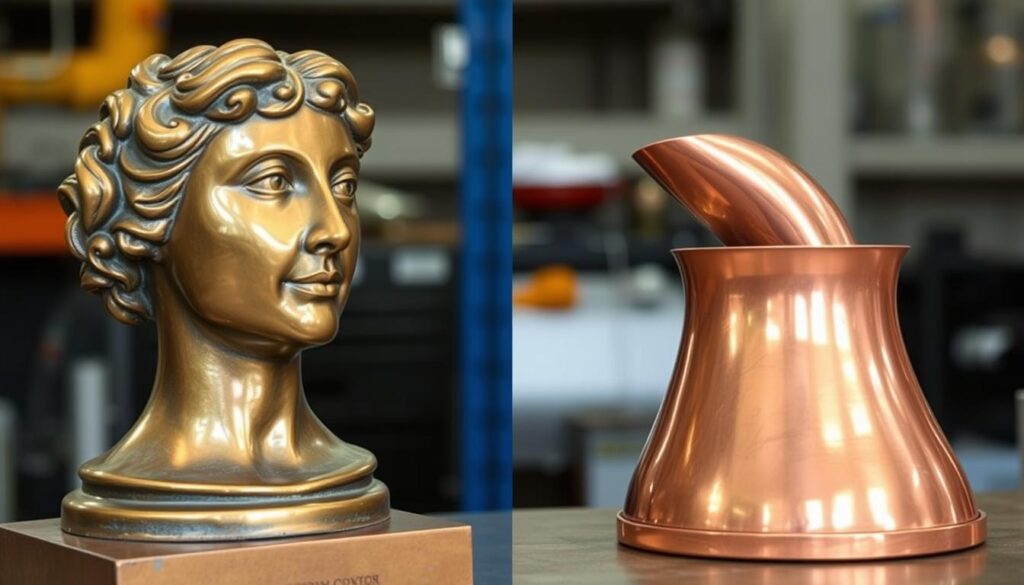
Do you know the difference between bronze and copper?
For hundreds of years, both metals have been around. But they are special because of how they are made. Bronze is a mix of copper, tin, and other metals, while copper is a pure metal.
This difference in how they are made changes how they are used. In this article, we’ll talk about how bronze and copper are different. We’ll look at their features, advantages, and uses.
Key Takeaways
- Knowing what bronze and copper are made of.
- Examining the differences in their properties.
- Exploring the different uses of bronze and copper.
- Identifying the benefits of using each metal.
- Comparing the uses of bronze and copper in different industries.
Introduction
To comprehend copper and bronze, we must examine their composition, characteristics, and historical context. Both metals have played important roles in human history. People have used them to make tools, jewelry, and even buildings.
What Is Copper
The chemical element copper has the symbol Cu and the atomic number 29. It is soft, easy to shape, and a good conductor of heat and electricity. People have used copper for thousands of years because it looks good and lasts a long time.
Copper is used in a lot of ways these days, such as in electronics, wiring, and buildings. It’s also good for places that need to kill germs, like hospitals.
What Is Bronze
Copper and tin are mixed to make bronze. The mix can change, which makes bronzes with different properties. People used bronze for tools and weapons in the past because it is stronger than copper.
When you add tin to copper, it makes it stronger and less likely to rust. Bronze is also used in sculptures, bearings, and musical instruments because it looks good and lasts a long time.
Historical Overview
Bronze and copper have been around for a long time and have been important in human history. The Copper Age, which lasted from about 4500 to 3500 BCE, was when people first started using copper to make tools. During the Bronze Age, which lasted from 3000 to 1200 BCE, bronze was used all over the place.
Both metals were important for human progress, from making the first tools to creating new technologies. Knowing their past helps us understand why they matter now.
Chemical Composition & Structure
To use copper and bronze correctly, you need to know what they are made of. Copper is a metal that is pure. Bronze is a mix of copper and tin, and sometimes other things are added to it.
Composition of Copper
The atomic number for copper is 29, and the symbol for it is Cu. It’s soft, easy to shape, and good at moving heat and electricity. Because of this, it’s often used in wires and gadgets.

Composition of Bronze
Bronze is mostly copper, but it also has some tin in it. When you mix copper and tin, you change the way bronze works. Bronze is stronger but less flexible when it has more tin in it.
Tin makes bronze a lot different. It makes casting bronze easier and lowers its melting point. For special bronzes, you can add things like aluminum or silicon.
Effect of Alloying Elements
You can change bronze’s properties by changing the mix. Aluminum bronze is stronger and lasts longer in tough situations. Silicon bronze is also tough and resists rusting well.
“The versatility of bronze is largely due to the range of properties achievable through the variation of its chemical composition.”
Bronze is useful in many areas because you can change its mix. Bronze is good for everything from boat parts to musical instruments. It’s important to know how to choose the right bronze.
In short, the way copper and bronze are made determines how they work and where they can be used. Copper shines because it is pure and can carry electricity. Bronze is strong and flexible because it has tin and other metals in it.
Physical & Mechanical Properties
You should know how bronze and copper work and what they are made of. These features help you figure out if they’re good for different things. They show how each metal behaves in different situations.
Density & Melting Point
Copper has a density of about 8.96 g/cm³ and melts at about 1,085°C. Bronze, which is made of copper and tin, is less dense, with a density of 8.7 to 8.9 g/cm³. The temperature at which it melts is also lower, between 900 and 950°C.
Because of the tin and other metals in bronze, it is less dense and melts at a lower temperature than pure copper.
Strength & Hardness
Bronze is stronger and harder than copper on its own. Adding tin to bronze makes it stronger and longer-lasting. Copper is softer and weaker, but it can bend and conduct electricity well.
This means that bronze is better for jobs that need a lot of strength and durability.
Ductility & Malleability
Copper is very flexible and easy to shape without breaking. Bronze is also ductile, but it is not as malleable as copper. This is due to the tin and other metals in bronze.
But bronze is flexible enough to make complicated shapes and structures.
Electrical & Thermal Conductivity
Copper is a good choice for electrical wiring and heat exchangers because it conducts electricity well. Bronze, which has tin and other metals in it, doesn’t conduct as well as copper. But some bronze alloys are used when moderate conductivity is fine.
They are chosen because they are strong and don’t rust.
Appearance & Color Differences
Copper and bronze look and feel different. These differences are caused by their makeup. If looks are important for a project, you need to know these.
Copper Color Characteristics
Copper is easy to spot because it is reddish-brown. The pure copper atoms in this color give it its color. It has a warm, bright tone that makes it great for buildings and decorations.

Bronze Color Characteristics
Compared to copper, bronze looks darker and less shiny. Bronze is made by mixing copper and tin. This combination makes bronze a darker, richer color, from golden brown to almost black. Bronze is good for both art and practical uses because it comes in a range of colors.
Patina Formation
Over time, both copper and bronze develop a patina. This patina is a layer of corrosion that changes how the metal looks. Depending on the setting, copper’s patina can be greenish-blue or dark brown. The patina on bronze is more stable and less colorful.
The patina gives these metals more character. People often keep or encourage it in art and buildings.
To sum up, copper and bronze look and feel different. The way they are made and the way they look different are what make them different. These qualities make each metal good for different projects where looks matter.
Applications & Use Cases
You should know how to use copper and bronze. Different metals are better for different projects because they each have their own unique properties.
Applications of Copper
Copper is a good choice for electrical work because it conducts electricity well. It is used in circuits, wiring, and electronic parts. It also works well for heat because it moves it around well.
Copper is useful in healthcare because it kills germs. It stops germs from getting into hospital handles and other places.
Applications of Bronze
Bronze is tough, strong, and doesn’t rust easily. It lowers friction in bushings and bearings. It doesn’t rust in saltwater, which is good for marine parts.
A materials expert says, “Bronze is important for making bearings and other parts that last a long time.” Because it doesn’t wear out easily, it’s great for hard work.
When to Choose Copper
Use copper for electrical or thermal needs. It also helps hospitals and other medical facilities because it kills germs.
- Wires and parts for electrical systems
- Radiators and heat exchangers
- Surfaces and tools used in medicine
When to Choose Bronze
Bronze is a good choice for things that need to be strong, last a long time, and not rust. It’s best for parts that are used in boats and heavy-duty work.
“The strength and corrosion resistance of bronze make it a preferred material for marine and heavy-duty applications.”
Professionals can choose the best material for their projects if they know what makes copper and bronze special.
Cost & Practical Considerations
When deciding between bronze and copper, you should think about how much they cost and how useful they are. The price, how easy they are to work with, and how long they last are often what people choose. Another thing to think about is how much care they need.
Cost Comparison
The price of bronze and copper can go up or down depending on the market and how they are used. Copper is usually more expensive than bronze. This is because copper is in high demand for its good conductivity.
For instance, copper’s high conductivity is important in electrical work, even if it costs more. Bronze is better for places where its strength and low cost are important.

Workability & Machinability
The ability of a metal to be shaped without breaking is known as workability. Copper is easy to work with because it is very malleable and ductile. Although less malleable than copper, bronze is still workable.
Because bronze contains tin, which facilitates machining, it is easier to machine than copper. Bronze is therefore ideal for intricate work.
Durability & Maintenance
Although both copper and bronze are strong, they require different maintenance. When exposed to air, copper turns green, which some people prefer in buildings but requires maintenance.
Because it is an alloy, bronze is more resilient to corrosion, such as that found in the ocean. Because of its more stable and protective patina, it requires less maintenance than copper.
Advantages & Disadvantages
Understanding the advantages and disadvantages of copper and bronze is crucial.
Copper: Advantages
Because it conducts well, copper is excellent for electrical and thermal applications. It’s also simple to mold and shape. It is therefore ideal for heat exchangers, circuits, and wiring.
- Elevated electrical conductivity
- Outstanding heat conductivity
- Malleable and ductile
Copper: Disadvantages
However, copper has drawbacks as well. It can be costly, and premium copper costs more. Additionally, copper oxidizes readily, which, if left exposed, can lead to corrosion.
- High cost
- Prone to oxidation and corrosion
Bronze: Advantages
Because of its strength and hardness, bronze is ideal for long-lasting applications like marine parts and bearings. Additionally, it has low friction, which facilitates moving parts.
- High strength and hardness
- Low friction properties
- Corrosion-resistant
Bronze: Disadvantages
Bronze, however, has its own difficulties. Because of its hardness, it is more difficult to work with than copper. Additionally, the composition of the alloy affects its properties.
- Difficult to machine
- Variable properties based on alloy composition
To wrap up, here’s a quick comparison of copper and bronze:
| Material | Advantages | Disadvantages |
|---|---|---|
| Copper | High electrical and thermal conductivity, ductile, and malleable | Expensive, prone to oxidation and corrosion |
| Bronze | High strength and hardness, low friction, corrosion-resistant | Difficult to machine, variable properties |
Material Variants
There are numerous varieties of bronze alloys, each with unique characteristics. This diversity results from adding various elements to copper, which is the primary component of bronze.
Types of Bronze Alloys
A number of bronze alloys are distinguished by their special qualities. Phosphor bronze is notable for its excellent spring qualities, strength, and resistance to corrosion. Springs, bushings, and bearings frequently use it.
Aluminum bronze is renowned for its durability, corrosion resistance, and good wear. It is utilized in gears, bearings, and marine components.
Because of its strength, corrosion resistance, and ease of welding, silicon bronze is highly valued. It is utilized in hydraulic components, fasteners, and marine parts.

Alloy Grade Performance Differences
The performance of various bronze alloys varies, which influences how they are used. Phosphor bronze, for instance, is stronger and more fatigue-resistant due to its higher tin content.
Aluminum is the source of aluminum bronze’s strength and resistance to corrosion. In harsh conditions, aluminum also aids in corrosion resistance.
Silicon bronze gets its strength and castability from silicon. Silicon also helps it resist corrosion.
- Phosphor Bronze: Superior spring qualities, strong, and resistant to corrosion.
- High strength, excellent corrosion resistance, and good wear resistance are all attributes of aluminum bronze.
- Silicon Bronze: Superior corrosion resistance, high strength, and good weldability.
Selecting the appropriate bronze alloy for a task requires an understanding of these variations. It guarantees the alloy’s longevity and good performance.
Historical & Cultural Uses
Bronze and copper are essential to human history. They influenced art and culture and contributed to technological advancement. For centuries, these metals have been essential.
Copper in History
Around 9000 BCE, humans began using copper. Prior to the Bronze Age, it ushered in the Copper Age. It was ideal for tools and jewelry because it could be shaped and conduct electricity.
In the past, copper was significant. Coins, structures, and artwork were all made with it. Its value was demonstrated by the numerous uses it had by the Romans and Egyptians.

Bronze in History
Around 3000 BCE, bronze, which was made of copper and tin, revolutionized the world. It was excellent for tools and weapons and stronger than copper. Better tools and more robust societies resulted from this.
Bronze was essential to ancient societies. The Sumerians, Egyptians, and Mycenaeans all used it. Its cultural value was demonstrated by the fact that it was used for both special and everyday items.
The influence of copper and bronze can still be seen today. They still influence our technology and culture. Understanding their past enables us to appreciate their enduring impact.
Choosing the Right Material
Making wise decisions requires an understanding of the distinctions between copper and bronze. This holds true for both creative and industrial projects. The required qualities, the use, and the price all influence which metal is best.
Key Selection Criteria
When picking between bronze and copper, several important factors come into play. These include:
- Mechanical Properties: Consider the required ductility, hardness, and strength. Bronze is superior for wear-resistant applications because it is harder and stronger than copper.
- Corrosion Resistance: Both metals have good corrosion resistance, but in some conditions, such as seawater, bronze performs better.
- Copper has excellent electrical and thermal conductivity. It is therefore ideal for heat exchangers and wiring.
- Cost: Two significant factors are the cost of the materials and processing. Copper is pricier than bronze, but it’s recyclable, which can lower costs.

Recommended Use Cases
Here are some suggested uses for bronze and copper based on their properties:
- Bronze: Excellent for applications requiring high strength, resistance to wear, and resistance to corrosion. This covers marine hardware, bushings, and bearings.
- Copper: Perfect for applications that call for superior electrical and thermal conductivity. This includes wiring, heat sinks, and plumbing.
In conclusion, picking between copper and bronze should be done carefully. Analyzing the requirements of the application and the characteristics of each metal is crucial. You can choose a solution that meets your needs by examining the main selection criteria and suggested applications.
Conclusion
The composition and applications of copper and bronze are different. Selecting the appropriate content for each task is made easier by being aware of these variations.
Because bronze is composed of both copper and tin, it is more durable and robust than pure copper. Heat and electricity are better transported by copper. The decision between copper and bronze is based on your needs, including price, ease of handling, and performance.
Consider the cost and the purpose of the material when choosing between copper and bronze. You can choose the best option for your project in this way.
FAQs
What is the main difference between bronze and copper?
Bronze is an alloy of copper and tin, with other elements sometimes added. Copper is a pure metal.
How do the properties of bronze and copper compare?
Copper is very good at conducting electricity and heat. It’s also soft and easy to shape. Bronze, on the other hand, is stronger and harder. It also resists wear and corrosion better.
What are the typical applications of copper?
Copper is used in many places. It’s in electrical wiring, electronics, buildings, and plumbing. This is because it conducts well and lasts long.
What are the typical applications of bronze?
Bronze is used in parts that need to last a long time, like bearings and bushings. It’s also in marine hardware, musical instruments, and sculptures. It’s strong, looks good, and resists corrosion.
How does the cost of bronze compare to copper?
Bronze costs more than copper because it has tin and other elements. But prices can change based on the market and the alloy.
What is the difference between bronze and brass?
Bronze is copper and tin, while brass is copper and zinc. They have different uses because of their makeup.
How do the colors of bronze and copper compare?
Copper looks reddish-orange. Bronze is more brownish because of tin. Both can change color over time.
What is patina, and how does it form on bronze and copper?
Patina is a layer that forms on metals like bronze and copper. It happens when they react with air, water, and chemicals. It can change how the metal looks and feels.
Which is more durable, bronze or copper?
Bronze is more durable than copper. This is because tin and other elements make it stronger and more resistant to wear and corrosion.
Can bronze and copper be recycled?
Yes, both bronze and copper can be recycled. Copper is one of the most recycled metals. Recycling helps save resources and cuts down on waste.
What are the advantages of using copper over bronze?
Copper is great for electrical and thermal uses because it conducts well. It’s also softer and easier to shape than bronze.
What are the advantages of using bronze over copper?
Bronze is stronger and more resistant to wear and corrosion. This makes it better for projects that need to last a long time.
How do I choose between bronze and copper for my project?
Choose based on what your project needs. Consider strength, conductivity, corrosion resistance, and looks. Each metal has its own benefits.