
What Is CMM Machine: Components, Uses, and Benefits
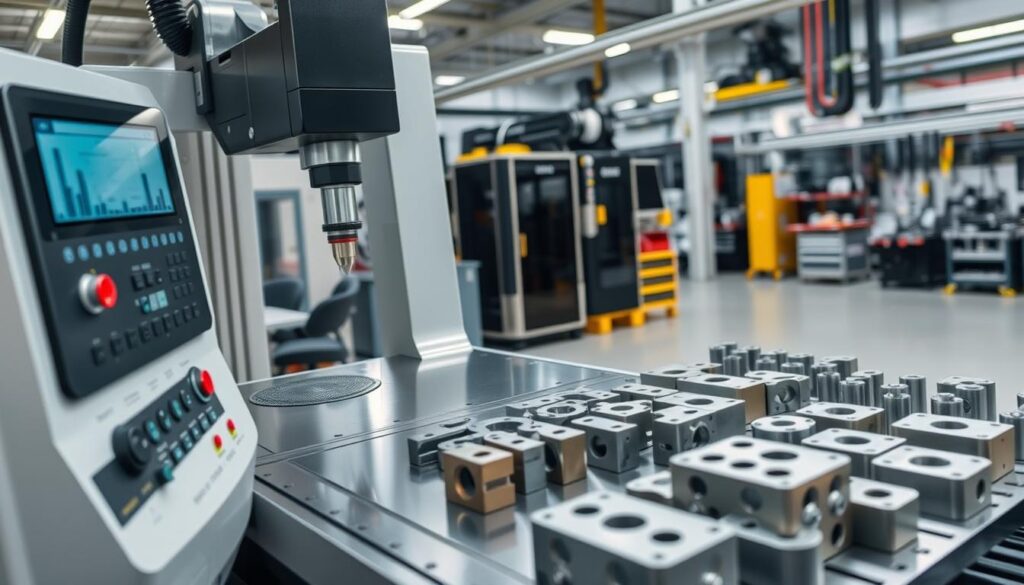
Are precise measurements key to your manufacturing process? In today’s fast world, accuracy is not just a goal. It’s a must.
A coordinate measuring machine is a tool that uses advanced technology to measure objects with great precision. This tech is vital in making sure products are up to high standards.
This machine’s value comes from its ability to give accurate measurements. These are vital for keeping quality and precision in production.
Key Takeaways
- Understanding the role of a coordinate measuring machine in manufacturing.
- Exploring the components that make up a CMM machine.
- Discovering the benefits of using a CMM machine for quality control.
- Learning about the limitations of CMM machines in certain applications.
- Understanding how to effectively use a CMM measuring machine.
What Is CMM Machine?
In the world of precision manufacturing, the CMM machine is a key tool. It ensures complex parts are accurate. A Coordinate Measuring Machine measures physical objects with great precision.
Definition and Purpose
The coordinate measuring machine captures precise measurements of an object’s dimensions. It uses coordinate technology. This makes it essential in manufacturing, where accuracy is critical.
The main goal of a CMM machine is to give accurate and precise measurements. This helps with quality control and inspection.
Typical Uses
CMM machines are used in quality control, inspection, and dimensional analysis. They are versatile and used in many industries. This includes automotive and aerospace, where complex parts need careful measurement.
- Inspecting complex geometries and dimensions
- Ensuring compliance with design specifications
- Facilitating reverse engineering
Using a CMM machine helps manufacturers improve their quality assurance. It reduces defects and boosts product quality.
How to Use CMM Measuring Machine?
Using a CMM machine requires several important steps for accurate measurements. First, you need to understand how it works and prepare the workpiece.
Preparing and Fixturing the Workpiece Before Measurement
Before you start measuring, the workpiece must be clean and securely fixed. Cleaning removes debris that could affect measurements. Proper fixturing keeps the workpiece steady, preventing movement during the measurement.
The right fixture depends on the workpiece’s shape and size. You might use clamps, vise mounts, or custom holders. It’s key to fasten the workpiece well for accurate dimensional analysis.

Establishing Coordinate System and Probe Setup
Setting up a coordinate system is essential. It defines the origin and axes relative to the workpiece. This system is the basis for all measurements.
Choosing the right probe is also critical. The probe type (touch, optical, or laser) varies based on the measurement needs. Probe calibration ensures accurate and reliable measurements.
Operating the CMM Probe and Capturing Measurements
With the workpiece fixed and the coordinate system set, it’s time to use the CMM probe. Move the probe to the points you want to measure. It collects data points to create a digital model of the workpiece.
The precision of the CMM machine allows for detailed dimensional data capture. The operator must ensure the probe is correctly placed and the measurement process is uninterrupted.
Using Software for Data Analysis and Reporting
After capturing data, specialized software analyzes and reports on it. This software turns data points into detailed reports on the workpiece’s dimensions.
The analysis software can do many things, like tolerance analysis and surface finish checks. Data visualization tools help understand complex data, aiding in quality control decisions.
By following these steps, users can get highly accurate measurements from a CMM machine. Proper preparation, precise probe use, and thorough data analysis ensure reliable quality control.
CMM Machine Components
To understand a CMM machine, we need to look at its main parts. A CMM machine has several key components. These parts work together to give accurate and precise measurements.
Probing System
The probing system is key in a CMM machine. It captures the data points needed for measurements. There are different probes like touch, optical, and laser probes. Each is best for different materials and uses.
Types of Probes:
- Touch Probes: These are the most common type, using physical contact to measure surfaces.
- Optical Probes: Utilize light to capture data, ideal for delicate or complex surfaces.
- Laser Probes: Employ laser technology for high-speed data acquisition.
Main Structure and Axes
The main structure of a CMM machine, including its axes, is its backbone. It has different types like bridge, gantry, and table. Each type has its own benefits for accessibility and range.
| Configuration | Description | Advantages |
|---|---|---|
| Bridge | Features a bridge-like structure over the measuring area. | High precision, suitable for complex parts. |
| Gantry | Has a gantry-style frame that moves over the workpiece. | Offers large measuring volumes, high stability. |
| Table | Involves a fixed table with a moving probe or gantry. | Ideal for smaller workpieces, compact design. |
Controller and Data Processing System
The controller and data processing system are the heart of a CMM machine. They interpret data from the probing system and create detailed reports. Modern CMM machines use advanced software for analysis. This allows for detailed geometric calculations and comparisons against design specs.
Fixtures and Work Holding Devices
Fixtures and work holding devices are vital for holding the workpiece in place. They ensure the workpiece stays stable and accurately positioned. The type of fixture needed depends on the workpiece’s size, shape, and material.
The right fixtures can greatly improve CMM measurement accuracy. They help by reducing movement and ensuring consistent positioning.
Benefits & Limitations of Coordinate Measuring Machine
CMM machines are key in precision measurement, giving accurate and reliable data. They are used in many industries for quality checks, inspections, and size analysis.
High Accuracy and Precision in Measurement
The benefits of CMM machines include their high accuracy and precision. They can measure complex shapes with tight tolerances. This ensures parts meet the needed standards.
- Highly accurate measurements
- Precision in detecting minute deviations
- Reliable data for quality assurance
Automated Inspection and Reduced Human Error
CMM machines make inspections automatic, cutting down on human mistakes. This automation boosts efficiency and ensures consistent measurements.
- Automated probing and data capture
- Reduced reliance on manual inspection
- Consistent results across multiple measurements

Versatility with Multiple Probes & Complex Parts
CMM machines are versatile, working with various probes for different parts. They can handle simple to complex shapes.
- Compatibility with multiple probing systems
- Ability to measure complex parts
- Flexibility in accommodating different workpiece sizes
Efficient Data Documentation and Quality Assurance
CMM machines help document data efficiently, which is key for quality assurance. The collected data can create detailed reports, track quality, and guide decisions.
Efficient data managementenables manufacturers to:
- Generate detailed inspection reports
- Track quality trends over time
- Make informed decisions
While CMM machines have many benefits, they also have some limitations. Knowing these helps use them to their fullest and ensures accurate measurements.
Conclusion
CMM machines are key in today’s manufacturing world. They give accurate and precise measurements. This ensures products are of high quality and reliable.
These machines are vital for quality control, inspection, and checking dimensions. They are essential in many industries.
Using a CMM machine has many advantages. It offers high accuracy and automated inspections. This reduces human mistakes.
CMM machines can handle different probes and complex parts. They make documenting data and ensuring quality easier and more efficient.
Knowing how CMM machines work helps manufacturers improve their quality control. As technology advances, CMM machines will become even more important. They are a must-have for companies aiming for excellence.
FAQs
What is a CMM machine used for?
A Coordinate Measuring Machine (CMM) is used for accurate measurements and to verify that complex parts and products meet manufacturing quality and accuracy standards.
How does a CMM machine work?
What are the different types of probing systems used in CMM machines?
What is the importance of proper fixturing in CMM measurement?
What are the benefits of using a CMM machine?
What are the limitations of CMM machines?
CMM machines have limitations, such as software bugs or errors resulting from probe deflection, and they require routine maintenance to remain accurate and dependable.