
CNC Acrylic: PMMA Machining
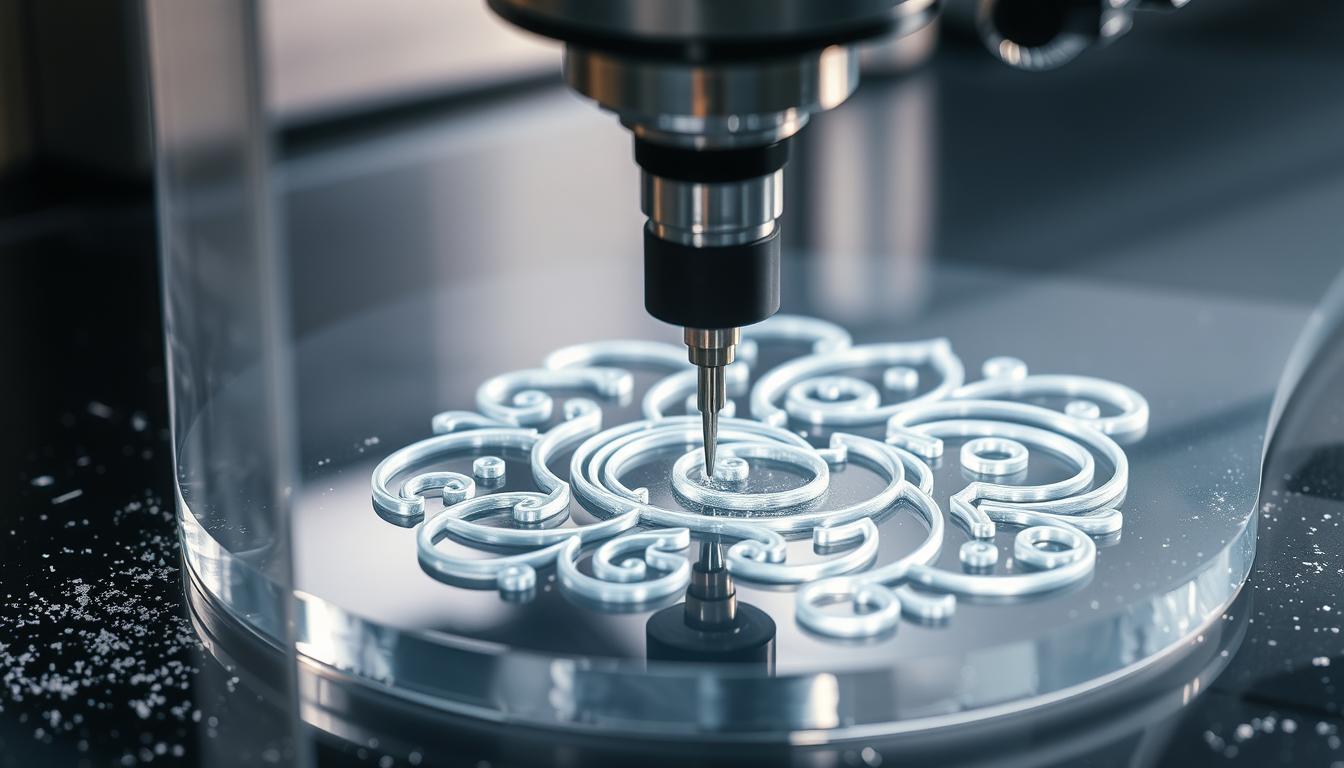
Are you looking for a strong and clear material for your project? Acrylic is a popular choice among makers and manufacturers. It looks great and can be used in many ways.
You can use CNC machining to cut acrylic into shapes that are hard to make. This way is better than working with glass and polycarbonate.
Key Takeaways
- Acrylic is a flexible and common material used in CNC machining.
- When working with acrylic, CNC machining gives you precision and accuracy.
- Because acrylic is clear and strong, it is a great choice for many uses.
- Acrylic is attractive and can withstand impact, which are two of its benefits.
- For makers and manufacturers, CNC acrylic machining is a useful skill.
What is Acrylic?
Acrylic, also called polymethyl methacrylate, is a clear, strong plastic. Because it’s lighter, it’s often chosen over glass.
What is Acrylic (PMMA)?
Acrylic, or PMMA, is known for being tough, letting light through, and being able to handle the weather. It works well for a lot of things, like CNC machining and big industrial projects.
Types of acrylic
There are different shapes of acrylic for different needs. Some of these are:
- Granules: Great for making things by injection molding and extrusion.
- Pellets: Like granules, they are used for precise molding and extrusion.
- Sheets: Great for flat, big surfaces that need to be used in construction or display cases.
Ways to Make Things
There are many ways to make acrylic, which shows how flexible it is. Some of these are:
- Compression molding: Acrylic is shaped by heat and pressure.
- Extrusion: Pushing the material through a die makes shapes that are always the same, like tubes or sheets.
- Injection molding is a common way to make complicated shapes with a lot of accuracy.
- Cell Casting: A method of pouring acrylic into molds to make certain shapes or designs.
Properties of Acrylic

To use acrylic well in different ways, you need to know what it is and how it works. Acrylic, also known as PMMA, has a lot of qualities that make it useful for a lot of things.
Hardness of the surface
Acrylic is tough on the outside. It can handle scratches and scrapes well. This is great for places where things need to last a long time.
Stability in UV
When exposed to UV light, acrylic does not break down. It stays strong for a long time. This is great for things that need to go outside.
Sending
Light can pass through acrylic easily. It doesn’t change the way light looks very much. This is why it works well for displays and clear lights.
Resistant to Chemicals
Acrylic is good at handling chemicals. It’s good in places where there might be chemicals. This helps it last longer when things get tough.
In short, acrylic is very useful because it is hard, stable in UV light, clear, and resistant to chemicals. It’s great for many things, like cars, lights, medical stuff, and buildings.
Suitable Processes for PMMA
There are many ways to work with acrylic, and each has its own benefits. It can be shaped for use in many different fields.
Machining with CNC
CNC machining is a great way to work with acrylic because it is accurate and can make complicated designs. It takes material away from a block to change its shape.
This method works great for making custom parts, prototypes, and small to medium-sized batches. It’s accurate and can handle complex designs, so it’s useful for a lot of things.
Molding by Injection
Acrylic is also a common material for injection molding. It melts granules and puts them into a mold. This works well for big batches.
It’s useful in many fields and is good for making shapes that are hard to make. This includes the medical, automotive, and consumer goods industries.
Acrylic Extrusion
Acrylic extrusion melts the material and forces it through a die. This makes shapes that are long and straight, like sheets or rods.
It’s a cheap way to make a lot of acrylic items. The products are always the same and can be used for signs, displays, and other things.
Welding with acrylic
Acrylic welding, also called solvent welding, connects acrylic parts. It uses a solvent that makes the parts stick together as it dries.
This is a strong and dependable way to bond acrylic. It’s used for custom products like displays and enclosures.
| Process | Advantages | Applications |
|---|---|---|
| CNC Machining | High precision, complex designs | Custom parts, prototypes, small production runs |
| Injection Molding | Efficient for large volumes, complex geometries | Automotive, medical, consumer goods |
| Acrylic Extrusion | Cost-effective for high volumes, uniform products | Signage, displays, architectural features |
| Acrylic Welding | Strong and reliable bonding | Custom acrylic products, displays, enclosures |
“The type of processing method used for acrylic depends on the use, the properties you want, and how much you need to make.” – An expert in making acrylic
Advantages of Using Acrylic for Your Parts

It’s important to choose the right material for your project. PMMA, or acrylic, is a great choice for a lot of reasons. It has special qualities that make it great for a variety of uses.
Resistance to weather and UV rays
Acrylic is a great material because it can handle bad weather and UV light. It stays in good shape and keeps its shape even when it’s outside in bad weather. This is why it’s great for outside use. It also doesn’t break or get brittle, so it keeps its look and feel.
Stability in all dimensions
Even when things change, acrylic stays the same size and shape. This is important for projects that need to be exact. It is also easy to work with because it is stable.
Openness
Acrylic is very clear, almost like glass. This makes it great for things where you need to see well. It’s great for lighting, display cases, and other things where you need to see what’s inside.
Stiffness
Acrylic is also tough and strong. It’s good for projects that need to be tough. Because it is strong, it is good for carrying weight and structural parts.
In short, there are many reasons why acrylic is great. It can handle bad weather, is stable, clear, and strong. These traits make it a useful and reliable material for a wide range of projects, from outdoor work to precise engineering.
- It can handle weather and UV rays, making it great for outdoor use.
- Dimensional Stability: Keeps its shape and size in different situations.
- Transparency: Gives you great optical clarity.
- Rigidity: Makes things last longer and stronger.
Applications of CNC Acrylic Parts
Many things, like cars, lights, and buildings, use CNC acrylic parts. They are flexible and accurate, which makes them great for a lot of different fields.
The car business
CNC acrylic parts are used for dashboards, lights, and trim in cars. They are strong and clear, and they fit well inside and outside of cars.
They are also great for making prototypes and custom car parts. This is because they are easy and quick to make.
Electronics and Lighting
CNC acrylic parts are very important for LED diffusers and screens in lights and electronics. They are clear and can be made with a lot of accuracy.
Some important uses of lighting and electronics are:
- Lenses and diffusers for LED lights
- Screens and touchscreens
- Parts for electronic devices that use light
Health and medical
CNC acrylic parts are used to make medical tools and devices in the healthcare field. They are safe and easy to clean.
Some medical uses are:
- Parts of medical devices
- Casing for diagnostic equipment
- Braces and other orthodontic tools
Building and architecture
CNC acrylic parts are used to make signs and decorations in buildings. They look good and can be used in many ways.
The table below shows how the different industries that use CNC acrylic parts compare to each other:
| Industry | Common Applications | Key Benefits |
|---|---|---|
| Automotive | Dashboard displays, light covers, custom parts | Clarity, durability, ease of machining |
| Lighting & Electronics | LED diffusers, display screens, optical components | Optical clarity, precision machining |
| Medical & Healthcare | Medical device components, diagnostic equipment | Biocompatibility, sterilizability |
| Architecture & Construction | Decorative elements, signage, structural components | Aesthetic appeal, versatility |
Tips to Get the Best Results from Machining CNC Acrylic

Keep an eye on a few important things to get the best results from CNC acrylic machining. It’s important to choose the right tools, handle the material correctly, and set up the machine correctly.
Tip 1: Keep your stuff safe
The first step to accurate machining is to secure your acrylic material. Keep it steady with clamps or vacuum fixtures. A well-fastened piece of material makes fewer mistakes because “a stable workpiece is essential for precision machining.”
Tip 2: Use the Right Bit
In CNC acrylic machining, picking the right tool is very important. Use a bit that is made for acrylic so it doesn’t chip or crack. For a clean cut, the bit must be the right shape and sharpness.
“The right tool for the job makes all the difference in achieving high-quality results.”
Tip 3: Set the right rate of feed
The feed rate, or how fast the tool moves, has to be just right for acrylic. If the feed rate is too high, the acrylic could crack or break the tool. If it’s too low, the acrylic could melt. To get a smooth finish, you need to find the right feed rate.
Tip 4: Set the right RPM settings
The cutting performance of your CNC machine is affected by the RPM setting. Set the RPM to the right level for acrylic machining so that it doesn’t get too hot and damage the material. The right RPM and feed rate work together to give you a great finish.
You can make your CNC acrylic machining projects much better by following these tips. Whether it’s a complex design or a simple prototype, paying attention to these details will lead to professional-grade results.
| Benefit | Description | Impact |
|---|---|---|
| Single-Setup Machining | Reduces the need for multiple fixtures and setups during the production process. | Decreased production time and increased overall accuracy of machined components. |
| Complex Shapes & Surface Finish | Enables creation of intricate designs and superior surface finishes through multi-axis motion. | Enhanced product quality and ability to meet demanding industry standards. |
| Better Tool Life | Allows optimal tool angles during cutting, reducing mechanical stress and tool wear. | Cost savings and reduced maintenance due to longer tool life. |
| Higher Productivity | Improves machining efficiency and reduces total lead times per part. | Faster response to customer demands and a stronger competitive advantage. |
Final Thoughts
In the end, CNC acrylic machining is a cheap and flexible way to make exact parts out of acrylic. This article has shown how useful and helpful it is.
Acrylic is great for a lot of things because it is hard, doesn’t fade in the sun, and lets light through. It works great for the electronics, lighting, automotive, medical, and construction industries.
Knowing how to work with PMMA is important for getting the best results from CNC acrylic machining. This includes CNC machining, injection molding, and other things. Also, it’s important to keep your stuff safe and pick the right tools.
Manufacturers can make complicated, precise parts if they know how CNC acrylic machining works. This summary highlights the main points, showing why CNC acrylic machining is vital in many industries.