
CNC Milling vs CNC Drilling: Which One to Choose?
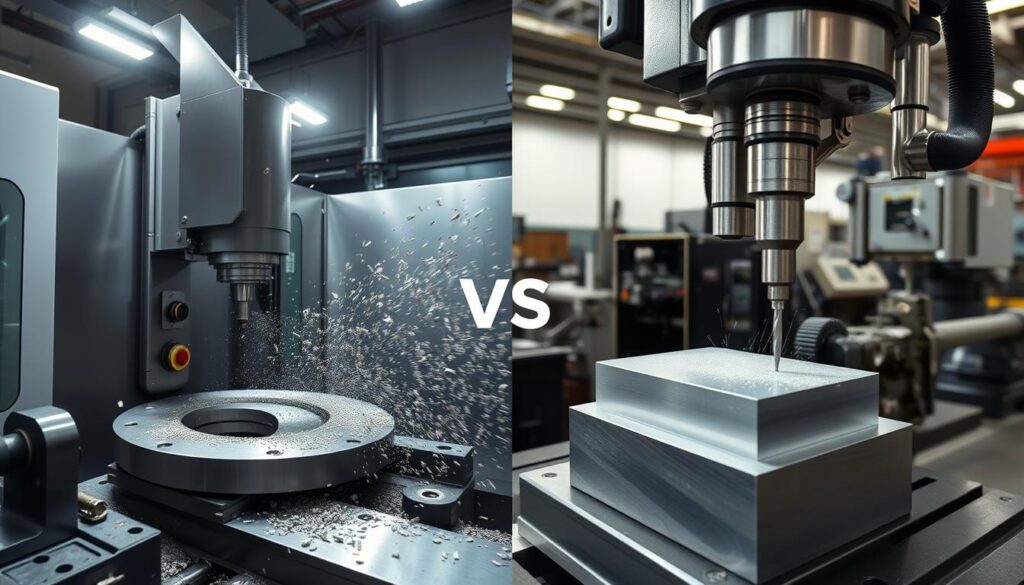
Are you deciding between CNC milling and CNC drilling for your project? Both are key for making precise parts. But they are used for different things.
CNC milling uses moving tools to cut away material. On the other hand, CNC drilling is all about making exact holes.
It’s important to know the differences to pick the best method for your project. This article will explore CNC milling and CNC drilling. We’ll look at their good and bad points, and where they’re used.
Key Takeaways
- Understanding the basic processes of CNC milling and drilling.
- Identifying the key differences between CNC milling and drilling.
- Learning the advantages and disadvantages of each process.
- Discovering how to choose the right technique for your project.
- Gaining insights into the applications of CNC milling and drilling.
What’s CNC Milling?
CNC milling is key for making detailed parts accurately. It’s a subtractive process where a tool removes material from a workpiece. It works with many materials like metals, plastics, and composites.
What is Milling?
Milling uses a rotating tool to cut away material from a workpiece. It’s very flexible, making complex parts with great precision. CNC milling machines run on computer programs, ensuring everything is done right.
This method can create many features, like slots and complex shapes. It’s used in many fields, from aerospace to cars, because it works with different materials.
CNC milling can do more than just simple tasks. It can handle 3D machining and multi-axis milling. This lets makers create parts with detailed designs and exact specs.
CNC milling’s precision and flexibility are vital in today’s manufacturing. Knowing what CNC milling can do helps makers choose the best methods for their work.
Differences Between CNC Milling and Drilling: Quick Comparison
Knowing the differences between CNC milling and drilling is key for picking the right machining method. These two CNC techniques are often mixed up, but they are quite different.
The main difference is in their cutting methods and machine setups. CNC milling uses multi-axis movement for complex shapes and finishes. On the other hand, CNC drilling sticks to a single axis for making holes.

Key Differences Between CNC Drilling and Milling Machines
The main differences between CNC drilling and milling machines are:
- Tool Motion: CNC milling machines move on multiple axes for detailed parts. CNC drilling machines only move in one axis.
- Cutting Technique: Milling removes material with rotating cutters. Drilling makes holes with a drill bit.
- Machine Setup: Milling machines need complex setups for multi-axis alignment. Drilling machines are simpler, with a basic drill bit alignment.
Understanding these differences between CNC milling and drilling helps manufacturers pick the best method. This improves efficiency and quality in their products.
Compare Differences Between CNC Milling and Drilling in Detail
CNC milling and drilling are key machining processes with different uses. Knowing their differences helps choose the right method for your needs.
Capabilities
CNC milling is more flexible and precise. It can work with complex shapes and various materials. It’s great for cutting, shaping, and engraving.
CNC milling capabilities include:
- Machining complex shapes and contours
- Handling multiple materials, such as metals, plastics, and composites
- Performing various operations like cutting, drilling, and engraving
Material Handling and Setup
CNC milling machines work with many materials and have automatic tool changers. This makes them versatile. CNC drilling machines, on the other hand, focus on drilling and might not handle complex materials or operations well.
The setup for CNC milling involves securing the workpiece and selecting the appropriate tools for the desired operations.
Tool Engagement
In CNC milling, the tool interacts with the workpiece for complex cuts. The tool spins fast, and the workpiece moves into it as programmed.
Workpiece Handling
CNC milling machines need careful workpiece handling for accurate machining. The workpiece must be held firmly to avoid movement during machining.
The depth of cut in CNC milling can be adjusted for different project needs. This allows for both roughing and finishing with precision.
Precision and Tolerances
Both CNC milling and drilling are precise, but CNC milling is better for tight tolerances in complex shapes.
The precision and tolerances achieved by CNC milling include:
- Tight tolerances for precise fits and finishes
- High accuracy for complex geometries
- Consistency across multiple parts
Advantages of CNC Milling and Drilling
Knowing the benefits of CNC milling and drilling is key for picking the right method for your project. Each process has its own strengths that fit different needs in making things.

Advantages of CNC Milling
CNC milling has many key advantages. It’s versatile, precise, and can handle complex shapes. This makes it perfect for making detailed parts and pieces.
- Versatility: CNC milling works with many materials, like metals and plastics.
- Precision: It makes very accurate cuts and shapes, ensuring the final product is just right.
- Complex Geometries: CNC milling can tackle complex designs, ideal for parts with detailed features.
A manufacturing expert says, “CNC milling is a big deal for making complex parts. It offers unmatched precision and flexibility.”
“The ability to mill complex geometries with high precision has revolutionized the manufacturing industry.”
Advantages of CNC Drilling
CNC drilling is great for making precise holes fast and efficiently. Its benefits include:
- Speed: CNC drilling is quicker than manual drilling, cutting down production time.
- Accuracy: It drills holes with high precision, meeting exact requirements.
- Efficiency: CNC drilling can do many drilling tasks in one setup, boosting productivity.
The perks of CNC drilling make it a top pick for projects needing precise and quick hole-making. Using CNC drilling, makers can boost product quality and cut costs.
In summary, CNC milling and drilling each bring unique benefits to manufacturing. Knowing these advantages helps makers choose the best method for their projects.
Disadvantages of CNC Milling and Drilling
CNC milling and drilling are powerful tools, but they have their downsides. Knowing these limitations helps manufacturers make better choices for their work.
Limitations of CNC Milling
CNC milling is versatile and precise, but it has its drawbacks. One big disadvantage of CNC milling is its high cost. The machines are pricey to buy and keep up, and complex designs can take a lot of time.
Another issue is tool wear and tear. The tools used in CNC milling can wear out, affecting precision if not kept up. Experts say, “the life of the cutting tool is key to keeping milled parts quality.”
“Tool wear is a big worry in CNC milling, as it affects the accuracy and finish of the final product.”
Drawbacks of CNC Drilling
CNC drilling is good for making holes, but it has its own problems. One major disadvantage of CNC drilling is its limited use compared to milling. Drilling is mainly for holes and is not as good for complex tasks.
Also, CNC drilling can be tricky with certain materials. Some materials need special drill bits, and drilling through hard materials can be tough. It might lead to broken tools or less accurate results.
- The need for precise setup and calibration
- Potential for drill bit breakage
- Limited to creating holes, with less versatility than milling
In summary, CNC milling and drilling each have their own issues. These include high costs, tool wear, and material challenges. Knowing these helps improve manufacturing methods.
CNC Milling vs. Drilling: How to Choose the Right Technique for Your Project
Choosing between CNC milling and drilling is key. It depends on the part’s complexity, material, and how precise it needs to be. Think about what your project really needs.
Key Factors When Deciding Between CNC Drilling and Milling Machines
Several things affect your choice between CNC milling and drilling. Knowing these can help pick the best method for your project.
- Part Complexity: Parts with complex designs usually need CNC milling. It can cut, shape, and finish in one go.
- Material: The material matters too. Harder materials might need CNC milling’s precision and flexibility.
- Tolerances: For parts needing tight tolerances, CNC milling is better. It can make complex shapes and smooth finishes.
Looking at these factors helps make a choice that fits your project’s needs.

When picking between CNC milling and drilling, think about what each can do. CNC milling is great for complex parts and custom designs. CNC drilling is best for making accurate holes fast.
Understanding your project’s needs and each technique’s strengths can improve your production. This leads to better results.
Bottom Line
The choice between CNC milling and drilling depends on several factors. These factors are key to a project’s success. Both processes have unique strengths for different applications.
CNC milling is great for complex shapes and designs. It’s perfect for projects needing detailed work in one setup. CNC drilling, on the other hand, excels at making precise holes. It’s mainly used for projects focusing on hole accuracy.
When choosing between CNC milling and drilling, consider the project’s needs. Look at the material, design complexity, and precision required. Knowing what each process can do helps make the right choice.
In summary, CNC milling and CNC drilling are both vital machining methods. The right choice depends on understanding the project’s needs and matching them with each process’s strengths.
FAQs
As we’ve looked into the differences between CNC milling and drilling, some questions might remain. Here, we tackle some common questions to clear up these machining processes.
What’s the main difference between CNC milling and drilling? CNC milling removes material from a workpiece with rotating tools. Drilling, on the other hand, uses a drill bit to make holes.
Can CNC milling machines do drilling? Yes, many CNC milling machines can also drill, but their main job is milling.
How do I pick between CNC milling and drilling for my project? Think about your project’s complexity, the material, and what you want to achieve. CNC milling is great for complex shapes. Drilling is better for making precise holes.
For more details on CNC milling vs CNC drilling, or to see how they can help your project, contact industry experts. Or visit websites of top CNC machining companies.
FAQ
What is the main difference between CNC milling and CNC drilling?
CNC milling removes material with rotating tools. CNC drilling makes holes with a drill bit. This is the main difference.
Can CNC milling machines perform drilling operations?
Yes, CNC milling machines can do drilling. But, they’re not as good as dedicated CNC drilling machines for simple holes.
What types of materials can be processed using CNC milling and drilling?
Both can work on many materials. This includes metals like aluminum and steel, and also plastics, wood, and composites.
How do I choose between CNC milling and drilling for my project?
Think about your project’s complexity, material, and needed precision. CNC milling is great for complex shapes. CNC drilling is better for simple holes.
What are the advantages of using CNC milling over traditional machining methods?
CNC milling is precise and accurate. It can make complex shapes. This makes it perfect for detailed parts.
Are CNC drilling machines more cost-effective than CNC milling machines?
CNC drilling is often cheaper for simple holes. CNC milling is more versatile for complex tasks.
Can CNC milling and drilling be used together in a single project?
Yes, many projects need both CNC milling and drilling. Modern CNC machines can do both.
What are the typical tolerances achievable with CNC milling and drilling?
CNC milling and drilling can get very precise. They usually stay within ±0.001 inches or better, depending on the machine and material.