
CNC Router Machine
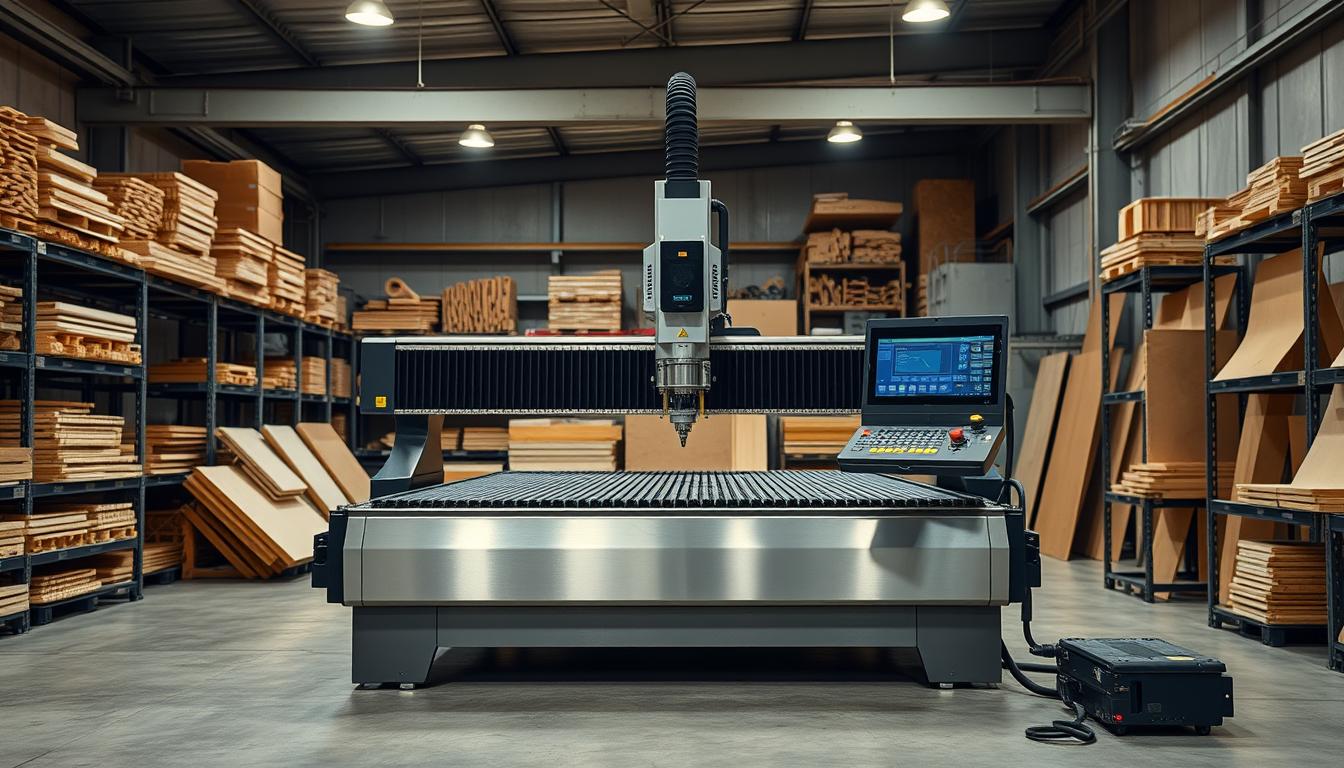
Do you want to make a lot of furniture parts or cut designs with precision? The woodworking world and more have changed because of CNC router machines.
We use these tools for a lot of things, like making signs and furniture, because they are so accurate and quick. The CNC Router Machine XE-Ultra and CNC Router Masuter 3S are two models that have cool features for both professionals and hobbyists.
These machines can do CNC routing and CNC machining. They’re important in today’s world.
Key Takeaways
- A tool that can be used for many things
- Production that is accurate and efficient
- Models like the XE-Ultra and Masuter 3S have advanced features.
- Important for both professionals and amateurs
- Necessary for modern manufacturing
Introduction to CNC Router Machine
CNC router machines are the best in modern manufacturing because they are so precise and flexible. They are important tools in a lot of different fields, like making signs and working with wood.
What is a CNC router?
A computer controls a CNC router machine, which cuts things. It cuts and shapes things like foam, wood, and plastic. It follows designs made in CAD software by spinning a spindle.
People know that the Elite Series CNC machines are very accurate and well-made. They are great for a lot of things. They are a better choice than old tools because they can easily cut complex designs.
Why use a CNC router instead of other cutting and machining tools?
There are a number of benefits to choosing a CNC router over other tools:
- Accuracy and precision: CNC routers are very accurate, so they follow designs exactly.
- They can work with a lot of different materials, like wood and plastic, which makes them useful in a lot of different fields.
- Automation: Because they are automated, they require less manual work, which increases productivity and lowers the number of mistakes.
- Complex Designs: CNC routers can make designs that other tools can’t because they are so advanced.
CNC routers are better than milling machines for working with softer materials and making detailed designs. Milling machines are for harder materials and heavy-duty cutting. CNC routers are great for woodworking and making signs because of their unique abilities.
How a CNC Router Works

A CNC router is a machine that cuts materials very accurately using computer numerical control (CNC). It has a lot of different hardware and software parts that work together.
Basic working principle: Gantry, table, and axes (X, Y, and Z)
The gantry system, table, and axes make up the heart of a CNC router. The gantry moves the router exactly with its hardened steel linear motion shafts and precision ball screws. The table holds the things that are being cut.
The router moves along the X, Y, and Z axes. The Y-axis goes up and down, the X-axis goes left and right, and the Z-axis goes up and down. This setup makes it possible to make precise cuts.
CAD to CAM to G-code to Machine Control is the software workflow.
Using CAD (Computer-Aided Design) software, the first step is to design the part. After that, CAM (Computer-Aided Manufacturing) software changes the design into G-code. The CNC router does what the G-code says.
This step is very important for turning digital designs into real things. The detail of the design depends on how good the CNC router is and how complicated the software is.
Main Parts: Spindle/Router Bit, Linear Guides, Drive System, and Table Surface
The spindle or router bit cuts through the material. The finish is affected by the kind of bit used. The drive system powers the router, and the linear guides make sure it moves smoothly. The material is held securely by the table surface.
Knowing what these parts are and what they do can help a CNC router work better. This makes woodworking and metalworking go better.
Types & Configurations of CNC Routers
To choose the right CNC router for your needs, you need to know about the different types and how they work. These machines can do a lot of different things and can be changed to fit your needs. Some are small hobby projects, while others are large-scale industrial production.
There are three types of CNC routers: 3-Axis, 4-Axis, and 5-Axis.
There are different types of CNC routers based on how many axes they have. This makes it harder for them to deal with complicated shapes. A 3-axis CNC router is common and works well for a lot of things, like making signs and working with wood. It moves along the X, Y, and Z axes to make precise cuts on flat surfaces.
CNC routers with 4 or 5 axes can do more. A 4-axis adds a rotating axis for surfaces that are not flat. This is great for making detailed designs on shapes that are rounded. A 5-axis can move in five different directions at once, making it great for complicated 3D work.
By Material/Application: Routers for wood, acrylic/foam, and metal composites
Another way to group CNC routers is by the materials they work with. Wood routers are best for working with wood, like making signs and furniture. Acrylic and foam routers are used to cut softer materials like signs and packaging.
Metal composite routers can cut through tougher materials like aluminum. They are used in making cars and planes, where accuracy is very important.
Sizes and formats for tables and work areas: large bed for desktop/hobby vs. industrial
The work area of a CNC router is very important in terms of size and shape. Desktop or hobby CNC routers are small and good for personal use and small projects. They’re great for people who like to do things on the side and small businesses.
Big bed for industry CNC routers can work with big pieces of wood and other materials. They are for big jobs, like working with wood and metal.
The type of CNC router you choose will depend on what you need it for. Think about the material, size, and precision needed. Knowing the options helps you pick the right one for your work.
Materials & Applications of CNC Router Machine

CNC routers are great because they can cut a lot of different kinds of materials. This makes them useful in a lot of fields.
What kinds of materials can a CNC router work with?
CNC routers can work with wood, plastic, foam, metal, and composites. It’s a big plus that they can work with a lot of different materials. It lets people work on a lot of different things.
Compatibility of materials:
- Wood: Great for making cabinets, furniture, and woodworking.
- Plastics are good for making signs, displays, and plastic parts.
- Foam is used to package things, make prototypes, and build models of buildings.
- Metals: Depending on the spindle and tools, you may be able to work with some metals.
- Composites: Helpful for using composite materials in a range of fields.
Common Uses
People use CNC routers for a lot of things, like making furniture, signs, prototypes, and engraving. They are accurate and can repeat complicated designs. This makes them very helpful in these areas.
Examples of Applications:
| Application | Description | Common Materials |
|---|---|---|
| Signage | Creating custom signs for businesses and events. | Wood, Plastics, Aluminum |
| Woodworking | Furniture making, cabinetry, and decorative wood items. | Wood |
| Furniture Production | Manufacturing custom furniture parts and designs. | Wood, Metal |
| Prototyping | Creating prototypes for product development and testing. | Foam, Plastics, Wood |
| Engraving | Personalized gifts, awards, and decorative items. | Wood, Plastics, Metal |
Specific Uses
CNC routers are also used for special tasks like 3D carving, processing with multiple heads, and using a rotary table. These new features make them even more useful and adaptable.
We use CNC routers to make complicated 3D carvings, multi-head processing to do more work, and rotary tables to work with round things. These uses show how useful and powerful CNC router machines can be for making things and doing crafts.
Key Features & Specification Considerations
To get the best results from a CNC router machine, you need to know its most important features and specifications. There are a few important things to think about when you look at a CNC router. These make sure that the machine fits your needs.
Power, Speed (RPM), and Tool Change Systems for Spindles
The power and speed of the spindle on a CNC router machine are very important for working with different materials and tasks. Watts or horsepower are used to measure spindle power, which helps the machine cut through thick materials. Speed, which is measured in revolutions per minute (RPM), has an effect on the quality of the finish and how long it takes to process. Onefinity’s advanced CNC routers come with powerful controllers, HD touch screens, and preassembled rails. This makes the process of machining easier and faster.
- High spindle power for dense materials
- Different materials and finishes can be controlled at different speeds.
- Automatic tool change systems to boost productivity
Structure and stability of machines
For a CNC router machine to be accurate and last a long time, its structure and stability are very important. A strong frame and bed design makes vibrations less likely. Ball screws and linear guides make sure that movement along the axes is accurate. The machine’s stability has an effect on how well it can stay accurate over time.
Options for holding work and tables
To keep the material in place while machining, good workholding is important. There are different kinds of tables, such as vacuum tables, T-slot tables, and strap clamp fixtures. The right workholding system depends on the size, type of material, and how it will be used.
- Vacuum tables for holding flat things
- T-slot tables for making fixtures more flexible
- Strap clamp fixtures for holding shapes that aren’t straight
Drive systems, repeatability, motion control, and accuracy
For consistent results, accuracy and repeatability are very important. The drive systems and motion control systems are very important for getting these qualities. The machine can accurately follow the programmed toolpaths because it has high-quality drive systems and precise motion control.
- High-resolution encoders for exact positioning
- Advanced drive systems for smooth movement
- Regular upkeep for long-lasting accuracy
Advantages & Limitations of CNC Router Machine

CNC router machines bring many benefits, like automation and the ability to make the same part over and over. They are key in many industries because they are versatile and precise.
Benefits
CNC router machines have many advantages that make manufacturing better. Some of the main benefits are:
- Automation: CNC routers do tasks on their own, which cuts down on manual work and boosts efficiency.
- Repeatability: They make the same part over and over, ensuring quality every time.
- Versatility: CNC routers can handle many materials, like wood, plastics, foam, and composites.
- Fast Production: They can make custom parts quickly, helping meet deadlines and increase productivity.
In woodworking, CNC routers make complex designs and patterns easily. This is because they are precise and can work with different woods.
Challenges/Considerations
While CNC router machines have many benefits, there are also challenges and things to think about:
- Machine Cost: Buying a CNC router machine can be expensive. This might be a problem for small businesses or hobbyists.
- Material Limitations: CNC routers can work with many materials, but there are limits based on the machine and the material.
- Setup & Tooling: Setting up and using the right tools are key for the best results. This needs skilled people and might cost more for tools.
- Risk of Vibration or Deflection: CNC routers can shake or bend, which can mess up precision and quality, mainly at high speeds or with certain materials.
To deal with these challenges, picking the right machine for your needs is important. Also, training operators well and keeping the machine in good shape is key.
Design & Best Practices of CNC Router Machine
You need to plan carefully when you design for CNC routing. It’s important to think about material layout, toolpath planning, and nesting. These steps help make the machining process more efficient.
Designing for CNC Routing
Understanding your CNC machine’s capabilities is key. Onefinity CNC machines use Carveco Maker software for designing and optimizing projects. Material layout is essential; it helps cut down waste and save time.
Toolpath planning is also critical. It decides the path the tool will take to cut out parts. Good planning can cut down machining time and improve product quality. Nesting is important too, as it lets you cut multiple parts from one sheet, reducing waste.
Process Setup
Setting up the process is vital for a CNC router’s success. This includes tool selection and adjusting feed and speed for the material and tool.
- Selecting the right tool for the job
- Setting the correct feed and speed rates
- Determining the sequence of operations
- Implementing strategies for waste reduction
Operation & Maintenance
Regular maintenance is key for a CNC router’s performance and longevity. This includes calibrating the machine and keeping a good dust collection system. It also involves operator training for safety and efficiency.
Regular tasks include checking and replacing worn parts, lubricating, and updating software. By following these practices, users can get the most out of their CNC router machine.
Selecting & Buying a CNC Router Machine

It’s important to know what you need before you buy a CNC router machine. Look at different models and see how they stack up against each other. It’s important to pick the right CNC router for your job.
Figure Out What You Need
First, figure out what you want. Think about the materials you’ll use, the size of the parts, how much you’ll make, and how much money you have. These things will help you choose the right machine.
- Material: Some materials work better with CNC routers than others. Check to see if the machine works with your main material.
- Size of Parts: The size of your parts is important. Pick a CNC router that can handle the biggest parts you need to cut.
- Production Volume: A strong machine is needed if you make a lot. Bigger jobs need more power.
- Budget: Before you buy, know how much money you have. Prices change depending on the size and features.
Comparing Different Models of Machines
Compare different CNC router models after you know what you want. Look for machines that fit your needs in specs and features.
| Feature | Basic CNC Router | Advanced CNC Router |
|---|---|---|
| Spindle Power | 1.5 kW | 3.0 kW |
| Table Size | 4' x 4' | 5' x 10' |
| Number of Axes | 3-axis | 4-axis |
| Control System | Basic Controller | Advanced CNC Control |
Help, compatibility with other software, and the ability to upgrade in the future
Consider the help from the maker, how well the software works with other programs, and the options for upgrading. These are important for your machine’s life.
- Support: Pick makers that offer good support, like training and help with problems.
- Software Compatibility: Check that the CNC router can work with the design and manufacturing software you use.
- Future Upgradeability: Think about whether the machine can grow with your needs or new technology.
You can pick a CNC router that works for you now and in the future by thinking about these things. Our CNC experts can give you more information and advice on our website.
Innovations in CNC Routing
There is a lot of room for improvement in multi-axis routing, automation, and material processing, so the future of CNC routing looks good. As makers ask for more complicated and exact parts, CNC routing technology is getting better to meet these needs.
Routing with Multiple Axes and Rotary Tables
Multi-axis routing is a big trend in CNC routing. It lets makers make shapes that are more complicated and cuts down on the number of setups they need. People are starting to use 5-axis CNC routers more and more to make complicated parts with a lot of accuracy.
- Better accuracy of parts and finish on the surface
- Less time spent making things because there are fewer setups
- Better at machining complicated shapes
Another new thing that makes CNC routers better is the rotary table. They help machine parts that are round or curved. They can also work with multi-axis systems to get even more flexibility.
Working together with automation and digital workflows
Automation is very important in CNC routing. Many companies connect their CNC routers to robots and digital workflows. This connection lets the system run by itself and makes production more efficient.
“The integration of CNC routing with automation and digital workflows is
revolutionizing the manufacturing industry, enabling faster production times and
improved product quality.”
CAD/CAM software is becoming more common, which makes it easier to go from design to production. This integration makes things more accurate and reduces the number of mistakes people make.
Improvements in materials and hybrid processing
CNC routing is getting better because of new ways to process materials. People are working on new materials and hybrid methods. This lets you work with a wider range of materials, from metals to composites.
Large-format CNC routers are also getting bigger, which lets you make bigger parts. This makes it less necessary to put things together. These machines are very useful in fields like aerospace and construction.
We’ll see more new technologies and methods as the CNC routing industry keeps changing. These will make CNC routers even more capable and efficient.
Final Thoughts
It’s important to go over the main points as we finish our look at CNC router machines. We’ll also show you how to use these useful machines.
CNC router machines offer accuracy, flexibility, and automation. They’re great for making signs, woodworking, and prototypes. To get the best results, you need to know the parts of the machine, such as the spindle and guides.
Before you use a CNC router, plan a test project. This shows you what the machine can do. It’s also important to pick the right size of machine. It depends on how big your materials are and how much you want to make.
Users of Onefinity CNC have access to a lot of resources and help. They give you training and more to help you learn.
It’s important to find good training and resources if you’re new to CNC routing. Check out online tutorials, the guides that come with the product, and forums. You can learn more about CNC machines this way and stay up to date on new things.