
Die Casting: Hot-Chamber Vs Cold-Chamber Vs Vacuum

Do you know how to make parts that are strong, long-lasting, and have a lot of detail? Die casting is key in creating complex metal parts with great precision and accuracy.
We use different methods for die casting, such as hot-chamber, cold-chamber, and vacuum die casting. These methods work for a lot of different manufacturing needs. To do this, molten metal is pushed into a mold cavity under a lot of pressure. This lets you make parts that are smooth and have fine details.
Key Takeaways
Die casting is a way to make high-quality metal parts by casting them.
There are three different ways to make things: hot-chamber, cold-chamber, and vacuum die casting.
The process entails injecting molten metal into a mold cavity under significant pressure.
Die casting is used across various industries, including automotive and aerospace.
The process makes it possible to make parts with very fine details and a great surface finish.
Introduction to Die Casting Processes
During the die casting process, molten metal is forced into a mold using high pressure. This makes parts that fit perfectly and have smooth finishes. It works well for making complicated parts, which is why it’s used in so many fields.
What is die casting?
Die casting fills a mold with molten metal under a lot of pressure. This makes parts that are precise and look great. It can make parts that are simple or complicated.
We use die casting in a lot of different areas, such as cars, planes, and gadgets. It works well and makes parts of high quality. The process entails mold design, metal melting, injection, and the acquisition of the final product.
What are the differences between hot-chamber, cold-chamber, and vacuum die casting?
You should know the difference between hot-chamber, cold-chamber, and vacuum die casting. Depending on the alloy, the part’s complexity, and the finish needed, each one has its own use.
Zinc and tin are two examples of alloys that work best with hot-chamber die casting. It works quickly and well. Cold-chamber die casting is used for metals like copper and aluminum. It makes parts tough and long-lasting.
If you need parts that are dense and have a smooth finish, vacuum die casting is the way to go. It’s great for parts that need to be strong and look good.
| Die Casting Method | Alloy Suitability | Key Advantages |
|---|---|---|
| Hot-Chamber | Low-melting-point alloys (zinc, tin) | High production rate, efficient |
| Cold-Chamber | Higher-melting-point alloys (aluminum, copper) | Strong and durable parts |
| Vacuum | Various alloys, designed to minimize porosity | High-density parts, minimal porosity |
Fundamentals of Hot-Chamber Die Casting
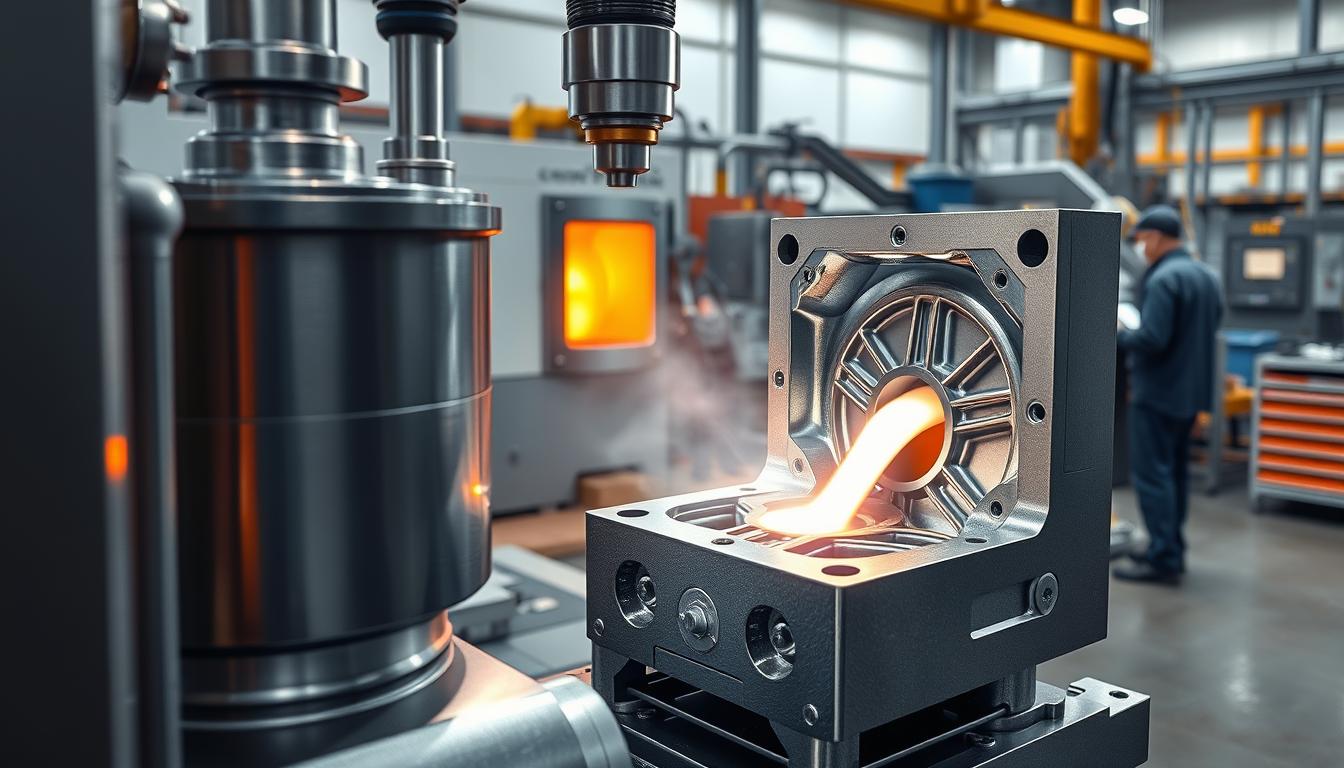
Hot-chamber die casting is great for metals that melt easily, like zinc, tin, and lead alloys. It’s great for making small to medium-sized parts with hard-to-make shapes.
Definition & Basic Process
When you do hot-chamber die casting, you push molten metal into a mold with a lot of pressure. A gooseneck machine is used in this method to melt the metal in a crucible. It works quickly and makes parts with a smooth finish and exact shape.
Suitable Alloys, Melt Temperatures & Typical Materials
Low temperatures are needed to melt the alloys used in hot-chamber die casting. Some of the most common ones are:
Alloys of zinc
Alloys of tin
Lead-based alloys
These materials were chosen because they are flexible and resistant to corrosion. They are useful for a lot of things.
Important Parts of a Machine and How They Work
The machine has a gooseneck that goes into the hot metal. We can control how much metal goes into the mold with this. The process involves quickly injecting the material, solidifying it under pressure, and then ejecting the part.
Benefits, Drawbacks, and Common Uses
Hot-chamber die casting is quick, leaves a smooth finish, and can make shapes that are hard to make. But, it’s only for certain alloys. It’s used for:
| Application | Description |
|---|---|
| Automotive Components | Parts such as carburetors and other small engine components. |
| Hardware | Various hardware items like locks and fittings. |
| Electronics | Housings and other components for electronic devices. |
We use these benefits to make parts of high quality quickly. Hot-chamber die casting is an important part of how we make things.
Fundamentals of Cold-Chamber Die Casting
The cold-chamber die casting process works well with metals like aluminum, magnesium, and copper alloys. These metals are tough and last for a long time. This makes it great for parts that need to be strong and last a long time.
Definition & Basic Process
A cold chamber is used in cold-chamber die casting to pour molten metal. After that, it is pushed into a die with a lot of force. In hot-chamber die casting, on the other hand, the metal is melted and injected at the same time.
The cold-chamber process has a few main steps:
- Pouring hot metal into the cold chamber.
- Putting the molten metal into the die while applying a lot of pressure.
- Making the metal in the die solid.
- Getting the cast part out of the die.
Suitable Alloys, Melt Temperatures & Typical Materials
Alloys that melt at high temperatures work well with cold-chamber die casting. Some common materials are:
- Aluminum alloys are strong, resist corrosion, and conduct heat well.
- Magnesium alloys are used in aerospace and automotive applications because they have a high strength-to-weight ratio.
- Copper alloys are useful because they conduct electricity well and last a long time.
These alloys have high temperatures at which they melt. They go from about 600°C for magnesium alloys to more than 1000°C for copper alloys.
Differences in machine setup compared to hot-chamber
Cold-chamber die casting machines have their own furnace. The furnace pours hot metal into the cold chamber. This makes it possible to work with alloys that have higher melting points.
The setup for the machine also has a more complicated injection system. This is necessary for the high pressures of die casting in a cold chamber.
Benefits, Drawbacks, and Common Uses
There are a lot of good things about the cold-chamber die casting process. It can make parts with high accuracy and surface finish. It works well with a lot of different alloys, too.
There are some problems, though. The separate furnace and complicated injection system make the process more expensive.
Cold-chamber die casting is often used to make car engine blocks, aerospace parts, and other complex, strong parts.
Some of the main benefits of cold-chamber die casting are:
- Ability to cast alloys with a high melting point.
- High accuracy in three dimensions and a smooth surface.
- Good for making complicated shapes.
Fundamentals of Vacuum Die Casting
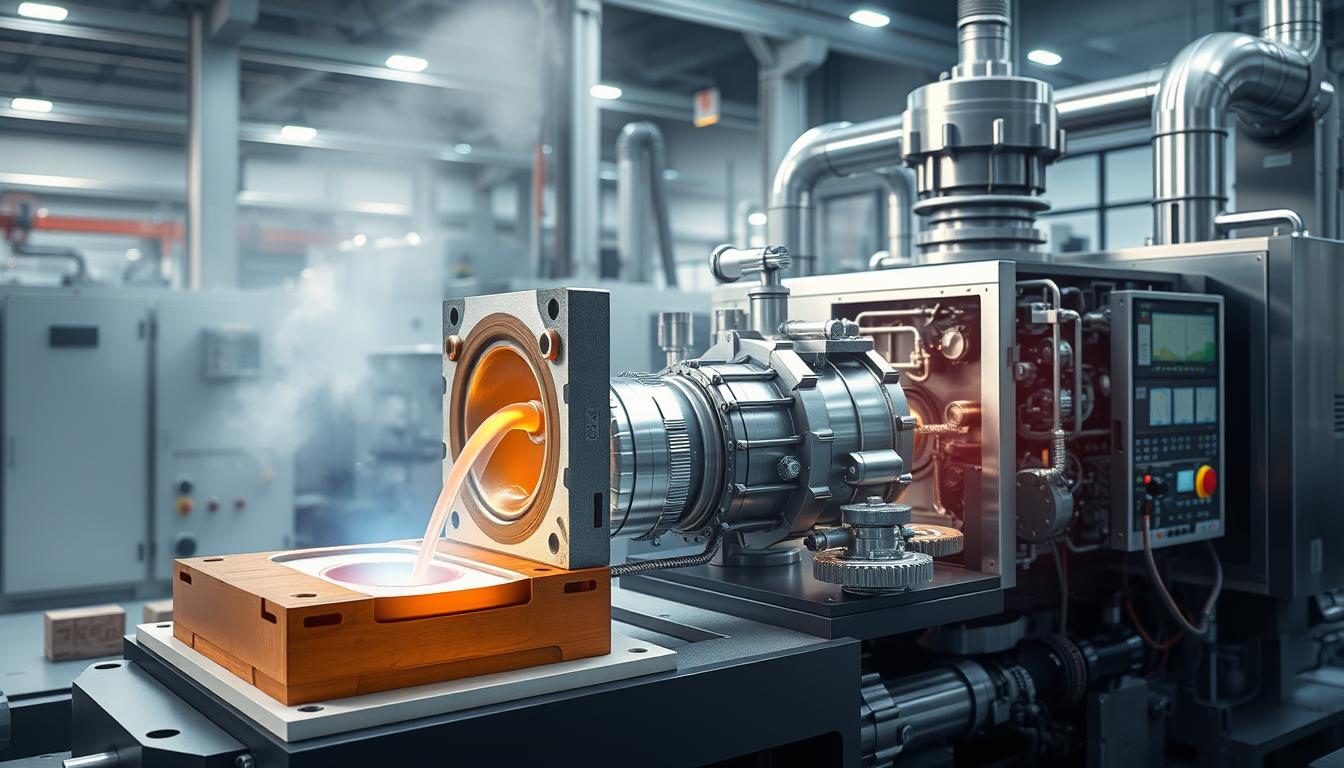
Using a vacuum in die casting makes the material less porous and stronger. It’s great for making parts that are high-quality and dependable.
Definition & Basic Process
Before pouring in metal, vacuum die casting makes a vacuum space in the die. A vacuum pump gets rid of air in the die. This makes the pressure inside the cavity lower than normal.
The die is first made and sealed. After that, the empty die is filled with molten metal. The vacuum keeps air bubbles from getting into the casting.
What a Vacuum Does
The vacuum is what makes castings better. It lets the molten metal fill in the details of the die well. This makes parts with smoother surfaces and more exact shapes.
The most important benefits of vacuum in die casting are:
- Less porous
- Better density and strength
- Improved mechanical properties
- Better finish on the surface
Requirements for the right materials, tools, and processes
You can use vacuum die casting with metals like aluminum, zinc, and magnesium. The right material depends on what the part needs.
The tools for vacuum die casting are the same as those for regular die casting, but they have a vacuum system. For the right level of vacuum, this system is very important.
Things to think about when planning a process include:
- Designing and sealing the die
- Level of vacuum and time to empty
- The temperature at which the melt occurs and the pressure at which the injection takes place
Benefits, Drawbacks, and Common Uses
Vacuum die casting makes parts better and cuts down on defects. But it costs more and needs special tools.
Making important parts for cars and airplanes is what it’s used for.
Some common uses are:
- Parts for aerospace
- Parts for cars
- Parts for high-performance machines
Comparative Analysis: Hot vs Cold vs Vacuum Die Casting
Manufacturers need to know the differences between hot-chamber, cold-chamber, and vacuum die casting. There are pros and cons to each method. These are important to know when choosing the right process for a job.
Looking at Key Parameters Side by Side
There are big differences between hot-chamber, cold-chamber, and vacuum die casting when you look at the main points. These include what alloys can be used, how fast parts are made, the pressure needed, and the part’s finish. Here’s a table that shows these differences:
| Process | Alloy Compatibility | Cycle Times | Pressures | Surface Finish |
|---|---|---|---|---|
| Hot-Chamber | Zinc, Tin, Lead | Fast | Low to Medium | Good |
| Cold-Chamber | Aluminum, Magnesium, Copper | Medium to Slow | High | Excellent |
| Vacuum | Various, including Aluminum, Zinc | Variable | Low to High | Excellent, with reduced porosity |
The table shows that there are a lot of things to think about when choosing a die casting method. These include the material, how quickly parts need to be made, and the finish that is needed.
How to Pick the Right Method
There are a number of things to think about when choosing the best die casting method. These are the alloy, the number of parts that need to be made, and how complicated the parts are. To make a good choice, you need to think about the cost, quality, and speed.
For instance, hot-chamber die casting works well for small, detailed parts made of alloys that melt easily. For bigger, more complicated parts with alloys that melt at higher temperatures, cold-chamber die casting is better. Vacuum die casting works best for parts that need to be dense and have few holes.
“The right die casting process can significantly impact the quality and cost-effectiveness of the final product.”
Trade-Offs Between Cost, Tooling Life, Quality, and Production Rate
There is a connection between the cost, the tool’s life, the quality, and the production rate. For example, hot-chamber die casting is quick and cheap, but not for alloys that are very strong. Cold-chamber die casting can work with alloys that melt at high temperatures, but it costs more and needs more complicated tools.
When choosing a die casting process, you need to think about these trade-offs very carefully. This helps find the best balance between cost, quality, and speed.
Materials & Alloy Considerations
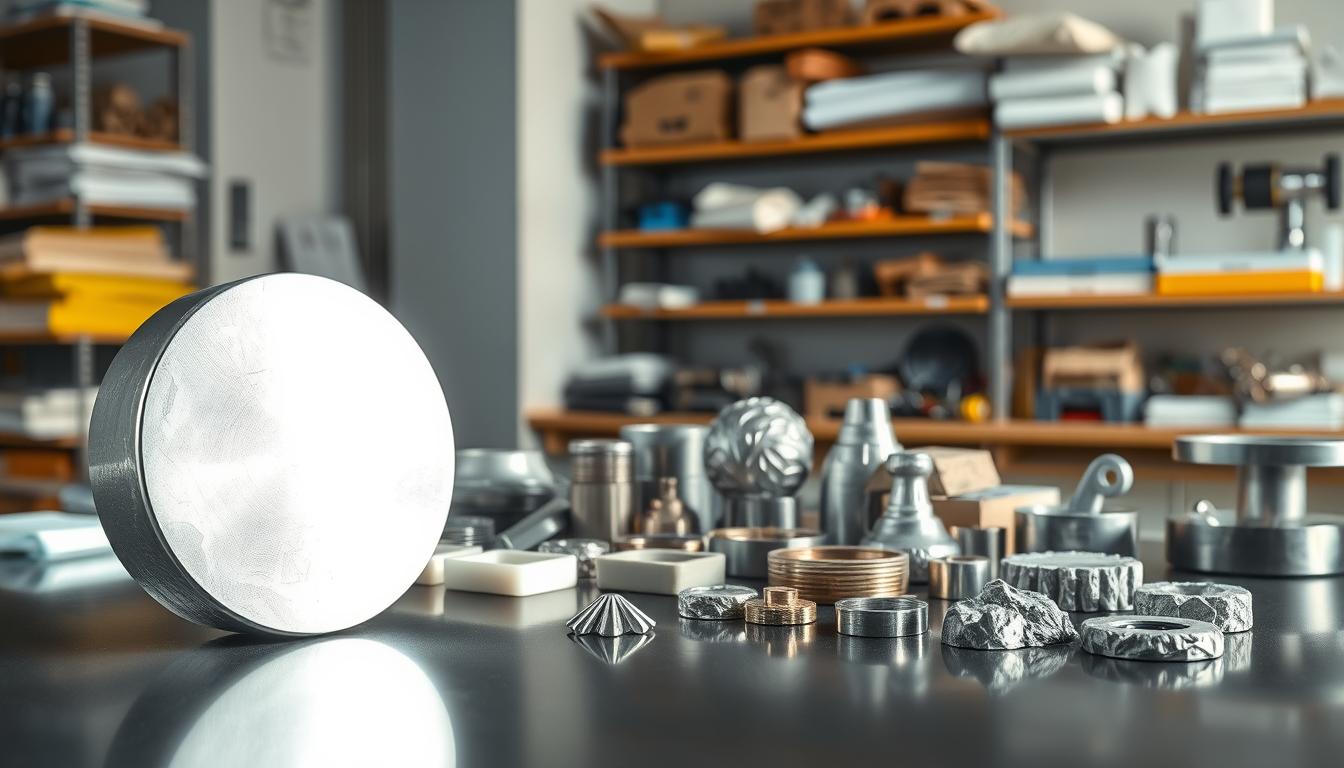
To make die-cast products of high quality, you need to choose the right materials and alloys. The alloy you choose affects how the die casting works, the quality of the product, and whether it will work for its intended purpose.
Suitability of Low-Melting Alloys and Hot-Chamber
Hot-chamber die casting works well with alloys like zinc, tin, and lead. They melt at lower temperatures, which is great for putting metal into the die under pressure.
When it comes to hot-chamber die casting, zinc alloys work well. They cast well, are very accurate, and look good. You can find them in a lot of things, like hardware, car parts, and everyday things.
Alloys with a higher melting point and cold-chamber suitability
Cold-chamber die casting is necessary for alloys that melt at higher temperatures, such as aluminum, magnesium, and copper. These alloys melt at higher temperatures and are used to make parts that need to be strong, last a long time, and not rust.
Cold-chamber die casting often uses aluminum alloys. They are strong, light, and don’t rust easily. For engine parts, transmission boxes, and other things, they are used in cars and planes.
Alloy Behaviour Under Vacuum Die Casting and Quality Standards
Vacuum die casting makes castings with very few holes that are of high quality. Before adding metal, it takes air out of the die. This makes the castings stronger and denser.
The quality of the product depends on how alloys act when they are cast in a vacuum. When choosing an alloy, you need to think about how it flows, hardens, and if it can hold gas.
How choosing an alloy affects die design, tooling life, and the choice of process
Your choice of alloy will affect the design of the die, the life of the tool, and the casting process. Different alloys need different die temperatures, injection pressures, and cooling rates.
| Alloy | Melting Point (°C) | Die Casting Process | Typical Applications |
|---|---|---|---|
| Zinc | 380-400 | Hot-Chamber | Hardware fittings, automotive parts |
| Aluminum | 600-650 | Cold-Chamber | Engine components, aerospace parts |
| Magnesium | 650-700 | Cold-Chamber | Aerospace components, electronic housings |
| Copper | 900-1000 | Cold-Chamber | Electrical components, industrial hardware |
Key Process Parameters & Quality Factors
The quality of die castings is determined by several important process parameters. For high-quality castings, it’s important to keep these parameters in check.
Pressure of the injection, temperature of the die, temperature of the melt, and cycle time
There are a few important process parameters that affect the quality of die casting. These are the injection pressure, die temperature, melt temperature, and cycle time. The pressure of the injection controls the flow of the molten metal. The temperatures of the die and melt affect how the material solidifies and its microstructure. Cycle time affects both productivity and quality.
- Injection Pressure: Higher pressures can make the surface smoother and less porous, but they may also wear out the die.
- Die Temperature: To keep things from solidifying too quickly and to avoid problems like cold shuts, the die temperature must be just right.
- Melt Temperature: The temperature of the metal affects how it flows and how the casting’s microstructure looks.
- Cycle Time: Shortening the cycle time is important for better productivity and solidification.
Gas Trapping, Microstructure, Surface Finish, and Porosity
Process parameters have an effect on quality factors like porosity, gas entrapment, microstructure, and surface finish. Defects and lower mechanical properties can happen when there are holes and gas gets stuck. The microstructure, which is affected by cooling rates and the type of alloy, affects strength and durability. The finish on the surface is important for both looks and function.
- Porosity and Gas Entrapment: Vacuum die casting can help reduce these issues.
- Microstructure: To get a good microstructure, you need to control the cooling rates and the composition of the alloy.
- Surface Finish: The quality of the casting’s surface depends on the die surface, the pressure of the injection, and the temperature.
Wear and tear on tools, upkeep, and the life cycle of dies in each process
In die casting, tool wear and maintenance are very important. The lifespan of dies differs according to the process employed (hot-chamber, cold-chamber, or vacuum) and is influenced by factors such as material, design, and environmental conditions.
- Tooling Wear: The die material’s resistance to wear and the conditions under which it works affect how long it lasts.
- Regular maintenance is important to make sure that the die lasts longer and is of good quality.
Concerns about the vacuum process: degassing, sealing, and how well it works for evacuation
There are some specific problems with vacuum die casting, such as degassing, sealing, and evacuation efficiency. To get the right vacuum level, you need to degas and seal properly. Cycle time and casting quality are both affected by how well the evacuation works.
Manufacturers can make their die casting processes better by knowing and controlling these parameters and factors. This leads to high-quality castings that meet specifications.
Applications

A lot of businesses use die casting. It makes parts that are complicated and exact. You can find these parts in both regular and specialized products.
Hot-chamber use cases for high-volume small parts, like electronics housings
Die casting in a hot chamber is a great way to make a lot of small parts. It’s great for parts that have smooth finishes and detailed designs. This is how electronics housings are often made. They need walls that are thin and shapes that are hard to understand.
Experts say that hot-chamber is a good way to make small, detailed parts. It’s a great place to buy electronics and hardware.
Structural or larger parts that need stronger alloys: cold-chamber use cases (like engine blocks for cars)
Cold-chamber die casting is used to make big, strong parts. It’s best for engine blocks in cars. These parts need to be tough, long-lasting, and able to handle high heat.
This process uses different kinds of metals. It’s great for parts that get a lot of use and stress.
Important parts that need to be dense and low in porosity: vacuum die casting use cases, like aerospace
Parts made with vacuum die casting have a lot of density and very little porosity. It’s very important in the aerospace industry. Parts here need to be of good quality and very reliable.
This method makes parts less porous and stronger. It gives them strength for important uses.
Die casting will become more important as the demand for high-quality parts grows. New technologies and better processes will keep die casting important in many fields.
Design & Tooling Considerations
The design of dies and tools is very important for making a good product in die casting. Good die design and tooling are important for making parts that are high quality, cheap, and quick to make.
Die Design Changes for Hot, Cold, and Vacuum Processes
The design of the die must work with the die casting process. The design for hot-chamber die casting needs to be able to handle the gooseneck and the flow of metal. Cold-chamber die casting needs a design for ladling and high pressure. To do vacuum die casting, you need a design that works with vacuum and seals and empties it correctly.
Every process has its own needs. For the best die design, you need to know these differences. The design has to take into account how materials will flow, how they will cool down, and how parts will be ejected.
Things to think about when designing parts
For die casting, it’s very important to design good parts. Wall thickness, draft angles, gating, and runners are all important things to think about. Even the thickness of the wall stops defects. There are enough draft angles to help with part ejection. The design of the gating and runner affects how metal flows and how well it casts.
- To avoid problems with cooling, the thickness of the walls should be the same.
- Draft angles should be big enough to make it easier to get parts out.
- Gates and runners should be made to let metal flow as easily as possible.
Best Practices for Each Process
There are best practices for each type of die casting. A tight seal and quick evacuation are very important for vacuum die casting. When using cold-chamber die casting, ladling must be done correctly to avoid problems. When using hot-chamber die casting, the design and upkeep of the gooseneck are very important for getting the same results every time.
Following these best practices and knowing how each process works can make things run more smoothly. It makes parts better and costs less.
Cost, Productivity & Return on Investment (ROI)

We should think about cost, productivity, and ROI when we look at die casting. We need to think about the different things that affect how much each die casting method costs.
Differences in the upfront costs of tools and equipment for different methods
The price of starting up hot-chamber, cold-chamber, and vacuum die casting can be very different. At first, hot-chamber die casting costs less because the machines are easier to use. Vacuum die casting, on the other hand, needs more vacuum equipment, which makes it more expensive at first.
Things to think about when it comes to costs are:
- Costs of equipment: machines, furnaces, and vacuum systems
- Costs of tools: dies, molds, and other parts that go with them
- Costs of maintenance: Keeping tools and equipment in good shape and fixing them when they break
Trade-offs between cycle time, production throughput, and tooling life
Cycle time, production throughput, and tooling life are very important for the cost and efficiency of die casting. Hot-chamber die casting is faster because it melts and injects at the same time. But it takes longer to cold-chamber die cast because it has its own furnace. It can work with alloys that melt at higher temperatures.
| Process | Cycle Time | Production Throughput | Tooling Life |
|---|---|---|---|
| Hot-Chamber | Faster | Higher | Moderate |
| Cold-Chamber | Slower | Lower | Longer |
| Vacuum | Variable | Variable | Longer with proper maintenance |
When to Put Money into a Vacuum Die Casting for a Balance Between Quality and Cost
If you need parts that are very dense and have few flaws, vacuum die casting is worth it. It is used in important car parts and in space. It costs more because it takes longer and needs special equipment, but the quality is better.
When we should use vacuum die casting:
- We need parts that are high quality and free of defects.
- The part needs to have great mechanical properties.
- The costs of scrap and rework are high.
We can choose the best die casting method for our needs by taking these things into account. This keeps quality, cost, and productivity in check.
Final Thoughts
Die casting is a flexible way to make things that can be used in many ways. We have examined the distinctions among hot-chamber, cold-chamber, and vacuum die casting. This helps makers pick the best method for their needs.
When you think about die casting for your project, keep a few things in mind. Check out the kind of alloy, how complicated the part is, and the finish you want on the surface. Hot-chamber die casting works well for small, detailed parts made of alloys that melt easily. Cold-chamber die casting is better for parts that are bigger, more complicated, and need to be strong.
When you need a lot of density and not a lot of porosity, vacuum die casting is the best option. We made a list of the most important parts of each die casting process. This summary will help you choose the best option for your project. We want to make the die casting process easier for you with our suggestions.