
What Is Insert Molding? Process, Considerations and Applications
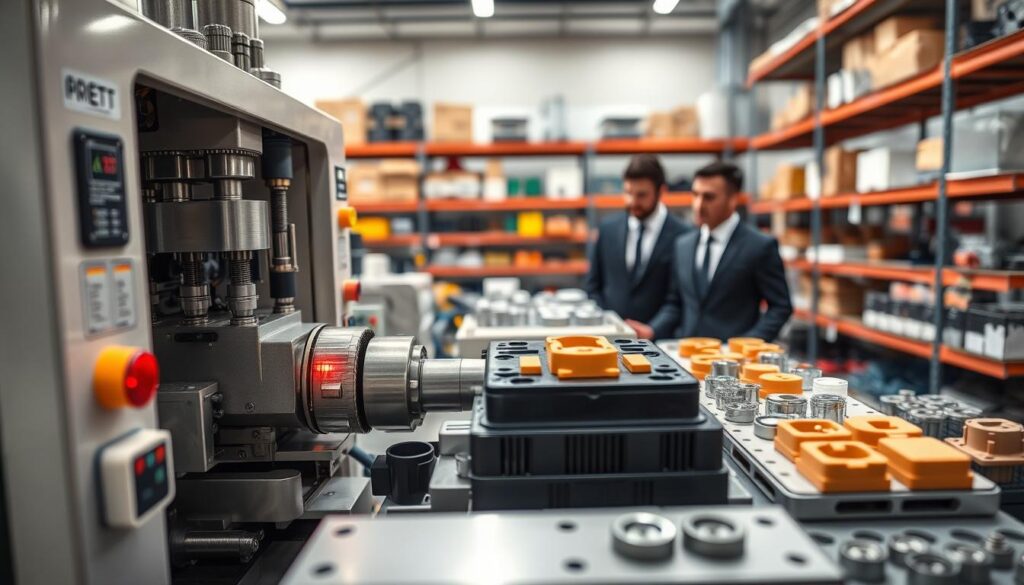
How do makers create parts that mix metal and plastic well? The secret is insert molding. It wraps a metal part in plastic to make one solid piece.
This method makes parts strong and detailed. It’s great for many fields, like cars and medical tools. Insert molding makes high-quality parts with complex designs.
Key Takeaways
- Insert molding combines different materials into a single part.
- The process enhances product durability and performance.
- It’s widely used in industries like automotive and medical devices.
- Insert molding reduces production costs by minimizing assembly steps.
- The technique allows for complex designs and detailed features.
Definition and Overview of Insert Molding
The insert molding process wraps an insert in molten plastic inside a mold. It’s used across many industries to make complex parts with different materials.
Insert molding is a manufacturing process that mixes materials, like metal inserts, into one product. First, an insert is placed in a mold. Then, molten plastic is injected around it.
This method makes parts stronger, more durable, and functional. By adding inserts to plastic parts, makers can create complex shapes and improve how parts work.
Here’s a comparison of traditional molding and insert molding:
| Characteristics | Traditional Molding | Insert Molding |
|---|---|---|
| Material Complexity | Single material | Multiple materials |
| Part Strength | Limited by material | Enhanced by inserts |
| Design Flexibility | Limited | High |
In short, insert molding is a flexible and effective way to make complex parts. It boosts product performance and design options.
Insert Molding Process
Understanding the insert molding process is key for making top-quality products. It involves several important steps. Each step must be done with great care to get the best results.
Insert Preparation
The first step is insert preparation. Here, the inserts needed for the plastic parts are made or picked. These inserts can be from metals and add strength or extra features to the product.
A leading manufacturer’s quote shows how vital insert preparation is:
“The quality of the insert directly affects the quality of the final molded part. Ensuring that inserts are properly cleaned, inspected, and prepared is critical.”
Mold Preparation
Mold preparation is another key step. The mold must fit the inserts perfectly. This means making a mold with exact cavities for the inserts.

Insert Placement
After the mold is ready, the next step is insert placement. The inserts are carefully placed in the mold cavities. They must be placed right to be fully covered by plastic during molding.
Injection Molding Around Inserts
The last step is injection molding around inserts. Molten plastic is then injected into the mold, covering the inserts. This step needs careful control of temperature, pressure, and material flow. It ensures the inserts are fully covered and the part meets all specifications.
| Step | Description | Importance |
|---|---|---|
| Insert Preparation | Creating or selecting inserts to be molded into plastic parts. | High |
| Mold Preparation | Designing the mold to accommodate and position inserts. | High |
| Insert Placement | Positioning inserts within mold cavities. | High |
| Injection Molding | Injecting molten plastic to encapsulate inserts. | High |
Step-by-Step Guide to Insert Molding
To get the best results in insert molding, it’s key to follow a step-by-step guide. This method includes several important stages. These stages help make high-quality, long-lasting parts.
The first step is loading the inserts into the mold. It’s important to be precise. This ensures the inserts are in the right spot in the mold cavity.
After the inserts are set, the next step is injecting molten plastic into the mold. The plastic is pushed in under high pressure. This makes sure it fills the mold cavity fully and covers the inserts.
Once the plastic cools and hardens, the mold is opened. Then, the molded part is detached from the sprue. This step needs careful handling to prevent damage to the part or the inserts.
The insert molding process can be summarized in the following table:
| Step | Description |
|---|---|
| 1 | Loading inserts into the mold |
| 2 | Injecting molten plastic into the mold |
| 3 | Opening the mold |
| 4 | Detaching the molded part from the sprue |
By following these plastic molding steps, makers can create parts that meet the needed specs and quality standards.
Design Considerations for Insert Molding
To get the best results in insert molding, you need to think about several design factors. These factors affect how the process works. Understanding how different parts and the molding process interact is key.

Material Selection and Compatibility
Choosing the right materials for both the insert and the molded part is very important. The materials must work well together to create a strong bond. Using materials that don’t mix well can cause the part to fail. You should look at things like how materials expand with heat, their chemical resistance, and their strength.
- Make sure the materials can handle the heat of the molding process.
- Check if the materials can resist chemicals in the environment they’ll be used in.
- Look at the mechanical properties to see if the part can handle the needed stresses.
Mold Design and Insert Positioning
The mold’s design and how the insert is placed are key to a successful insert molding process. The mold must hold the insert firmly to avoid any movement that could cause defects. The way the insert is placed affects the part’s function and how it can be made.
- Make sure the mold holds the insert securely, keeping it in place during molding.
- Think about where the gate and runner should be to ensure good material flow around the insert.
- Design the mold for efficient cooling and easy removal of the molded part.
Tolerances and Dimensional Accuracy
Getting the right tolerances and dimensional accuracy is very important in insert molding. This is even more true when the parts need to fit together precisely. The design must consider the tolerances of both the insert and the molded part, as well as the molding process’s variability.
| Factor | Consideration |
|---|---|
| Insert Tolerances | Make sure the insert is made to fit within the mold’s tolerances. |
| Molding Tolerances | Take into account the molding process’s variability, like shrinkage. |
| Dimensional Accuracy | Check that the final part meets the needed size requirements. |
Cost and Efficiency Factors
Insert molding is great because it can make production more efficient and cheaper. It combines several parts into one, cutting down on extra steps needed later. This makes the whole process smoother and faster.
Assembly Time Reduction
Insert molding cuts down on assembly time by merging parts into one. This means no extra steps are needed, saving time and money. It also makes production faster, helping meet demand better.
Tooling Complexity and Production Volume
Creating tools for insert molding can be more complex than other methods. But, the cost of this complexity is worth it as production grows. As you make more, the cost per item goes down, making it a cost-effective choice for big orders.
New advancements in mold design and making have also helped. These changes have made complex molds cheaper to create. This has made insert molding even more appealing for many uses.
Quality Control and Inspection Methods
The quality of insert molded components is key. It’s not just about meeting specs. It’s about ensuring they work well and last long in different uses.
Manufacturers use a detailed quality control plan. They check the inserts before molding, watch the molding process, and inspect the finished parts carefully.
How they inspect insert molding parts depends on the part’s complexity and materials. They often use:
- Visual checks for surface issues
- Dimensional checks to ensure parts fit right
- Functional tests to see if parts work as they should
For custom parts, working with the maker is vital. This ensures the parts are up to standard and fit their purpose.

Here’s a table showing some quality control steps and their benefits in insert molding:
| Quality Control Measure | Benefits |
|---|---|
| Pre-molding insert inspection | Ensures inserts are defect-free, lowering the chance of bad final products |
| Process monitoring during molding | Allows for quick adjustments to keep molding conditions perfect |
| Post-molding dimensional analysis | Confirms final products match the size requirements |
By using these quality control steps and inspection methods, makers can create top-notch insert molded parts. These parts meet customer needs, whether for custom or large-scale use. A strong quality control plan is key to success in insert molding.
Applications of Insert Molding
Insert molding is very versatile and used in many industries. It helps make complex parts that work better.
Automotive Industry Applications
In cars, insert molding makes parts like sensors and switches. It mixes materials for stronger and better performance. For example, it’s used in airbag and ABS sensors.
Electronics & Electrical Applications
Insert molding is key in making electronics. It helps create parts like connectors and switches with high precision. It also makes these parts stronger and better at conducting electricity.
Medical & Healthcare Applications
The medical field uses insert molding for precise and safe devices. It makes medical tools, diagnostic gear, and implants. These parts must meet strict rules and high standards.
Consumer Products & Appliances
Insert molding is also used in making everyday items. It allows for complex shapes and mixes materials. This makes products like kitchen tools and gadgets more durable and attractive.
Knowing how insert molding works helps makers create new products. It’s great for combining materials and making complex shapes. This makes it a key part of modern making.
Benefits of Insert Molding
Insert molding makes products better and lasts longer. It’s great for many industries because of its benefits.
Improved Product Performance and Reliability
Insert molding mixes materials for better products. It makes products stronger and more reliable. For example, adding metal to plastic parts makes them more durable.
Key advantages of improved product performance include:
- Increased resistance to wear and tear
- Enhanced electrical or thermal conductivity
- Better dimensional stability
Enhanced Design Flexibility
Insert molding lets you design in new ways. You can make complex shapes and parts all in one. This leads to more creative and useful designs.
“Insert molding enables the creation of complex parts with integrated features, reducing the need for secondary operations and improving overall product quality.” –
Industry Expert
This design freedom means:
| Design Aspect | Benefit |
|---|---|
| Complex Geometries | Allows for more detailed designs |
| Multi-Component Integration | Reduces assembly needs |
| Material Variety | Allows different materials for different parts |
Cost Savings and Production Efficiency
Insert molding saves money and makes production faster. It cuts down on assembly steps and waste. This makes complex parts easier to make in one step.
The cost savings come from:
- Less labor needed for assembly
- Less material used
- Parts made faster
Increased Part Strength and Durability
Insert molding makes parts stronger and more durable. By mixing materials, parts can handle more stress and wear.

Insert molding offers many benefits. It improves product quality, design options, saves money, and makes parts stronger. It’s a key process for making high-quality, complex parts.
Challenges and Limitations of Insert Molding
Insert molding is a strong solution for many industries, but it has its limits. Knowing these challenges helps manufacturers improve their processes and get better results.
Insert Shifting and Bonding Issues
One big problem with insert molding is insert shifting. This happens when the insert moves from where it’s supposed to be, causing defects. Proper insert design and placement are key to avoiding this.
Another issue is the bond between the insert and the molded material. If the bond is weak, the product might fail. Surface preparation and material compatibility are important for a strong bond.
High Initial Tooling Costs
Insert molding needs special tooling to fit the inserts right. Making these tools is expensive, adding to high initial tooling costs. This is a big factor for companies thinking about insert molding.
The cost isn’t just money; the tooling complexity also means longer setup times. But, the long-term benefits and cost savings can make up for these costs.

| Challenge | Description | Mitigation Strategy |
|---|---|---|
| Insert Shifting | Movement of insert during molding | Proper insert design and secure placement |
| Bonding Issues | Insufficient bond between insert and molded material | Surface preparation and compatible materials |
| High Tooling Costs | Expensive tool design and manufacture | Long-term production planning and cost amortization |
Choosing an Insert Molding Service Provider
When looking for custom insert molded parts, picking the right service provider is key. A good insert molding service provider ensures quality and efficient production.
Consider the provider’s expertise, equipment, and quality control when making your choice. A provider with lots of experience can offer valuable advice on design and production.
Look at the provider’s capabilities, including their machinery and technology. This helps figure out if they can handle complex projects and make parts with precision.
Choosing the right provider also means checking their quality control processes. This includes how they inspect products and source materials. A provider with strong quality control ensures consistent quality and reduces defect risk.
By carefully choosing an insert molding service provider, businesses can find a reliable partner. This partner will meet their needs and help them reach their production goals.
FAQ
What is insert molding?
Insert molding is a way to make parts by molding plastic or other materials around a metal part. This creates a single, integrated component.
What are the benefits of using insert molding?
Insert molding makes products better, more flexible, and cheaper. It also makes production faster. It’s great for making complex shapes and cuts down on assembly time.
What are the key design considerations for insert molding?
Choosing the right materials and designing the mold are key. The insert must be well-designed and placed correctly for a good molding process.
What industries commonly use insert molding?
Many industries use insert molding, like cars, electronics, medical, and consumer goods. It’s good for making complex parts with different materials and functions.
How does insert molding improve product performance?
It makes products better by combining parts into one. This reduces assembly time and makes the product stronger.
What are some common challenges associated with insert molding?
Challenges include insert movement and bonding problems, high tooling costs, and needing special equipment and skills.
How do I choose the right insert molding service provider?
Look at their experience, equipment, quality control, and if they can meet your needs. These factors are important.
What is the role of material selection in insert molding?
Material choice is very important. The materials must work well together and with the molding process. This affects the product’s quality and durability.
Can insert molding be used with different types of materials?
Yes, insert molding works with many materials like plastics, metals, and rubber. The right material depends on the product’s needs.