
Laser Engraving: What Is It and How It Works
Ever wondered how detailed designs are made on different materials? It’s thanks to a technology that has changed how we make and customize things.
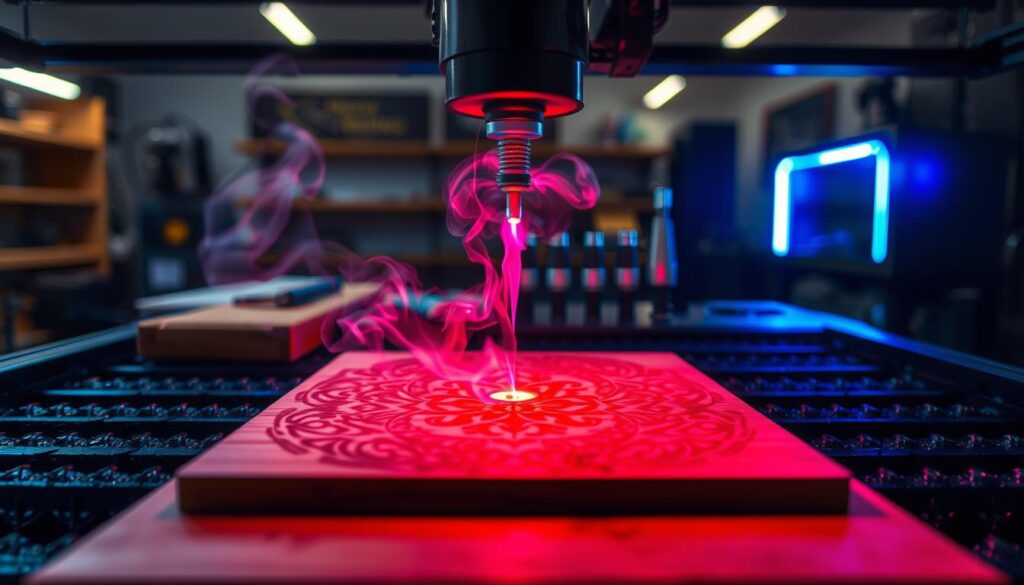
Laser engraving works by turning materials into gas to make lasting marks. The laser beam acts like a chisel, cutting into the material’s surface. This way, it creates detailed designs and patterns.
This tech is not only accurate but also works on many materials. It can handle everything from metals and woods to plastics and fabrics.
Key Takeaways
- Laser engraving is a precise method for creating permanent marks on various materials.
- The process involves vaporizing material layers to achieve the desired design.
- It is versatile and can be applied to metals, woods, plastics, and more.
- The technology enables the creation of intricately detailed designs.
- Laser engraving machines are used across different industries for customization and production.
What Is Laser Engraving?
Laser engraving uses a laser beam to mark materials with precision. It’s great for adding a personal touch to products. Think of a sports trophy with the winner’s name or a pen with a company logo.
Definition of Laser Engraving
Laser engraving is a process that removes material from a surface to create designs. It uses a laser beam to vaporize or melt the material. This results in the desired engraving.
This method is both precise and versatile. It’s used in many fields, from gifts to industrial marking. It works well with materials like metals, woods, and plastics.
So, laser engraving is key for adding unique touches to products. It’s useful for both looks and providing important information.
Brief History of Laser Engraving
Laser engraving has a rich history that spans several decades. It has seen continuous innovation. This technology has greatly changed the manufacturing world.
The idea of laser engraving started in the 1960s with the first laser by Theodore Maiman. This pioneering work laid the foundation for the development of laser technology in various fields, including engraving and cutting.

In the early days, laser engraving was mainly used for niche applications. This was because of the high cost and limited availability of laser technology. But as the technology improved and became more affordable, it started being used in many industries. These include signage, jewelry, and industrial manufacturing.
Key Milestones in Laser Engraving History
- 1960: Invention of the first laser by Theodore Maiman.
- 1970s: Early adoption of laser technology for industrial applications.
- 1980s: Advancements in laser technology leading to increased precision and efficiency.
- 1990s: Widespread adoption of laser engraving in various industries.
The advancements in laser technology have greatly improved laser engraving. Today, laser engraving machines can make very detailed designs with high accuracy. This makes them very important in many manufacturing processes.
“The laser technology has revolutionized the manufacturing industry by providing a precise and efficient method for engraving and cutting various materials.”
Looking at the early laser engraving technology and today’s systems shows a lot of progress. This progress is a result of the advancements in laser technology.
| Feature | Early Laser Engraving Systems | Modern Laser Engraving Systems |
|---|---|---|
| Precision | Limited precision | High precision |
| Speed | Slow | Fast |
| Material Compatibility | Limited materials | Wide range of materials |
The history of laser engraving shows how fast laser technology has advanced. It has become a key part of modern manufacturing.
Is Laser Engraving the Same as Laser Cutting?
Laser engraving and laser cutting both use laser technology. But they serve different purposes. Laser engraving is for making precise marks and designs on materials. Laser cutting, on the other hand, cuts through materials with great accuracy.
Differences Between Laser Engraving and Laser Cutting
The main difference is in their purpose and how they process materials. Laser engraving creates detailed designs and text on surfaces. It removes a small amount of material, leaving a lasting mark.
Laser cutting cuts through materials completely. It needs more power to cut through. This makes it perfect for complex shapes and designs.
“The key to understanding the difference between laser engraving and laser cutting lies in their distinct applications and the level of material processing involved.” – Expert in Laser Technology
Here’s a quick summary of the differences:
- Laser engraving is for surface marking and engraving.
- Laser cutting is for cutting through materials.
- The depth of material processing differs significantly between the two technologies.
Knowing these differences helps choose the right technology for your project. Whether you need to engrave or cut, pick the one that fits your project’s needs.
How Does Laser Engraving Work?
To understand laser engraving, we need to see how the laser interacts with the material. The process starts with the laser hitting the material, causing it to heat up a lot.
The Laser Engraving Process
First, the design is prepared and the laser engraver is set up. Then, the laser beam hits the material. Depending on how long it stays, the material changes color or even burns away.

- Design Preparation: The design is created or imported into the laser engraver’s software.
- Material Preparation: The material is prepared and put into the laser engraver.
- Laser Configuration: The laser engraver is set up based on the material and the desired look.
- Engraving: The laser beam is applied to the material, changing it as needed.
Knowing these steps helps us see the precision and control laser engraving offers.
5 Types of Laser Engraving Machines
Laser engraving machines come in many types to meet various needs. The technology has grown a lot, making different machines for specific uses.
There are several main types of laser engraving machines. Each has its own features and uses. These include Fiber Lasers, CO2 Lasers, Hybrid Lasers, UV Lasers, and others.
Fiber Lasers are great for marking metals. They work well on materials like stainless steel and titanium because of their high precision.
CO2 Lasers are very versatile. They are used for engraving on materials like wood, acrylic, and glass. They are good for detailed designs and patterns.
Hybrid Lasers mix different laser technologies. This makes them flexible for working with many materials, from metals to non-metals. They are great for many industrial uses.
UV Lasers are perfect for precise marking. They work well on materials that are sensitive to heat, like some plastics and semiconductors. They can add a lot of detail without harming the material.
Knowing about the types of laser engraving machines and what they can do is key. It helps choose the right machine for your needs. Whether for work or art, picking the right machine can make a big difference in quality and efficiency.
Think about the material and what you want to achieve. Then, pick the laser engraving technology that fits your needs best.
Materials Used for the Laser Engraving Process
Different materials can be used for laser engraving, depending on the desired outcome and the type of laser engraver. Laser engraving technology is versatile. It can be applied across various industries and applications.
Some common materials for laser engraving include metals, wood, glass, and plastics. Each material has its own properties. They are suited for different types of projects.
- Metals: Metals like stainless steel, aluminum, and copper are popular. They are durable and show high contrast through engraving.
- Wood: Wood is versatile for engraving. It can have detailed designs and patterns. Different woods offer different textures and colors, making the product more appealing.
- Glass: Glass engraving is great for decorative items, awards, and personalized gifts. The laser engraving on glass creates a frosted effect, making it unique.
- Plastics: Plastics like ABS, acrylic, and polycarbonate can be engraved. They are often used for signage, labels, and other customized items.
The choice of material depends on the desired application and the type of laser engraving machine used. Some machines are better for engraving metals, while others are better for wood or plastics.

When choosing a material for laser engraving, consider its thickness, density, and how it reacts to the laser. Knowing these factors helps achieve the best engraving quality. It also ensures the product lasts long.
Laser engraving has many uses, from industrial marking and signage to artistic creations and personalized gifts. Its ability to precision-engrave various materials makes it valuable in many fields.
Advantages of Laser Engraving
Laser engraving is precise and flexible, beating traditional methods. It can easily create complex designs. This is great for projects needing detailed work.
This method is non-contact, which means it’s safe for delicate materials. It also ensures the final product is just right, without extra steps.
Laser engraving works on many materials like metals, woods, and plastics. This makes it useful in many fields, from signs to decorative items.
Key Advantages of Laser Engraving:
- High precision and accuracy
- Non-contact process reducing material damage
- Flexibility in engraving various materials
- Ability to engrave complex designs
- Efficiency in production with minimal waste
Let’s look at how laser engraving compares to traditional methods. We’ll see how it stacks up in precision, speed, and material use.
| Characteristics | Laser Engraving | Traditional Engraving |
|---|---|---|
| Precision | High | Variable |
| Speed | Fast | Variable |
| Material Compatibility | High | Limited |
In summary, laser engraving is a top choice for many. Its precision, flexibility, and efficiency make it popular in many industries.
Disadvantages of Laser Engraving
Laser engraving is great for detailed designs, but it has its downsides. One big issue is the slow processing time for large or complex designs. This can slow down work in places that need to make lots of items fast.
Another problem is the need for specialized training to use laser engravers. People need to learn how to set up the machine for different materials and designs. This can take a lot of time and money.
Also, laser engraving doesn’t work well with all materials. Some plastics and shiny materials can be hard to work with. This might cause inconsistent results or damage to the equipment.
The cost of laser engraving machines is very high, which is a big problem for small businesses or hobbyists. Also, keeping the machine in good shape, like replacing parts, adds to the cost.
There are also environmental and health concerns with laser engraving. It can release fumes and there’s a risk of eye damage from the laser. So, it’s important to have safety measures and good ventilation.
In summary, laser engraving has many benefits, but it’s important to know its limitations. By understanding the disadvantages of laser engraving, users can make better choices. This helps them prepare for the challenges it brings.
Applications of Laser Engraving
Laser engraving is used in many ways, from making things in factories to creating art. It’s known for its accuracy, flexibility, and ability to work with many materials.
In factories, laser engraving marks parts and products with permanent info like numbers and logos. This is key in car and plane making, where knowing where parts come from is vital.
Industrial Applications:
- Marking of industrial parts and tools
- Identification of medical devices and equipment
- Engraving on jewelry and watches
But laser engraving isn’t just for factories. Artists and designers use it to make detailed designs on wood, glass, and metal.

The medical field also uses laser engraving a lot. It marks medical tools and devices with serial numbers and logos. This helps with tracking and meeting rules.
Artistic and Medical Applications:
- Creation of customized gifts and promotional items
- Engraving on medical devices and instruments
- Artistic designs on various materials
Laser engraving is very useful in many areas. It offers a precise and quick way to mark and engrave many materials.
What Are the Differences Between Laser Marking, Laser Etching, and Laser Engraving?
Laser marking, etching, and engraving are often confused with each other. But they serve different purposes and produce different results. Knowing the differences is key to picking the right technology for your needs.
Key Differences
Laser engraving removes material to create deep marks. It’s great for tasks that need a lot of material removal. Laser etching, on the other hand, changes the surface without removing much material. Laser marking makes permanent marks on materials, using methods like annealing or foaming.
The main difference is in how much material is removed and the finish. When choosing, think about the material and what you want to achieve. For example, laser engraving is perfect for detailed designs on wood or plastic. Laser marking is better for marking products on metals.
Understanding laser marking, etching, and engraving helps users get the best results. Whether for work or art, picking the right laser tech is vital for success.
FAQs
What is laser engraving?
Laser engraving is a technique used in metalworking, woodworking, and plastics that modifies a material’s surface by applying a powerful laser to produce patterns, designs, or images.