
Plasma Cutting: Working Principle and Advantages
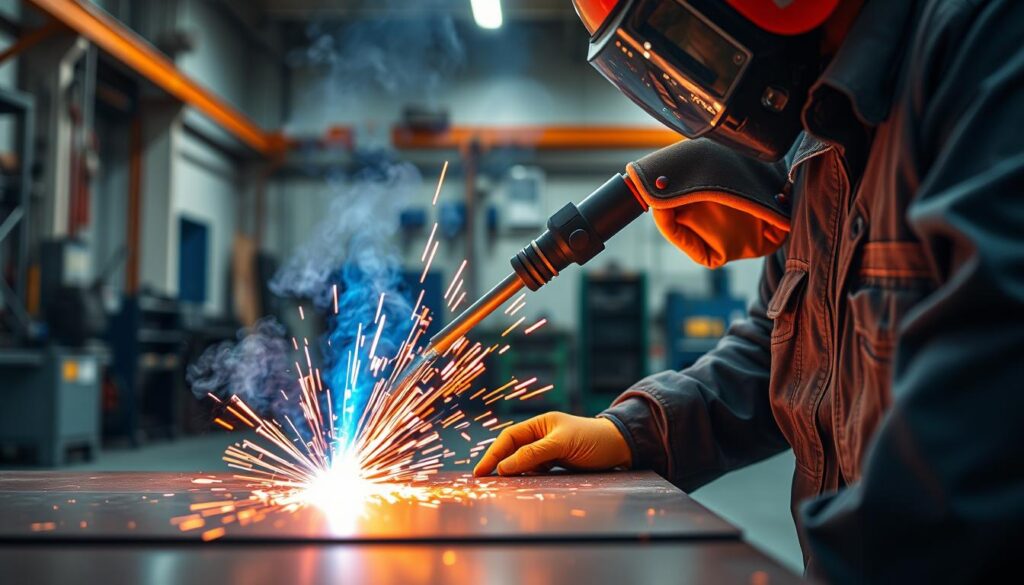
Can a method that uses ionized gases heated to over 20,000°C change how metal is made? This question is very important for understanding plasma cutting. It’s a way of cutting metal with heat that has changed how businesses work with it.
Plasma cutting is a very precise, fast, and flexible way to cut through materials that conduct electricity. It’s a very important skill in a lot of fields. This makes it an important step in making metal today.
Key Takeaways
- Learning the basics of plasma cutting and how it works.
- Understanding the benefits of plasma cutting for making metal parts.
- Looking into the fields that benefit from plasma cutting technology.
- Finding out how fast and accurate plasma cutting is.
- Learning how plasma cutting can be used on different types of materials.
Introduction to Plasma Cutting
Plasma cutting has come a long way since it started in 1957. It started with the Gas Tungsten Arc Welding (GTAW) process. It’s now a very important way to cut metals quickly and with great accuracy.
There are many new ideas along the way of plasma cutting. It wasn’t as advanced at first, but it quickly caught on. It could cut through metals that were hard to work with before. Nowadays, it’s used in a lot of fields, such as art, construction, and making metal.
“Plasma cutting has revolutionized the metal fabrication industry by providing a fast, efficient, and cost-effective method for cutting complex shapes and designs in metal.”
Industry Expert
Adding computer numerical control (CNC) systems was a big step forward. This made cutting more accurate, which let for more detailed designs. Here is a table that shows important events in the history of plasma cutting.
| Year | Development |
|---|---|
| 1957 | Plasma cutting technology is first developed from GTAW process |
| 1970s | First commercial plasma cutting systems are introduced |
| 1990s | Integration of CNC systems with plasma cutting technology |
| 2000s | Advancements in plasma cutting lead to higher precision and efficiency |
Plasma cutting is now used in a lot of different fields, from large-scale manufacturing to custom metalwork. It is important in many fields because it can cut through different materials. Plasma cutting will probably get even better as technology keeps getting better.
What Is Plasma Cutting?
A hot plasma jet can cut through metals in a process called plasma cutting. It cuts through a lot of different kinds of metal very well.
To do this, you need to make a quick jet of ionized gas, which is called plasma. This plasma can melt and cut through metals. When gas is ionized in the plasma torch, it makes plasma.
Key Components of Plasma Cutting:
- Ionized gas (plasma)
- Electrically conductive materials
- High-velocity jet
- Plasma torch
The first step is to ionize the gas in the torch, which makes plasma. After that, this plasma is pushed through a nozzle. It turns into a fast jet that hits the material that needs to be cut.

The plasma jet hits the material and melts it, pushing it away. This goes through it. Many industries use plasma cutting because it is very precise and works quickly.
| Material | Conductivity | Cutting Efficiency |
|---|---|---|
| Steel | High | Excellent |
| Aluminum | High | Good |
| Stainless Steel | High | Excellent |
In short, plasma cutting is a quick and flexible way to cut metal. It makes precise cuts with ionized gas.
Plasma Cutting Process & Principle
Plasma cutting is a complicated process that turns gas into plasma by using an electric arc. This is important to know in order to understand how it works and what makes it better than other methods.
How Plasma Is Generated
An electric arc, gas, and a nozzle are used to make plasma in plasma cutting. The arc turns the gas into plasma by ionizing it. Then, this plasma is pushed through the nozzle, where it gets hotter and faster.
The gas that is used is very important. It changes the properties of the plasma arc. Some common gases are argon, nitrogen, and compressed air. Adding hydrogen or other gases makes cutting easier.
Plasma Arc and Material Melting
The cutting process is centered on the plasma arc. It melts metal when it comes out of the nozzle. Then, its high speed blows away the melted metal, cutting through it.
There are a number of things that affect the quality of the cut. These are the power of the plasma arc, the type of gas, and how quickly the torch moves over the material.
| Factor | Influence on Cutting |
|---|---|
| Plasma Arc Power | Determines the thickness of material that can be cut |
| Type of Gas Used | Affects the quality and speed of the cut |
| Cutting Speed | Influences the precision and cleanliness of the cut |
To make plasma cutting better, you need to know these things. Operators can make high-quality cuts on different metals by changing the arc power, gas, and speed.
Components of a Plasma Cutting System
To get the best results, you need to know what parts make up a plasma cutting system. A plasma cutting system has a lot of important parts. They all work together to help cut things.
Power Supply
The power supply is very important. It provides the plasma arc with the electricity it needs. It makes sure the power is steady and correct.
Torch and Electrode
The torch helps the plasma arc find the material. The arc is made by the torch’s electrode. The quality of the cut is greatly affected by the type and condition of the electrode.
Gas Supply & Nozzle
The gas supply system provides the plasma with the gas it needs, such as argon, nitrogen, or oxygen. The plasma arc takes shape from the nozzle. This makes the cut better and more exact.
Control System / CNC Integration
The control system manages the plasma cutting process. It sets the height of the torch, the gas flow, and the arc voltage. With CNC (Computer Numerical Control), cutting is automated and very accurate.
| Component | Function | Importance |
|---|---|---|
| Power Supply | Provides electrical energy | Essential for generating plasma arc |
| Torch and Electrode | Directs plasma arc and creates the arc | Critical for cutting quality and precision |
| Gas Supply & Nozzle | Provides gas and constricts plasma arc | Improves cutting precision and quality |
| Control System / CNC Integration | Manages cutting process and enables automation | Enhances precision, repeatability, and productivity |

Types of Plasma Cutting Machines
There are now many machines that use plasma cutting technology. These can be anything from simple tools you hold in your hand to fully automated systems. Because of this growth, plasma cutting is now more widely available and useful for many industries.
Manual Plasma Cutters
Plasma cutters that are manual are made to be used by hand. They are easy to carry and can be changed. They are good for small jobs, repairs, and things that don’t need to be done with a lot of accuracy.
Key Features:
- Portable and lightweight
- Easy to use for basic cutting tasks
- Cost-effective for small operations
Mechanized / CNC Plasma Systems
Automated cutting tools are CNC plasma systems or mechanized plasma systems. They are very accurate and can make cuts that are the same every time. They are great for cutting complex shapes and large amounts of material in industrial settings.
Advantages include:
- High accuracy and precision
- Ability to cut complex geometries
- Increased productivity for large-scale operations
A comparison of manual and mechanized plasma cutting systems is provided in the table below:
| Feature | Manual Plasma Cutters | Mechanized / CNC Plasma Systems |
|---|---|---|
| Operation | Handheld, manual control | Automated, CNC controlled |
| Precision | Lower precision, suitable for basic tasks | High precision, ideal for complex cuts |
| Cost | Generally lower upfront cost | Higher upfront cost, but increased productivity |
Materials Suitable for Plasma Cutting
Plasma cutting is great because it can cut through a lot of different things. This is why it’s popular in many areas, like building and making things.
Plasma cutting works well on a lot of different kinds of materials. This cutting method works best with each material because of its unique properties.
Steel & Mild Steel
Plasma cutting is often used to cut steel and mild steel. The process works well on these metals because they conduct electricity. This is great for making and building things.
Stainless Steel
Stainless steel is strong and doesn’t rust easily. You can also cut it with plasma cutting. This method keeps the steel in good shape and makes clean cuts.
Aluminum & Non-Ferrous Metals
Plasma cutting can cut through metals that are hard to cut, like aluminum. It cuts aluminum cleanly without bending it, which is great.
The table below shows the main features of materials that can be cut with plasma cutting:
| Material | Conductivity | Cut Quality |
|---|---|---|
| Steel & Mild Steel | High | Excellent |
| Stainless Steel | Medium | Good |
| Aluminum | High | Very Good |
| Other Non-Ferrous Metals | Varies | Good to Excellent |

In short, plasma cutting is a useful and adaptable way to cut a lot of different things. Some of these are steel, stainless steel, aluminum, and other metals. It is a top choice in many industries because it can make high-quality cuts.
Advantages of Plasma Cutting
People know that plasma cutting is cheap and can easily cut complicated shapes. Because of its benefits, it’s an important method in many fields.
One of the best things about plasma cutting is how accurate it is. It cuts straight with a small kerf width. This makes the cuts better and cuts down on waste.
Another great thing about plasma cutting is that it can be used for a lot of different things. It can cut through a lot of things, like steel, stainless steel, aluminum, and more. It can also work with different thicknesses.
Plasma cutting is also faster than other ways. It’s great for both small and big projects because it’s fast and accurate.
- Cost-effectiveness because of less waste of materials and energy
- Cutting with great accuracy and a small kerf width
- Ability to cut different types of materials and thicknesses
- Quick processing times
- Ability to cut out complicated shapes and designs
In short, plasma cutting is a useful method in modern manufacturing. Few other methods can match its speed, accuracy, and flexibility.
Limitations and Disadvantages
Plasma cutting has a lot of good points, but it also has some bad ones. One big problem is that it makes fumes when you cut it. If you don’t have good ventilation, these fumes can be harmful.
The process uses an arc of plasma at a high temperature. Over time, this can wear down the electrode. This wear not only makes the cuts worse, but it also costs more because you have to replace the electrodes more often.

Another issue is that thin materials can get distorted. This happens because the cutting process gets very hot.
The table below shows some of the main problems and drawbacks of plasma cutting:
| Limitation/Disadvantage | Description | Impact |
|---|---|---|
| Fume Production | Generation of hazardous fumes during cutting | Health risk if not properly ventilated |
| Electrode Wear | Wear and tear on the electrode due to high-temperature plasma arc | Increased operating costs and reduced cut quality |
| Material Distortion | Distortion in thinner materials due to high temperatures | Affects the accuracy and quality of the cut |
Knowing these limits is important for improving plasma cutting. You can make your plasma cutting safer and more effective by knowing about these problems and how to fix them.
Applications of Plasma Cutting
Plasma cutting is used in a lot of different fields, like making parts for machines and making art. It is very useful because it can be both accurate and flexible.
Metal Fabrication & Industrial Use
Plasma cutting is a great way to cut through thick metals with a lot of precision. This is very useful for making large machines and tools.
Making parts for machines and buildings is one of the many things that industrial uses. Plasma cutting is very accurate, which makes parts fit perfectly. This cuts down on waste and increases efficiency.
| Industry | Application | Benefit |
|---|---|---|
| Metal Fabrication | Cutting metal parts | High precision, reduced waste |
| Industrial Manufacturing | Production of machinery parts | Increased efficiency, accuracy |
Construction and Structural Cutting
Plasma cutting is used in construction to cut structural steel and other metals. It’s important for making frames for buildings and other structures. It is important for modern building that it can cut complex shapes.
Plasma cutting also makes building safer. It cuts down on the need for dangerous ways to cut things by hand.
Artistic and Custom Metalwork
Plasma cutting is also used to make custom metalwork and art. It is used by artists and craftsmen to make intricate designs in metal. You can use these designs to make sculptures, decorative items, and custom furniture.
Artists can make complicated designs because plasma cutting is so precise. It would be hard or impossible to make these designs using traditional methods.
In summary, plasma cutting is useful in a lot of different fields. In many fields, it’s an important piece of technology.
Safety Considerations in Plasma Cutting
Safety is very important when using plasma cutting technology. You should wear the right gear and take the right steps to stay safe. This is because plasma cutting can get very hot, give off a lot of light, and use dangerous materials.
It’s important to wear the right clothes. To keep from getting burned by sparks and hot pieces, you should wear pants and jackets that don’t catch fire. You also need to wear protective eyewear. A welding helmet with a shaded lens (shade 5–8 for plasma cutting) protects your eyes from the bright light.
Having good air in your office is also important. Plasma cutting can let out dangerous fumes and particles. Adequate ventilation systems get rid of these risks, making the air safe to breathe.
Keeping the area clear of flammable things is another safety step. Also, be sure to read and follow the instructions that came with your plasma cutter. It’s also important to teach your team how to cut safely. Checking your tools and following safety rules can greatly lower the chances of an accident.

You can make plasma cutting safer by paying attention to safety and following these tips. This makes sure that everyone has a safe and productive place to work.
Conclusion
Plasma cutting is a very accurate way to cut through metal. People use it in a lot of different fields, like art, metalworking, and building. This method uses a plasma torch to cut through metals, which is both precise and quick.
The process works by making a plasma arc. This arc melts and pushes the material out, leaving a clean edge. The system has a power supply, a torch, and a gas supply that all work together.
There are many good things about plasma cutting. It cuts quickly, accurately, and can make shapes that are hard to make. It’s a key part of modern manufacturing because it’s used in both industrial and custom metalwork.
It’s important to know how plasma cutting works. It helps us learn how safe it is and what it can do. Industries can do better work and make better products by using plasma cutting correctly.
FAQs
What does it mean to cut plasma?
Using an ionized gas to cut through materials that conduct electricity is what plasma cutting does.
What is the process of plasma cutting?
It works by making a plasma arc that melts the stuff. Gas flow then blows the molten metal away, making a cut.
What kinds of things can plasma cutting cut?
Plasma cutting can cut through a lot of different materials. This includes aluminum, stainless steel, mild steel, steel, and other metals that don’t contain iron.
What are the benefits of plasma cutting?
Plasma cutting is cheap and accurate. It can cut shapes that are hard to make and materials of different thicknesses.
What are the problems with plasma cutting?
It has some drawbacks, such as making fumes and wearing out electrodes. It also needs safety measures.
What safety measures should be taken when using plasma cutting?
You need clothes, glasses, and good airflow to stay safe. These ensure a safe work environment.
What kinds of plasma cutting machines are there?
Plasma systems can be either manual or mechanized/CNC. Each one has its own uses, features, and benefits.
How do you make plasma for plasma cutting?
To make plasma, you need to create an electric arc between the workpiece and the electrode. This makes the gas into plasma by ionizing it.
What are the parts of a plasma cutting system?
A plasma cutting system has a power supply, torch, electrode, gas supply, nozzle, and control system. These all work together to cut.