
Ever wondered how things like window frames and tubing are made so perfectly? It’s all thanks to a special manufacturing method.
This method turns small pieces into a continuous profile using heat and pressure. It’s not just fast but also makes many different products we use every day.
Knowing about this process is key for both makers and buyers. It’s the backbone of making many important items.
Key Takeaways
- The process transforms granular materials into continuous profiles.
- It involves the application of heat and pressure.
- This manufacturing method is highly versatile and efficient.
- It plays a critical role in making a wide range of everyday products.
- Understanding the process is important for both manufacturers and consumers.
An Overview of Plastic Extrusion
Plastic extrusion melts plastic and shapes it into a continuous product. It’s used in many industries because it’s efficient and versatile.
What Is Plastic Extrusion?
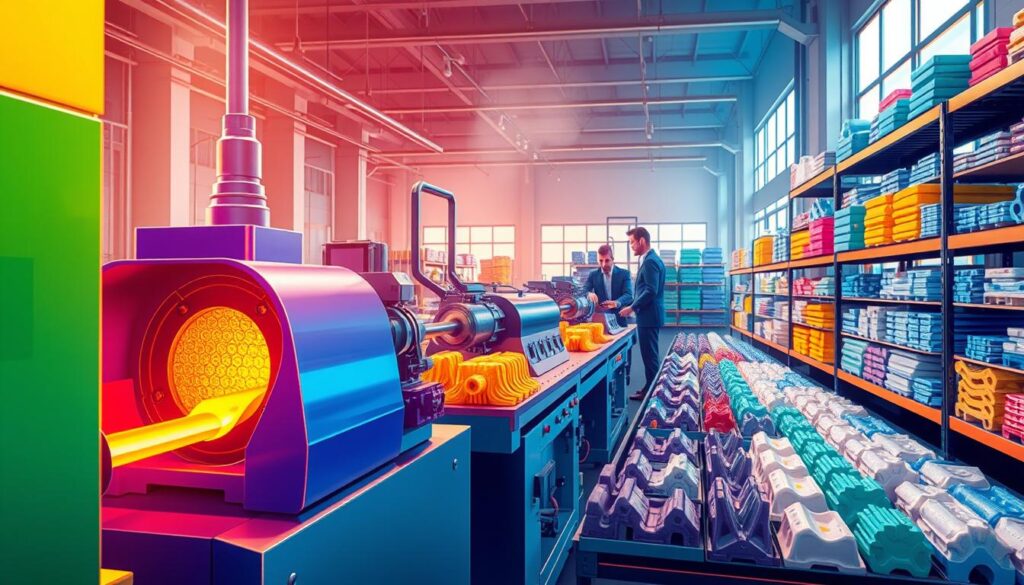
Plastic extrusion melts plastic into a shape. It starts with filling a hopper with small plastic pieces. Then, gravity moves the plastic to the barrel for processing.
Key components involved in the plastic extrusion process include:
- The hopper, where raw plastic material is loaded
- The barrel, where the plastic is melted
- The screw, which pushes the molten plastic forward
- The die, which shapes the plastic into the desired form
How the Plastic Extrusion Process Works
The process feeds plastic into the extruder, melting and mixing it. The molten plastic goes through a die to get its shape. Then, it’s cooled and cut to length.
The plastic extrusion process can be tailored for different plastics and outputs. Various extruders, like single-screw and twin-screw, control the process differently.
Key Benefits of Plastic Extrusion
Plastic extrusion is efficient, cost-effective for big batches, and makes complex shapes. It’s also versatile, handling many materials.
| Benefit | Description |
|---|---|
| High Production Efficiency | Plastic extrusion allows for continuous production, increasing overall efficiency. |
| Cost-Effectiveness | For high-volume production, plastic extrusion is a cost-effective method. |
| Versatility in Shapes | The process enables the creation of complex and varied shapes and profiles. |
Understanding the plastic extrusion process and its benefits helps manufacturers make high-quality plastic products efficiently.
Plastic Extrusion Through History
Plastic extrusion has a long history, starting centuries ago. It has become a key part of modern industry. This process helps make many everyday items.

Early Development
In the early 19th century, extrusion was first used in industry. It involved pushing materials like metal through a die. This early work set the stage for using it with plastics later.
In the early 20th century, plastic extrusion started to grow. As plastics became more common, makers began to find ways to shape them. The first plastic extrusion was simple, using basic machines and manual work.
Milestones in Evolution
There have been many important steps in plastic extrusion’s growth. The single-screw extruder was a big step forward. It was simple yet effective. Later, the twin-screw extruder brought more control and flexibility, allowing for more complex shapes and materials.
Improvements in die design were also key. Better dies meant more precise shapes and quality. Also, new cooling and sizing systems made the process more efficient and better.
The 20th century saw big changes with computer control and automation. Today’s extrusion lines use advanced systems for real-time monitoring. This ensures quality and cuts down on waste. These changes have made plastic extrusion very efficient and flexible.
Now, plastic extrusion keeps getting better. New materials and advanced machines are driving progress. This means it can make a wide range of products, from simple items to complex parts.
Different Types of Plastic Extrusion Processes
There are many plastic extrusion processes for different needs. They help make all sorts of plastic products. Each process is tailored for specific shapes, materials, and how much is needed.
Pipe and Tubing Extrusion
Pipe and tubing extrusion makes pipes, tubes, and other hollow items. It melts plastic and shapes it through a die. Then, it cools and cuts it to the right size.
Sheet and Film Extrusion
Sheet and film extrusion creates flat plastic sheets or films. It uses a flat die to melt and shape the plastic. The plastic is then cooled and rolled up.
Blow Film Extrusion
Blow film extrusion makes thin plastic films. It melts plastic into a circle, then inflates it. After cooling and collapsing, it’s rolled up.
Over-Jacket and Co-Extrusion Processes
Over-jacket extrusion wraps plastic around a core, like a wire. Co-extrusion makes a product with layers of different plastics. These methods create products with special properties, like insulation.
| Extrusion Process | Product Examples | Key Characteristics |
|---|---|---|
| Pipe and Tubing Extrusion | Pipes, tubes, hoses | Hollow products, variable diameters |
| Sheet and Film Extrusion | Plastic sheets, films, packaging materials | Flat products, variable thickness |
| Blow Film Extrusion | Thin plastic films, packaging materials | Thin, flexible films |
| Over-Jacket and Co-Extrusion | Insulated wires, composite products | Multi-layered products, specific properties |
In conclusion, plastic extrusion processes offer many ways to make plastic products. Knowing what each process does helps manufacturers pick the right one for their needs.
Types of Plastic Extruders
It’s important to know the different types of plastic extruders for your needs. There are mainly single-screw, twin-screw, and specialized extruders. Each has its own features and uses.
Single-Screw Extruders
Single-screw extruders are the most common. They have a single screw in a barrel that moves the plastic. These are simple and affordable, great for basic shapes.
Key features of single-screw extruders include:
- Easy to use and keep up
- Good for simple products
- Works with many plastics
Twin-Screw Extruders
Twin-screw extruders have two screws that work together. They offer more complex processing than single-screw extruders. They’re best for mixing and blending materials well.
The benefits of twin-screw extruders are:
- Great for mixing and blending
- Handles many plastics, even tough ones
- Flexible for different uses
Specialized Extruders
Specialized extruders, like ram and planetary extruders, are for specific needs. Ram extruders make big, complex parts. Planetary extruders are for precise, detailed work.
Specialized extruders offer:
- Make complex and large parts
- High precision and detail
- Meets specific material needs

Advantages of Plastic Extrusion
The plastic extrusion process has many benefits that make it popular in different industries. It has changed how plastic products are made. This method offers advantages for many industrial needs.
High Production Efficiency and Continuous Operation
One big plus of plastic extrusion is its high production efficiency and ability to run continuously. It makes long, continuous plastic products without stopping often. This boosts productivity.
- Continuous production capability
- Reduced downtime
- Increased output
Cost-Effectiveness for High Volume Production
Plastic extrusion is very cost-effective for making lots of products. It saves on labor and cuts down on waste, making it cheaper for big production runs. Plus, it uses less energy for each product made.
“The cost-effectiveness of plastic extrusion in high-volume production is a significant factor in its widespread adoption across various industries.”
Versatility in Shapes and Profiles
Plastic extrusion can make a wide variety of shapes and profiles. It can go from simple shapes like tubes and rods to complex designs. This makes it great for many uses.
Wide Material Compatibility
Plastic extrusion works well with many materials, including different plastics and compounds. This lets makers choose the best materials for their products. Whether it’s for strength, flexibility, or resistance to chemicals.
- Variety of plastic materials
- Compatibility with additives and compounds
- Customizable material properties
The Main Applications of Plastic Extrusion
Plastic extrusion is used in many areas, from building to making everyday items. Its wide use shows how important it is in different fields.

Construction and Building Materials
In construction, plastic extrusion is key. It makes pipes, tubing, and profiles for buildings. These items are strong, don’t rust, and are easy to put in place.
For example, PVC pipes are great for water systems because they last long and don’t react with chemicals. An expert says, “Plastic products in building have changed how we construct, making it better and more efficient.”
Packaging and Consumer Products
Plastic extrusion helps make plastic films, sheets, and containers for packaging. These items keep food, drinks, and other goods safe and make them easy to carry.
- Blown film extrusion makes plastic bags and wraps.
- Sheet extrusion creates packaging trays and boxes.
Automotive and Industrial Components
The car industry uses plastic extrusion for parts like seals, gaskets, and weatherstripping. These parts are vital for a car’s safety and performance.
Also, conveyor belts and hoses are made with this method. It shows how important plastic extrusion is in making things.
Specialty Uses
Plastic extrusion also serves special needs, like wire insulation and 3D printing filaments. Its ability to make precise materials is perfect for these tasks.
“The advancements in plastic extrusion technology have opened up new possibilities for innovative applications, transforming industries and enabling the creation of complex products.”
In summary, plastic extrusion is vital in today’s manufacturing. It’s used in construction, packaging, cars, and special items.
Celerity Precision: The Best Choice for Quality Plastic Extrusion Services
For businesses looking for top plastic extrusion services, Celerity Precision is the best choice. They offer unmatched expertise and service. With a wide range of manufacturing solutions, they are a one-stop shop for all your extrusion needs.
Company Overview and Expertise
Celerity Precision has a lot of experience in plastic extrusion. They have a team of skilled professionals and the latest technology. They can handle many extrusion processes, making sure your products are of high quality and meet your exact needs.
Core Capabilities and Equipment
The company can handle a wide range of extrusion processes, from simple to complex. They have advanced machinery for efficient production. This allows them to work with different materials and designs.
Key Equipment and Technologies:
- Advanced single and twin-screw extruders
- Precision tooling and die-making capabilities
- State-of-the-art quality control systems
Quality Assurance and Customer Support
Celerity Precision focuses on quality assurance. They have strict quality control measures in place. They also offer responsive support services. This ensures they meet your needs on time and are flexible to changes.
Case Studies and Success Stories
The company has a portfolio of successful projects across various industries. They show their versatility and ability to provide customized extrusion solutions. Whether it’s construction materials or consumer products, Celerity Precision can meet your needs.
| Industry | Product | Extrusion Process |
|---|---|---|
| Construction | PVC Profiles | Single-Screw Extrusion |
| Consumer Goods | Plastic Tubing | Twin-Screw Extrusion |
| Automotive | Sealing Profiles | Co-Extrusion |
Bonus: Plastic vs Aluminum Extrusion
When we talk about extrusion manufacturing, plastic and aluminum are two top choices. Knowing the differences between plastic and aluminum extrusion is key to picking the best material for your project.
Process Differences
The way plastic and aluminum are extruded is quite different. Plastic extrusion melts plastic pellets into the shape you need. Aluminum extrusion heats aluminum alloys and pushes them through a die to get the right shape.
Material Properties
Plastic and aluminum have unique properties. Aluminum is stronger and more durable, with better heat transfer. This makes it great for high-stress jobs. Plastic, though, is more flexible, resistant to corrosion, and can be made to have certain properties.
Industry Uses
Plastic is often used in packaging, consumer goods, and building. Aluminum, on the other hand, is used in aerospace, cars, and heavy industry. It’s chosen for its strength and durability.
Deciding between plastic and aluminum depends on your project’s needs. This includes the material’s properties, industry standards, and how it will be used.