
Plastic Welding: 8 Types of Techniques & Methods, and Their Advantages
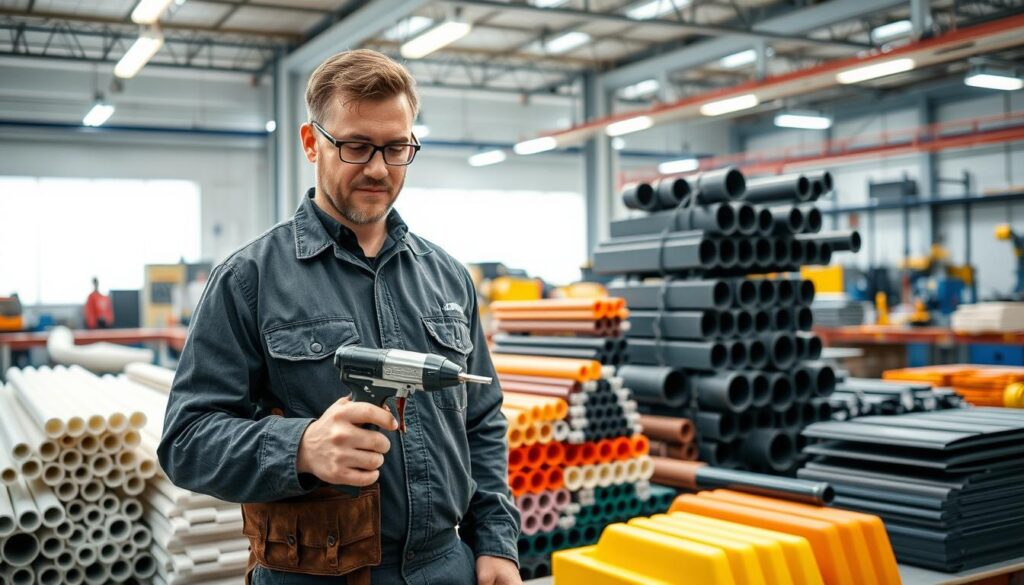
Could plastic welding really transform the landscape of manufacturing and repair? This question sparks our interest in exploring innovative ways to combine plastic materials.
Plastic welding involves melting and joining two pieces of plastic, creating a durable connection. In many cases, it can be a more effective choice than adhesives or screws.
This process consists of three key steps, ensuring it is both dependable and efficient for various industries. Understanding the various plastic welding techniques and methods allows for selecting the most suitable option for each task.
Key Takeaways
- Getting to know the fundamentals of plastic welding and the benefits it offers.
- Understanding the three key steps in the welding process.
- Delving into different plastic welding methods and how they can be used.
- Exploring the advantages of plastic welding techniques across various sectors.
- Finding the best plastic welding method to suit your unique requirements.
Introduction
In the modern manufacturing landscape, plastic welding stands out as an essential technique. It’s recognized for its strong and efficient bonding of thermoplastic materials. This is widely favored in various fields.
What is Plastic Welding?
Plastic welding is a method used to connect two plastic pieces by applying heat to them. The heat causes them to soften and cling to one another. Initially, the surfaces are readied, followed by heating, and then they are pressed together to create a solid bond.
Various methods exist for plastic welding, including hot-gas and ultrasonic welding. Every option comes with its unique advantages and purposes. This allows for a lot of versatility in plastic welding.
Why Use Plastic Welding Instead of Adhesives or Fasteners
Plastic welding offers a strength and durability that surpasses adhesives or fasteners. A properly executed weld can match the strength of the original material. This provides excellent structural strength.
It also helps save money by eliminating the need for additional materials. Additionally, it offers accuracy and is capable of managing intricate designs. This is a popular option for a lot of projects.
“The use of plastic welding in manufacturing has revolutionized the way we assemble parts, making it clean, efficient, and cost-effective.”
Industry Expert
Plastic welding stands out compared to other methods when it comes to affordability, efficiency, and creating secure seals. Let’s take a moment to compare:
| Joining Method | Strength of Joint | Cost-Effectiveness | Speed |
|---|---|---|---|
| Plastic Welding | High | High | Fast |
| Adhesives | Variable | Moderate | Slow to Moderate |
| Mechanical Fasteners | High | Low to Moderate | Moderate |
Grasping the benefits and uses of plastic welding helps manufacturers choose the best approach for their needs.
Overview of Common Plastic Materials for Welding
Knowing which plastics can be welded is crucial for any welding project. Plastic welding brings together thermoplastic materials using various techniques. The success of these projects depends on the kind of plastic selected.
Thermoplastics are the plastics most often used in welding. They can be melted and reshaped repeatedly while maintaining their chemical integrity. These are ideal for welding.
Thermoplastics Suitable for Welding
A variety of thermoplastics are utilized in welding, such as:
- Polyethylene (PE) is appreciated for its flexibility and resistance to chemicals, making it a popular choice for packaging and piping applications.
- Polypropylene (PP) is a flexible material that finds its way into various applications, from car parts to containers and even medical devices.
- Polyvinyl Chloride (PVC) is a strong and corrosion-resistant material, commonly found in plumbing systems and vinyl records.
- Acrylonitrile Butadiene Styrene (ABS) is a durable and impact-resistant material commonly found in electronics, automotive components, and construction applications.
- Polycarbonate (PC) is a transparent and durable material, making it an excellent choice for eyewear, medical devices, and electronics.

Materials Not Suitable
Some plastics just can’t be welded. Elastomers have a flexible and rubbery quality. Welding them can be quite challenging since they tend to change shape when exposed to heat.
Thermosets can’t be welded either. After being shaped, they cannot be remelted or reformed. This happens due to a chemical reaction that causes them to become rigid and unchangeable.
Here’s a list of materials that typically don’t lend themselves well to welding:
- Elastomers (e.g., rubber)
- Thermosets (e.g., epoxy, phenolic resins)
Grasping the traits of different plastics is important. This helps in determining if they can be welded and which welding method is most appropriate for the task at hand.
8 Plastic Welding Techniques & Methods
Choosing the right plastic welding technique is essential for creating strong joints, as there are many options available. The decision is influenced by the type of plastic, the shape of the part, and the specific requirements of the application.
1. Ultrasonic Welding
Ultrasonic welding connects plastic parts by utilizing high-frequency vibrations rather than applying direct heat. The vibrations generate friction at the joint, leading to the melting of the plastic and its bonding at a molecular level. The outcome is a neat, robust, and top-notch weld, commonly found in electronics, medical devices, and everyday products.
Key Pros
Very fast process with high production rates
No direct heat, making it safer for sensitive plastics
Produces strong, clean, and visually appealing joints
Key Cons
Not suitable for thick or high-moisture plastics
Limited to overlapping joints only
High tooling cost and setup time
2. Laser Welding
Laser welding employs a concentrated laser beam to carefully warm plastic components just beneath their evaporation temperature. After being softened, pressure is gently applied, allowing the joint to cool and create a clean and accurate weld. This approach works best for intricate or highly accurate parts.
Key Pros
Welding that is precise and tidy
Perfect for intricate designs and delicate features
Quick method, widely used in fast prototyping
Key Cons
The upfront cost of equipment can be quite significant.
This product may not work well with very thick plastics.
Concerns about porosity or fragile joints
3. Friction Welding
Friction welding generates heat by pressing plastic parts against each other, causing them to rub together. The friction creates heat that softens the joint surfaces, and as pressure is maintained, a solid bond is formed without the need for any external heat sources.
Key Pros
No consumables or special power supply required
Produces high-strength, distortion-free joints
Environmentally friendly and fast
Key Cons
Limited to certain joint shapes (mainly round or butt joints)
Expensive equipment
4. High-Frequency (HF) Welding
High-frequency welding employs electromagnetic waves to internally heat plastic materials. Pressure is applied until the materials come together and cool, forming a strong, even joint. This method is most effective when used with materials such as PVC and PET.
Key Pros
Very fast welding speeds
Strong and consistent joints
Minimal surface damage
Key Cons
Limited material compatibility
High heat radiation
Tool wear over time
5. Vibration Welding
In vibration welding, plastic parts gently rub against one another at a carefully controlled frequency and pressure. The heat generated by friction softens the joint area, and when the vibrations cease, the plastic cools down and solidifies into a strong weld.
Key Pros
No consumables needed
Energy-efficient process
Suitable for thin and irregularly shaped parts
Key Cons
Requires flat, horizontal joint surfaces
Limited range of compatible plastics
High machine cost
6. Hot Plate Welding
Hot plate welding involves using a heated plate to melt the surfaces of thermoplastic parts that need to be joined together. After being softened, the pieces are gently pressed together and left to cool, creating a strong and secure bond. This material is often utilized for creating sizable plastic parts.
Key Pros
Creates exceptionally strong and dependable welds
Perfect for big plastic components
Compatible with a variety of thermoplastics
Key Cons
This product may not work well with very thin plastics.
Our equipment needs regular upkeep.
7. Hot Gas Welding
Hot gas welding involves using a handheld gun that emits hot air or gas to gently soften the plastic parts along with a filler rod. After melting, the materials come together and cool down to form a solid connection. This approach is commonly employed for plastic fabrication and repairs right at the location.
Key Pros
Convenient and user-friendly
No need for heavy machinery
Minimal skill needed
Key Cons
It’s a gradual journey.
This isn’t ideal for thicker plastics.
Weaker joint strength when compared to more advanced techniques
8. Spin Welding
Spin welding connects plastic parts by spinning one piece against another while applying pressure. The friction creates heat, causing the surfaces of the joint to melt. When the rotation comes to a halt, the components cool down and create a solid connection.
Key Pros
A straightforward and energy-saving approach
No consumables needed
Works well with a variety of thermoplastics
Key Cons
Needs parts that are symmetrical when rotated
Significant expenses for setup and tooling
Comparison of 8 Plastic Welding Methods
| Welding Method | Heat Source | Best For | Joint Quality | Speed | Material Limitations | Cost Level |
|---|---|---|---|---|---|---|
| Ultrasonic Welding | High-frequency vibrations | Small, precise parts; electronics; medical components | Very high, clean, aesthetic | Very fast | Not suitable for thick or high-moisture plastics | High |
| Laser Welding | Focused laser beam | Complex, high-precision parts | Excellent, visually clean | Very fast | Limited thickness; risk of brittleness | Very high |
| Friction Welding | Friction-generated heat | Round or butt joints; dissimilar plastics | Very strong and uniform | Fast | Limited joint shapes | High |
| High-Frequency (HF) Welding | Electromagnetic field | PVC, PET, EVA sheets and films | Strong and consistent | Very fast | Limited compatible materials | Medium |
| Vibration Welding | Mechanical vibration | Thin or irregularly shaped parts | Strong and reliable | Fast | Flat, horizontal joints only | High |
| Hot Plate Welding | Heated metal plate | Large thermoplastic components | Very strong, hermetic | Medium | Not suitable for very thin plastics | Medium |
| Hot Gas Welding | Hot air or gas | On-site fabrication and repairs | Moderate | Slow | Not suitable for thick plastics | Low |
| Spin Welding | Rotational friction | Circular or symmetrical parts | Strong and consistent | Fast | Requires symmetrical parts | High |
Advantages of Plastic Welding
Plastic welding offers numerous advantages that set it apart from traditional methods of joining materials. Many fields rely on it due to its benefits.
Strong, Durable Joints
One significant advantage of plastic welding is its ability to create strong and durable joints. The welding process forms a strong connection between plastic parts. This creates a joint that is just as strong as the original material.
The strength of the joint is crucial in products where safety and performance are at stake.

Cost-Effectiveness
Plastic welding tends to be more affordable compared to other techniques. No adhesives or fasteners are required, which helps save on costs. Additionally, it requires minimal materials, which makes it a budget-friendly option for large-scale productions.
Versatility
Plastic welding offers a great deal of versatility. It’s compatible with a variety of plastics and shapes. It works wonderfully for everything from intricate industrial components to straightforward objects, catering to a wide range of needs.
Speed and Production Efficiency
Various plastic welding techniques are efficient, automated, and dependable. This enhances how quickly and effectively we can produce things. It helps cut down on labor expenses while maintaining quality, leading to fewer defects.
To sum it up, the advantages of plastic welding—such as durable joints, savings on costs, adaptability, and quick execution—are significant. It enhances product quality, reduces costs, and increases efficiency across various industries.
How to Choose the Right Technique
The appropriate plastic welding technique relies on a variety of factors. These consist of the type of material and the shape of the part. Every technique shines in its own unique way, suited for various applications. Understanding this is essential for achieving the best outcomes.
Based on Material Type
The type of material being welded really matters. Various types of plastics come with their own unique characteristics. For instance, different welding methods are required for thermoplastics such as PE, PP, and PVC.
Thicker plastics may require additional heat or pressure to work effectively. This is where hot-plate welding or extrusion welding plays a role. On the flip side, thinner plastics could benefit more from ultrasonic welding. This approach provides a careful and accurate way to manage things.
Based on Part Geometry and Joint Design
The shape of the part and the design of the joint are important too. Various techniques are more effective depending on the shape involved. For example, hot-gas welding works really well for large, intricate components.
For small, precise jobs, ultrasonic welding works better. It is ideal for small pieces or thin sheets.
Based on Production Volume, Speed Needs, and Cost Constraints
Cost, speed, and volume of production are also crucial. The automation, speed, and cost of various methods differ. For large-scale production, for instance, hot-plate and ultrasonic welding are quick and effective.
However, hot-gas welding or extrusion welding may be superior for intricate shapes or small batches. These techniques can be more accurate, but they are more manual.
Choosing the right technique allows manufacturers to create durable joints. They have the opportunity to save money and enhance their efficiency in their work.
Typical Applications & Industries
Plastic welding finds applications across various industries, highlighting its versatility. It’s not limited to a single industry; it finds applications across various fields. This is due to the numerous advantages it provides.

Automotive
In the car industry, plastic welding is used to create essential components such as bumpers, housings, and structural parts. It forms durable, enduring connections. These joints are built to withstand the stresses and strains that come with driving the car.
Plumbing, Tanks, Pipes, Containers, Water Systems
Plastic welding plays an essential role in plumbing and in the creation of tanks, pipes, and containers. This method offers a dependable approach to bonding plastic, ensuring that seals are secure and structures are robust. This is essential for our water systems and storage containers.
Electronics, Medical Devices, Consumer Goods, Packaging
In the electronics and medical device industries, plastic welding is utilized to create precise components. These parts require top-notch quality and cleanliness. It’s also used in consumer goods and packaging for sealed items and plastic products.
Industrial / Structural Applications
Plastic welding plays a crucial role in creating large plastic structures, tanks, and pipe systems for various industrial and structural applications. It creates durable, long-lasting connections. These joints are designed to take on heavy loads and withstand tough conditions.
Understanding the application of plastic welding benefits various industries. It improves manufacturing, extends the lifespan of products, and helps save money.
Limitations / Considerations
Plastic welding has many benefits, but it’s important to know its limits. It performs effectively only in specific situations. The factors to consider are the kind of plastic, the tools being utilized, and the expertise of the individual performing the welding.
Not All Plastics Are Weldable
One significant challenge with plastic welding is that not every type of plastic can be welded together. Thermosets and elastomers can’t be welded since they don’t melt when heated. Plastic welding isn’t the right fit for every industry that works with these materials.
Equipment Cost and Setup
The price of plastic welding equipment plays a significant role. Ultrasonic welding, laser welding, and high-frequency welding require specialized and costly equipment. This can be a problem for small businesses or those making small batches.
Skill & Process Control
Welding plastic takes a good amount of skill and precise control. Training operators and optimizing processes are essential for achieving quality welds. This helps guarantee that the welds are up to quality standards.
Material & Geometry Constraints
There are certain boundaries to plastic welding methods, influenced by the type of material and the shape of the parts involved. Certain techniques are particularly effective for thin sheets or circular components. Some people are capable of working with thicker materials or more intricate shapes. Understanding these limits allows for selecting the most suitable welding method for a task.
To sum it up, plastic welding is quite adaptable, yet it does have its boundaries. Grasping these concepts can assist manufacturers in determining whether plastic welding suits their requirements.
Conclusion
Plastic welding is a flexible and efficient method for bringing plastics together. It provides a variety of advantages in various fields. There are several techniques available, such as hot-gas welding, hot-plate welding, and ultrasonic welding, each suited for specific materials and requirements.
Plastic welding offers a variety of benefits. It forms robust and long-lasting connections, is budget-friendly, and enhances production efficiency. This is a popular option for numerous manufacturers. This material finds its place in various fields like automotive, plumbing, electronics, and industrial sectors.
With advancements in technology, the future of plastic welding appears promising. We have an opportunity to improve our equipment and enhance our process control. Understanding the various techniques and their boundaries allows manufacturers to enhance their efforts. In short, plastic welding is a reliable and efficient way to join plastics, with many uses and benefits.
FAQs
What is plastic welding?
Plastic welding is a method to join plastic parts together. It uses heat and pressure to make a strong bond.
Why is plastic welding preferred over adhesives or fasteners?
It’s chosen because it makes a strong and lasting joint. It’s also cost-effective and works well with many plastics.
What types of plastics are suitable for welding?
You can weld thermoplastics like PE, PP, PVC, ABS, and PC. But thermosets and elastomers don’t work well.
What are the different plastic welding techniques?
There are many techniques, like hot-gas welding and ultrasonic welding. Each has its own benefits and uses.
How do I choose the right plastic welding technique?
Pick a technique based on the plastic type, part shape, and how fast you need it. Also, think about the cost.
What are the advantages of plastic welding?
It offers strong joints, saves money, and is versatile. It’s also quick, making it a reliable choice.
What are the typical applications of plastic welding?
It’s used in many fields. This includes cars, plumbing, electronics, medical devices, and more.
What are the limitations of plastic welding?
It’s not for all plastics. It also depends on the equipment cost and the skill needed. Plus, some plastics and shapes are harder to work with.
Can all plastics be welded?
No, not all plastics can be welded. Thermosets and elastomers don’t work well. But thermoplastics can be welded in different ways.
What is hot-gas welding?
Hot-gas welding uses a heated gas to melt the plastic. Then, it’s pressed together to form a strong bond.
What is ultrasonic welding?
Ultrasonic welding uses vibrations to heat the plastic. This melts it and creates a strong bond.