
What’s Precision Machining? Process, Advantages, and Applications
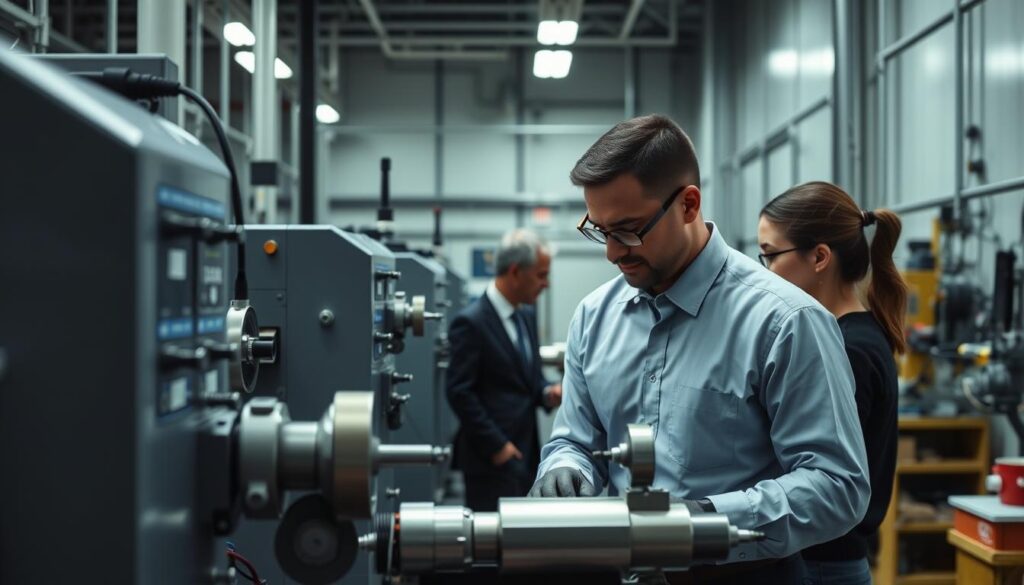
Is it possible for contemporary manufacturing to satisfy the growing need for parts with incredibly precise tolerances? Advanced manufacturing methods like CNC machining hold the key to the solution. The way we create complex parts has been altered by this process.
Precision machining creates parts with precise specifications by using sophisticated equipment and methods. In today’s manufacturing, it is essential. It enables us to precisely create intricate components.
Key Takeaways
- Knowing the fundamentals of precision machining.
- Investigating its importance in cutting-edge manufacturing.
- Discovering the uses for CNC machining.
- The function of precise machining in the creation of intricate components.
- Benefits of precision machining in production.
Introduction
In today’s manufacturing environment, precision machining is essential. It provides unparalleled accuracy and dependability. It is necessary for the production of parts for the automotive, medical, and aerospace industries.
What is Precision Machining
The goal of precision machining is to create parts with a high degree of accuracy. It makes use of cutting-edge equipment and CNC (Computer Numerical Control) technology. In order to achieve the proper size and finish, this method removes material.
CNC technology allows for exact control over the machining process. It enables the creation of intricate patterns and shapes. Making these using traditional methods is difficult or impossible.
Why Precision Machining Matters
In today’s manufacturing, precision machining is essential. It produces high-quality parts with precise tolerances. Its significance is evident in multiple ways:
- High Precision: Produces components with precise specifications.
- Complexity: Produces intricately designed, complex components.
- Repeatability: Maintains production consistency over extended periods of time.
- Material Flexibility: Able to work with a wide range of materials, including plastics, metals, and alloys.
Precision machining is essential to industries like automotive, medical devices, and aerospace. This demonstrates its significant role in contemporary manufacturing.
Core Processes & Techniques

The fundamental procedures of precision machining form its core. These consist of drilling, grinding, milling, and turning. These methods are essential for forming materials into exact components that adhere to tight specifications.
Turning (CNC Turning)
A cutting tool is used in CNC turning to extract material from a rotating workpiece. It’s ideal for creating spherical or cylindrical components. CNC turning is excellent for parts like shafts, pins, and bushings because it guarantees high precision.
Milling (CNC Milling)
CNC milling removes material from a stationary workpiece using rotating tools. It is adaptable and capable of creating intricate shapes like pockets and slots. With their ability to operate on multiple axes, CNC milling machines can produce intricate parts with remarkable accuracy.
Drilling / Boring
Drilling uses a rotating drill bit to create holes in a workpiece. Existing holes are precisely enlarged through boring. In order to ensure precise holes and cavities, both are essential for precision machining.
Grinding, Honing, Lapping & Surface Finishing
These procedures improve precise dimensions and surface finishes. Abrasive wheels are used in grinding, and surfaces are fine-tuned by honing and lapping. In order to ensure that parts meet standards during precision machining, surface finishing is crucial.
| Process | Description | Typical Applications |
|---|---|---|
| CNC Turning | Removing material from a rotating workpiece | Shafts, pins, bushings |
| CNC Milling | Using rotating cutters on a stationary workpiece | Complex geometries, slots, pockets |
| Drilling/Boring | Creating or enlarging holes | Holes, cavities |
| Grinding/Honing/Lapping | Achieving high surface finishes and precision | Surface finishing, precision parts |
Materials & Workpiece Preparation
In precision machining, material selection is crucial. Both the final quality of the part and the material’s ease of machining are impacted. The material selection affects the performance and longevity of the part as well as the tools required.
Common Materials
Metals, alloys, and plastics are just a few of the materials that precision machining can work with. Popular metals include titanium, stainless steel, and aluminum. They are robust, long-lasting, and corrosion-resistant.
Metals are mixed in alloys to improve their qualities. Hastelloy and Inconel, for instance, are utilized in harsh environments. They withstand corrosion and heat well.
| Material | Machinability | Common Applications |
|---|---|---|
| Aluminum | High | Aerospace, Automotive |
| Stainless Steel | Medium | Medical Devices, Food Processing |
| Titanium | Low | Aerospace, Biomedical Implants |
Material Selection Criteria
It can be difficult to choose the best material for precision machining. It entails examining cost, corrosion resistance, strength, and machinability. The ease of machining a material is known as its machinability.
“The machinability of a material is influenced by its composition, microstructure, and mechanical properties.” –
ASM Handbook, Volume 16: Machining
When choosing materials, the part’s intended use is also important. Because of their strength and light weight, materials like titanium and aluminum are used in aerospace.
Pre-machining Preparation
The workpiece must be prepared before beginning. This entails selecting the appropriate blank or billet size and inspecting it for flaws. Additionally, machining allowances must be added.
Preparing the workpiece is essential for accuracy and quality. To meet the necessary standards, meticulous planning and inspections are necessary.
Machinery, Tools & Equipment

The machinery, tools, and equipment are the foundation of precision machining. These are designed to provide results that are repeatable and highly precise. They are essential to fulfilling the stringent requirements of numerous industries.
CNC Machines
At the heart of precision machining are CNC machines. They improve accuracy, productivity, and reproducible outcomes. These devices, each for a distinct purpose, include lathes, milling centers, and multi-axis machines.
- CNC Lathes: These devices precisely control the movement of the cutting tool, making them ideal for turning operations.
- CNC Milling Centers: These multipurpose devices can perform a variety of operations, including milling, tapping, and drilling.
- Multi-axis machines are capable of handling intricate machining jobs while simultaneously operating on several surfaces.
Cutting Tools & Tooling
In precision machining, selecting the appropriate cutting tools is essential. The material and desired finish are taken into consideration when choosing tools such as end mills, drills, and grinding wheels.
- End Mills: These milling tools are available in various forms and coatings.
- Drills: Accurate holes are made in workpieces by precision drills.
- Grinding Wheels: These tools offer a superior finish when grinding.
Workholding & Fixturing
Chucks, vices, and clamps are examples of workholding devices that are essential for holding the workpiece while it is being machined. Fixtures are designed to firmly hold intricate workpieces.
- Chucks: These are mostly used for turning and hold the workpiece tightly.
- Vices: These tools are used in milling and provide a strong grip.
- Fixtures: These are made for specific workpieces and make sure they are held securely and accurately.
Coolants, Lubricants, Chip Removal & Temperature Control
In precision machining, coolants and lubricants are very important. They lower friction, stop tools from wearing out, and get rid of chips. For accurate machining, it’s also important to keep the temperature steady.
- Coolants: Bring the temperature down and get rid of chips.
- Lubricants: Lower the amount of friction between the tool and the workpiece to get a better finish.
- Chip Removal: It’s important to remove chips quickly so that the tool and workpiece don’t get damaged.
- Temperature Control: For precision and accuracy, the temperature must stay the same.
Process Workflow & Execution
There are a lot of important steps in the process of precision machining. It starts with a design and ends with a product that is ready to use. Every step is important for making parts that are accurate and of high quality.
CAD → CAM → Programming → Setup
The first step is CAD, which stands for computer-aided design. In this case, the part is made with very precise details. Then, computer-aided manufacturing (CAM) software changes this design into a language that machines can understand.
The CAM output tells the CNC machines what to do. It tells them how to make the piece. Setting up the machine and the workpiece is the last step. This includes picking the right tools and how to hold the piece of work.
Machining Execution (roughing → semi-finishing → finishing)
There are three main steps in machining. First, roughing takes away a lot of material to get the shape close to what it will be in the end. Then, semi-finishing makes the part even better.
The last step is to finish. Here, the part is made to the exact measurements. It gets the right size and surface finish.
Post-processing (heat treatment, surface treatment, inspection)
Parts may need to be treated after machining. This includes heating the material to make it better. It also includes surface treatment, which can make the part last longer or look better.
After that, there is an inspection to make sure the part meets all the requirements. Inspections can be very basic or very complex. They make sure the part is of the highest quality.
The process of precision machining shows how far modern manufacturing has come. Makers can get better results by making each step better.
Quality Control & Precision Assurance
Quality control and precision assurance are very important in precision machining. They make sure that parts fit within very tight tolerances. It’s not enough to just meet the specs; you also have to make sure that the quality stays the same from batch to batch.
Tolerance & Dimensional Accuracy
Tolerance is the amount that the set dimensions can change. In precision machining, dimensional accuracy is very important. Parts need to fit together perfectly. Advanced machinery and careful calibration are needed for tight tolerances.
Key factors influencing tolerance include:
- The ability and accuracy of the machine
- Wear and tear on tools and how to take care of them
- Properties and behavior of materials
- Conditions in the environment, like temperature and humidity
Surface Finish & Surface Quality

In quality control, the surface finish is very important. It affects both the part’s function and look. Surface quality impacts friction, wear, and corrosion resistance.
Common surface finishing techniques include:
- Grinding
- Honing
- Lapping
- Polishing
Measurement & Inspection Methods
It is very important to measure and check things correctly. They make sure that machined parts meet specifications. People use a lot of different tools and methods, such as gauges, Coordinate Measuring Machines (CMM), and metrology.
Inspection methods may involve:
- Looking for surface flaws with the naked eye
- Using CMM or gauges to measure dimensions
- Measurement of surface roughness
Process Consistency & Batch Repeatability
For batch repeatability, it’s important to keep the process consistent. It makes sure that every part meets high standards. This includes strict process control, regular maintenance of machines, and keeping an eye on quality.
Strategies for improving process consistency include:
- Making machining processes the same
- Setting up schedules for preventative maintenance
- Teaching employees how to do quality control
Applications & Use Cases
Precision machining is very important in many fields, such as electronics and aerospace. It makes parts that are very complicated with high accuracy. This is very important for parts that need exact measurements.
Aerospace Components
In aerospace, precision machining makes parts that can handle extreme conditions.Aerospace components like turbine blades and engine parts need precise machining. This ensures safety and performance.
“The aerospace industry demands the highest level of precision and reliability, making precision machining an indispensable process.”
A table showing some aerospace components made with precision machining:
| Component | Material | Tolerance |
|---|---|---|
| Turbine Blades | Titanium Alloy | ±0.01 mm |
| Engine Parts | High-Strength Steel | ±0.005 mm |
| Satellite Components | Aluminum Alloy | ±0.001 mm |
Automotive Parts
Precision machining is used to make parts for cars in the automotive industry. This includes parts for the engine and the transmission. It ensures these parts meet performance and safety standards.
Precision machining makes shapes that are hard to make and have very small tolerances. This is very important for modern cars.
Medical Devices & Instruments
In the medical field, precision machining is used. It makes things like surgical tools and implants that are used in medicine. Precision machining is perfect for these devices because they need to be very accurate.
Orthopedic implants and dental implants are two examples. Precision machining is used to make these.
Electronics & Precision Instruments
Precision machining is used by the electronics industry to make parts for electronics. This includes semiconductor equipment and connectors. Advanced machining methods make sure the accuracy is there.
Precision machining makes it possible to create detailed designs. This is important for making electronics that are smaller.
Advantages & Limitations

Precision machining uses cutting-edge technology to make parts with very high accuracy and complicated shapes. It has changed how we make things. This method is very important for parts that need to be exact and detailed.
Key Advantages
Precision machining is known for being very precise and able to make complex shapes. It’s great because it can make the same parts over and over again. This is very important in industries where parts must be the same.
It can also be used with a lot of different materials, such as metals, alloys, plastics, and composites. This makes it useful in a lot of areas, like aerospace, cars, and medical devices.
- Very precise and accurate
- Ability to deal with complicated shapes
- Repeatability for steady production
- Being able to work with different materials
Limitations & Challenges
Precision machining has its pros and cons, even though it has some good points. The high cost of the tools and skilled workers is a big problem. Some businesses may have trouble with this.
Setting up precision machining is also hard. It takes a lot of work and time. Some materials are hard to work with because they are hard or have other properties.
| Limitation | Description |
|---|---|
| High Cost | Expensive equipment and skilled labor |
| Setup Complexity | Meticulous setup and programming required |
| Material Restrictions | Difficulty with certain hard or brittle materials |
In short, precision machining has a lot of benefits, such as accuracy, complexity, and the ability to work with different materials. But, it also has challenges like high costs and setup complexities. Knowing these points is important for businesses that want to use precision machining.
Emerging Trends & Advanced Topics
New trends in precision machining are making it possible to make things in new ways. The industry is moving toward making things in more complicated and advanced ways as technology gets better.
Multi-axis / 5-axis Machining

Multi-axis and 5-axis machining are two big trends. These methods let us make shapes and patterns that were hard to make before. With multi-axis machining, we can work on more than one surface at a time. This speeds things up and makes them more accurate.
Exotic Materials and Hard Alloys Machining
More and more parts need to be made from special materials and hard alloys. People are making new tools and ways to machine these tough materials. This lets us make parts with unique qualities.
- Working with titanium and other hard alloys
- Utilization of sophisticated tool coatings and geometries
- Creation of specialized machining methods
Integration with CAD/CAM and Automation
By linking precision machining with CAD/CAM software and automation, things are getting done faster. CAD/CAM integration makes it easier to go from design to production. Automation lets machines do their jobs with little help from people.
- Design and manufacturing process that is more efficient
- More accuracy thanks to automated machining
- Lower costs and shorter production times
Future Directions
Nanoprecision machining and working with composite materials are two new fields that are opening up in precision machining. With these new tools, we can make even more complicated and advanced parts.
- Nanoprecision machining for very small parts
- Machining composite materials for use in cars and planes
- Combining AI and machine learning into machining processes
When you get precision machined products from professionals, you can use the newest tools and techniques. This makes sure you get parts that are of high quality and meet strict standards.
Conclusion
In today’s world of manufacturing, precision machining is very important. It is very accurate and dependable. It uses processes like turning, milling, drilling, and grinding to make complicated parts.
There are many benefits to precision machining. It can be very accurate, have a good surface finish, and work the same way every time. It is used in a lot of different fields, such as electronics, aerospace, cars, and medical devices.
Precision machining is great for making parts that need to be very accurate and have complicated shapes. When you choose precision machining, keep in mind the material, tolerance, and surface finish. Also, think about the cost, how hard it is to set up, and any material limitations.
Manufacturers can make better decisions if they know what precision machining is good at and what it’s not good at. As manufacturing changes, precision machining will still be important. It will help make parts of high quality and encourage new ideas.
FAQs
What is precision machining?
Precision machining is a way to make parts and components with high accuracy. It uses advanced machinery and techniques.
What are the core processes involved in precision machining?
Key processes include CNC turning, milling, drilling, and grinding. These help make precise parts.
What materials are used in precision machining?
It works with metals, alloys, plastics, and more. These materials are suitable for machining.
How is material selected for precision machining?
Choosing materials depends on machinability and application needs. The final product’s properties also matter.
What is the role of CNC machines in precision machining?
CNC machines are vital. They control machining operations precisely. This makes complex parts possible.
What is the importance of quality control in precision machining?
Quality control is key. It ensures parts meet specifications and prevents defects.
What are some common applications of precision machining?
It’s used in aerospace, automotive, medical devices, and electronics. It produces precise components.
What are the advantages of precision machining?
It offers high precision, complexity, and material flexibility. These make it perfect for complex parts.
What are some emerging trends in precision machining?
Trends include multi-axis machining and exotic materials. CAD/CAM and automation integration also drive innovation.
How is precision machining used in different industries?
It’s used in aerospace, automotive, medical devices, and electronics. It makes precise components and parts.
What is the significance of precision machining in modern manufacturing?
It’s vital for modern manufacturing. It produces accurate parts and components for various industries.