
Sheet Metal Welding: Common Methods and Tips for Welding
Sheet Metal Welding: Common Methods and Tips for Welding
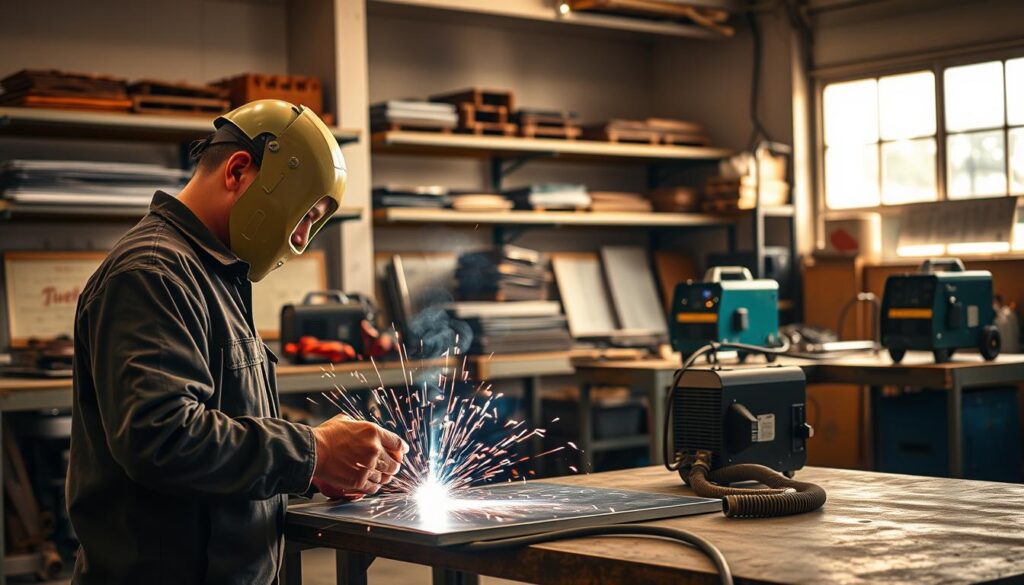
Can the right way to weld make or break a project to make metal? Yes, the answer is yes. How well you put metal parts together is what matters most.
Welding sheet metal is an important part of making metal. A lot of different fields use it. The right tips and techniques can make a big difference in how strong and good your work is.
Key Takeaways
- It’s important to know how to weld different types of sheet metal well.
- The best way to weld depends on what the project needs.
- Welding services for sheet metal need to be careful and precise.
- You can improve your welds by using welding tips.
- Knowing how to weld can help metal parts last longer.
Sheet Metal Welding Fundamentals
To achieve excellent results, welding sheet metal is a precise process that requires a thorough understanding of its fundamentals. It entails joining thin sheets of metal. To prevent distortion or damage, this calls for control and precision.
What Makes Sheet Metal Welding Unique
Welding thicker materials is not the same as welding thin sheet metal. It is more likely to distort and warp. Successful sheet metal welding relies on controlling heat input and employing the appropriate methods to lessen these problems. Because the surface condition has a significant impact on the weld quality, surface preparation is also essential.
Common Challenges in Sheet Metal Welding
Welding sheet metal is hard because you have to keep the structure strong and not let it bend. The table below lists some common problems and their solutions.
| Challenge | Description | Potential Solution |
|---|---|---|
| Warping | Distortion caused by uneven heating | Controlled heat input, proper clamping |
| Porosity | Gas bubbles in the weld | Proper surface cleaning, shielding gas |
| Lack of Fusion | Not fully joining metal pieces | Adjust welding technique, ensure proper fit-up |
Welders can improve the quality and dependability of their sheet metal welds by being aware of these problems and using the right techniques.
The Importance of Proper Sheet Metal Welding Techniques
To make strong welds, you need to use the right techniques for welding sheet metal. These methods help make sure the welds are safe and of good quality. They also help keep people safe and follow the rules of the industry.
Quality and Structural Integrity Considerations
It’s very important to keep the welds in sheet metal strong. It’s all about controlling the heat, making joints that work well, and choosing the right filler. For instance, controlling the heat input keeps the weld strong and stops it from warping. Here are some important things to remember:
- Choosing the best way to weld for the job
- Making sure the metal pieces fit right
- Using clamps and other tools to keep things still
Safety Aspects of Sheet Metal Welding
Safety is very important when welding sheet metal. Using the right methods lowers the chances of getting burned, shocked, or breathing in fumes. You need personal protective equipment (PPE) and a clean air space. Some steps to stay safe are:
- Putting on the right safety gear, like gloves and helmets
- Keeping the area well-ventilated so that you don’t breathe in fumes
- Following safety rules for tools

Welders can make sure their work meets standards by focusing on safety and quality. They also check to make sure it’s safe for different uses. Later, we’ll talk about eight ways to make welding sheet metals even safer and better.
Essential Equipment for Sheet Metal Welding
To weld sheet metal well, you need the right tools. The equipment and safety gear used affect how good the weld is.
Welding Machines for Sheet Metal Applications
For welding sheet metal, it’s important to pick the right welding machine. Because they are precise and can work with thin materials, MIG (GMAW) and TIG (GTAW) welders are the best choices. This is a side-by-side look at MIG and TIG welders.
| Feature | MIG Welder | TIG Welder |
|---|---|---|
| Ease of Use | High | Low |
| Precision | Medium | High |
| Material Thickness | Thin to Medium | Thin |
Necessary Safety Gear and Accessories
Safety gear is necessary for welding sheet metal to protect against burns, sparks, and UV rays. You will need gloves, helmets, and other protective gear for welding. To keep your workplace safe and avoid injuries, you need good safety gear.
Material Preparation Before Welding Sheet Metal
Good material preparation is the first step to getting sheet metal welding right. This makes the welding go smoothly and the finished product great.
Cleaning and Surface Preparation
First, clean the sheet metal to get rid of any dirt, oil, or rust. These can ruin the weld and cause problems like porosity. Cleaning the surface and making sure there are no coatings that could get in the way of welding are all part of surface preparation.

Edge Preparation and Fit-Up
Getting the edge ready is important. It makes sure that the edges of the metal fit together properly. The amount of prep work needed depends on the type of welding and the thickness of the metal. A good fit-up is necessary for a strong, even weld.
| Welding Process | Edge Preparation | Importance of Fit-Up |
|---|---|---|
| MIG Welding | Minimal edge prep for thin sheets | High |
| TIG Welding | Precise edge prep for thin sheets | Very High |
| Spot Welding | No edge prep needed | Medium |
6 Common Methods of Sheet Metal Welding
There are many ways to weld sheet metal, and each one is best for a different type of material or need. The right way to do it depends on how thick the metal is, how strong the weld is, and what tools you have.
Method Selection Criteria
Picking the right way to weld sheet metal is very important. The thickness of the material is a big deal. MIG welding, for example, works well with thicker metals because it deposits metal quickly and goes deep.
TIG welding works better on metals that are thinner. It gives you more control over the heat and the weld pool.
Other important things to think about are the type of metal, how the weld looks, and how accurate it needs to be. When it comes to aluminum, TIG welding is often the best option. It makes high-quality welds with little distortion.
“The choice of welding process depends on the specific requirements of the project, including the material thickness, desired weld appearance, and equipment availability.”
Comparing Effectiveness Across Applications
Different welding methods work better for different tasks. Here’s a comparison of common methods:
| Welding Method | Material Thickness | Weld Quality | Speed |
|---|---|---|---|
| MIG Welding | Medium to Thick | High | Fast |
| TIG Welding | Thin | High | Slow |
| Spot Welding | Thin to Medium | Medium | Fast |
| Laser Welding | Thin | High | Fast |
| Plasma Arc Welding | Thin to Medium | High | Medium |
| Resistance Welding | Thin | Medium | Fast |
The table shows that each method has its own pros and cons. Fabricators can choose the best method for their needs if they know these things. This makes sure that the work is done well and quickly.
MIG Welding for Sheet Metal
A lot of people use MIG welding to connect sheet metal. People know it for being useful and efficient. A lot of businesses use this method because it makes strong welds on thin materials.
Process and Equipment Requirements
During MIG welding, a wire electrode is fed continuously into the weld pool. An inert gas protects it. When working with sheet metal, the equipment needs to provide exact heat to keep it from bending or burning through. A good MIG welder, a wire feed system, and shielding gas are some of the most important pieces of equipment. It’s also important to choose the right type and size of wire for the weld.
Advantages and Limitations for Sheet Metal
There are many benefits to using MIG welding on sheet metal, such as its speed and flexibility. It works well with sheet metal made of aluminum and steel. But it has some problems, like needing precise control to avoid mistakes. MIG welding also requires a lot of expensive and complicated tools.
MIG welding is faster than TIG welding for sheet metal, but it is not as accurate. Depending on the project’s needs, like speed and quality of the weld, you can choose between MIG and TIG.
TIG Welding Sheet Metal Applications
When accuracy is important, TIG welding sheet metal is the way to go. It gives you control and accuracy, which is great for thin materials.

Technique and Setup for Thin Materials
When working with thin sheet metal, it’s important to use the right tools and set things up correctly. Pick the right shielding gas and tungsten electrode. To avoid warping, the welding technique needs to be exact.
It’s also important to keep the metal clean and ready. For better weld quality, make sure it doesn’t have any dirt or oils on it.
Best Practices for Precision Results
Follow some best practices to get accurate results. Use the same welding method every time and keep an eye on the weld pool. Keep an eye on the heat to avoid distortion.
Also, pay attention to how well the joints fit together and how well they are prepared for precision welding. A good weld needs edges that are clean and straight.
If you follow these tips, you can make good welds. These are necessary for accurate applications.
Spot Welding in Sheet Metal Fabrication
Spot welding is an important part of making sheet metal. It works quickly and reliably. It’s great when speed and efficiency are the most important things.
Equipment and Process Details
A welding machine that uses heat and pressure is used for spot welding. It connects two metal sheets at one point. The machine has a power source, electrodes, and a way to control it.
One of the most important things for a good weld is to keep the electrodes in good shape. It’s also important to make sure the sheets are lined up correctly and set the welding settings correctly.
- Materials for electrodes and how to take care of them
- Settings for welding machines that work best
- Importance of proper sheet alignment
Ideal Applications and Limitations
Spot welding is best for thin sheets of metal. In the auto industry, it’s often used for body parts. But it’s not as good for thicker materials or when you need to prepare the joints very carefully.
- Welding sheet metal for cars
- Limitations regarding material thickness
- The significance of collective preparation
Laser and Plasma Arc Welding for Sheet Metal
When working with sheet metal, laser and plasma arc welding are the best ways to do it. They are great for some jobs in the industry because they have unique benefits.
Technology and Implementation Differences
Laser welding uses a focused laser beam to melt and join metals. It is known for being very accurate and not getting too hot. This is great for making thin sheets and shapes that are hard to make.
Plasma arc welding, on the other hand, makes a stable plasma jet by using a narrow arc. It’s best for things that move heat well.
Key differences between laser and plasma arc welding include:
| Characteristics | Laser Welding | Plasma Arc Welding |
|---|---|---|
| Precision | High | Moderate to High |
| Heat Input | Low | Moderate |
| Material Thickness | Thin to Medium | Medium to Thick |
Selecting Between Advanced Welding Methods
Choosing between laser and plasma arc welding depends on several factors. Consider the thickness of the material, how precise it needs to be, and what your project needs. Laser welding is best for thin materials and designs with a lot of detail. Plasma arc welding is better for thicker sheets or projects needing more material.

To get great results in sheet metal work, you need to know what each method is good at and what it’s not good at. You can choose the best welding method by thinking about what your project needs.
Considering Surface Properties When Selecting Sheet Metal Welding Methods
When choosing welding methods, the surface properties of sheet metal are very important. For the best results, you should think about these things. Welding experts say that “understanding the surface properties is key to achieving high-quality welds.”

Impact of Material Thickness and Composition
The thickness and make-up of the material are very important. Welding thicker materials takes more heat. The material’s makeup can also change how it conducts heat and reacts to welding.
Aluminum and stainless steel, for instance, need different welding methods because they have different properties.
Surface Finish and Post-Weld Requirements
The surface finish and what happens after welding are also very important. For looks or function, a smooth finish is necessary. This is better done with some welding methods.
You might need to grind or polish the metal after welding. This depends on what the welded metal will be used for.
By looking at these surface properties, makers can choose the best way to weld. This makes sure that the welds are strong, long-lasting, and of good quality. It’s important for places where the metal will be under stress, corrode, or be affected by other environmental factors.
8 Essential Tips for Successful Sheet Metal Welding
To be good at sheet metal welding, you need to know the right techniques, have the right tools, and know the materials. Following best practices is important whether you’re restoring a car or making custom parts. This makes sure that the welds are of high quality.
Overview of Critical Success Factors
There are a few important things that need to happen for sheet metal welding to work. These are the right tools, the right way to prepare the material, and the right way to weld. Knowing these is vital for welds that are strong and look good.
A lot of things have to go right for a sheet metal welding project to be successful. This includes getting the materials ready, the actual welding, and the welder’s skill. The thickness and type of metal, as well as the welder’s skill, all matter.

Welders can make their welds much better by paying attention to these success factors and following the eight important tips. This means that it will last longer and be of better quality.
Tip 1: Controlling Heat Input to Prevent Warping
Controlling how much heat goes into the weld is very important. It stops warping and keeps the building strong. The metal can bend if it gets too hot. We use special methods to control heat well so that this doesn’t happen.
Techniques for Minimizing Distortion
We use a few different ways to cut down on distortion. We lower the amount of heat we put in and weld more slowly. MIG welding is also good because it doesn’t heat up too much.
It also helps to use a backing plate or heat sink. They absorb extra heat, which makes the metal less likely to bend.

Proper Sequencing and Tack Welding
It is also important to sequence and tack weld correctly. Tack welding is the process of making small welds to hold the metal in place. This keeps it straight and stops it from bending.
It also helps to plan the order in which you will weld. It makes sure that the heat is spread out evenly. This makes distortion even less.
| Technique | Description | Benefit |
|---|---|---|
| Lower Heat Input | Using less heat during welding | Reduces distortion |
| Tack Welding | Making small welds at intervals | Maintains alignment |
| Welding Sequence | Planning the order of welds | Distributes heat evenly |
Tip 2: Selecting the Right Filler Material
To make the best welds in sheet metal, you need to choose the right filler material. For a strong weld, the filler must match the base material.
Matching Filler to Base Material
If you want a weld to be as strong as the base, make sure the filler matches the base. Using the wrong filler can make the welds weak and the structure weak. For example, use aluminum filler for aluminum sheet metal.
- Check out the chemicals that make up the base material.
- Choose a filler that is similar to this makeup.
- Make sure the filler is right for the job and the conditions it will be in.
Application Techniques for Thin Materials
To avoid damage, you need to be careful when welding thin materials. Using a filler with a lower melting point can help keep things from burning through and warping. Keeping the welding steady and controlled is also key.
Welders can make strong welds even in thin metal if they choose the right filler and use the right methods.
Tip 3: Proper Joint Design for Sheet Metal
It is very important to choose the right joint design when welding sheet metal. It keeps the weld from getting bent and makes sure it goes all the way through. A simple butt or lap joint works well for thin sheets. But for thicker materials, you might need more complicated designs like V-groove or U-groove.
Tip 4: Using Clamps and Fixtures Effectively
It’s important to use clamps and fixtures correctly to keep things in place while welding. It makes the weld stronger and safer by keeping moving parts from causing accidents.
Tip 5: Implementing Backing Materials and Heat Sinks
Backing materials and heat sinks help keep the weld pool in check and control the heat. Backing materials stop burn-through, and heat sinks move heat away from areas that are sensitive. This keeps the material’s properties the same and reduces distortion.
Tip 6: Strategic Welding Sequence to Minimize Distortion
To avoid distortion, you need to plan the order in which you weld. To keep it from warping, you need to spread the heat evenly. When you weld, the metal stays stable if you do the right things in the right order.
Tip 7: Optimal Travel Speed and Technique
For good welds, it’s very important to choose the right speed. You might not finish the weld if you move too quickly. But if you go too slowly, the metal could get too hot. The goal is to find a speed that keeps both penetration and heat in check.
Tip 8: Post-Weld Treatments for Quality Finish
Grinding and polishing are important steps after welding. They make the weld look better and last longer. Post-weld treatment also helps get rid of any flaws in the weld.
Welders can make their work a lot better by paying attention to the order in which they weld, how fast they do it, and what they do after they weld. Following these tips will help you make welds that are more accurate and last longer.
Celerity Precision: Your Custom Sheet Metal Welding Partner
Celerity Precision is a great place to get custom sheet metal welding done. They care about quality and have built a reputation as a reliable name in the field.
Services and Capabilities Overview
Celerity Precision offers a lot of different custom welding services for sheet metal. Their skills help them meet the needs of different projects.
- Advanced welding methods for accuracy and quality
- The latest technology for fast processing
- A group of highly skilled professionals with a lot of experience
- Able to adapt to different project sizes and levels of difficulty
Quality Assurance and Project Management
Quality assurance is very important at Celerity Precision. They make sure they get the best results by using strict quality control. Their project management makes sure that projects are finished on time and to the client’s satisfaction.
- Detailed project planning and execution
- Regular updates and communication with clients
- Adherence to safety protocols and industry regulations
Celerity Precision uses cutting-edge technology and careful project management. They provide excellent custom sheet metal welding services. Celerity Precision is a great choice for people who need professional sheet metal welding services close to them.
Conclusion
Welding sheet metal is a complicated job that needs careful planning. It looks at the properties of the material, the welding methods, and the tools. This article has talked about the basics of welding sheet metal, some common methods, and some tips for making great welds.
You need to get ready, use the right technique, and have the best tools for a good sheet metal welding project. It’s easier to pick the right method for each job if you know the differences between MIG, TIG, spot welding, and laser welding.
To be good at welding sheet metal, you need to pay attention to the little things and know how the process works. Welders can make strong, long-lasting welds by following the advice in this article, such as controlling the heat and choosing the right filler material. These are very important for making metal.
If you need help from an expert or custom sheet metal welding, it’s a good idea to work with a trusted fabricator like Celerity Precision. As you learn more about welding sheet metal, look at our FAQs to find the answers to your questions.
FAQs
What is the best welding method for sheet metal?
The best welding method for sheet metal depends on the application, material thickness, and finish needed. MIG and TIG welding are top choices for their precision and control.
How do I prevent warping when welding thin sheet metal?
To avoid warping, control the heat by using lower amperage and proper sequencing. Tack welding helps too. Clamps and fixtures can also reduce distortion.
What is the difference between MIG and TIG welding for sheet metal?
MIG welding is faster and better for thicker sheet metal. TIG welding is more precise and perfect for thinner materials and high-quality finishes.
Can I weld sheet metal without specialized equipment?
Yes, you can weld sheet metal with basic tools. But, specialized machines like MIG or TIG welders improve weld quality and precision.
How important is surface preparation before welding sheet metal?
Surface preparation is key for quality welds. Clean the surface to remove dirt, oil, and rust for a strong and clean weld.
What are the benefits of using laser welding for sheet metal?
Laser welding is precise, uses minimal heat, and can weld complex shapes. It’s great for detailed work and minimal distortion.
How do I choose the right filler material for sheet metal welding?
Choose a filler material that matches the base material’s composition and properties. Consider the application and desired weld strength and corrosion resistance.
What safety gear is necessary for sheet metal welding?
You’ll need a welding helmet, gloves, safety glasses, and protective clothing. They protect against sparks, heat, and UV radiation.
Can sheet metal welding be used for automotive restoration?
Yes, it’s used in automotive restoration for repairing and making body panels. It requires precision and control for a seamless finish.
How does material thickness affect the choice of welding method?
Material thickness is key in choosing a welding method. Thicker materials need more powerful methods like MIG. Thinner materials are better with TIG or laser welding.