
What Is Tack Welding? Purpose and Importance
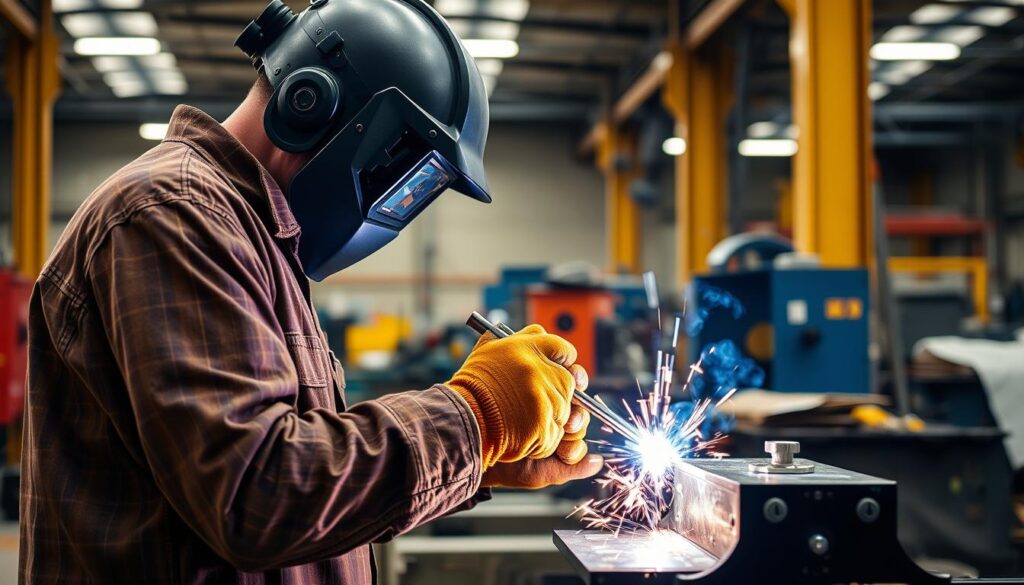
What Is Tack Welding? Purpose and Importance
What Is Tack Welding? Purpose and Importance
What holds metal components together prior to the last stage of welding? This tack weld is temporary. For many metal projects, this is an essential component.
Workpieces are kept in place with the aid of tack welding. It is essential to ensuring a flawless final weld.
Metal parts are momentarily held together by tack welds. They aid in the welding process’ setup. This lessens errors and makes control easier.
Key Takeaways
- A temporary method for holding metal components together is tack welding.
- Its primary purpose is to secure workpieces in the correct alignment.
- Tack welds are essential for ensuring accurate and high-quality final welds.
- This technique allows for precise control during the welding process.
- Tack welding minimizes the risk of errors in metalworking projects.
The Fundamentals of Tack Welding
Tack welding is essential for aligning and stabilizing parts in metalworking. In many welding techniques, it is a fundamental step. Before the final weld, it holds components in place for fine-tuning.
Definition and Basic Concept
One temporary welding method for joining metal parts is tack welding. It maintains part alignment with tiny welds. Without a complete weld, these welds are sufficient to hold the parts together.
It’s critical to understand the welding equipment and materials. In tack welding, accuracy is crucial. It aids in maintaining component alignment and avoiding distortion in the finished weld.
Historical Development in Metalworking
Beginning with early welding technology, tack welding has a lengthy history in metalworking. Initially, it was applied to basic tasks. However, tack welding’s significance increased along with metalworking.
These days, tack welding is essential to contemporary metalworking. It is utilized in a variety of industries, including automobiles and construction. Its development demonstrates the ongoing advancements in welding technology.
The Primary Purpose of Tack Welding
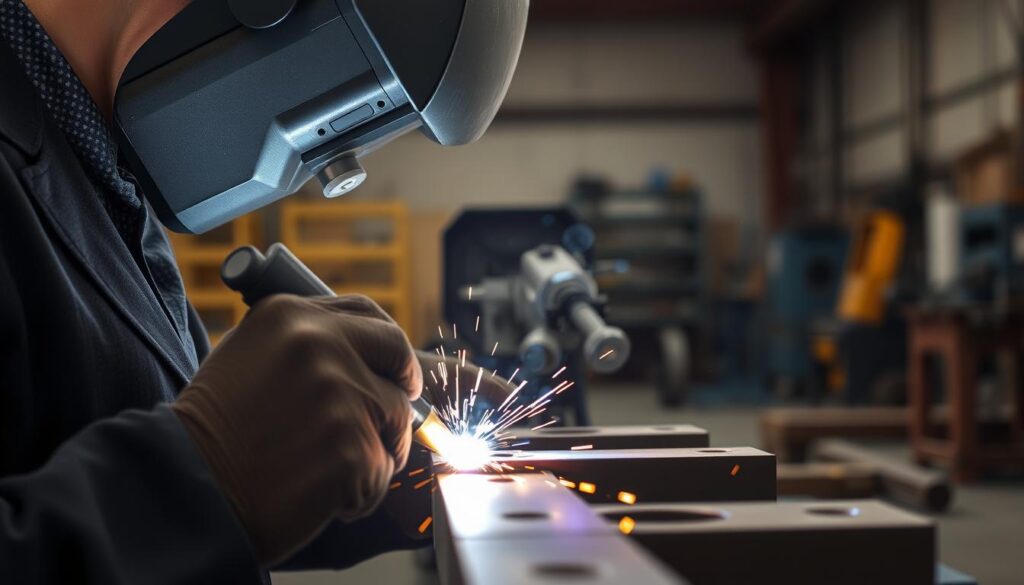
Tack welding is used in metalworking to temporarily secure parts. It guarantees that they remain in alignment for subsequent welding. This technique is essential for producing precise and high-quality welds.
Temporary Fixation of Components
Metal components can be temporarily held in place with tack welding. Up until the last weld, it holds them in place. To prevent parts from shifting or becoming misaligned, this is essential.
Complex assemblies are easier to work with when tack welds are used. It holds components firmly in place.
Maintaining Precise Alignment
Tack welding aids in maintaining component alignment. To keep parts in place, it applies welds at strategic locations. This is crucial for items where precision is crucial, such as structural steelwork or machinery.
| Application | Importance of Alignment | Role of Tack Welding |
|---|---|---|
| Machinery Construction | High precision required | Ensures accurate part alignment |
| Structural Steelwork | Critical for stability | Maintains component positioning |
| Automotive Fabrication | Essential for safety and performance | Provides temporary fixation during assembly |
Preparation for Permanent Welding Processes
Parts are prepped for permanent welding using tack welding. For the last weld, it holds them in place. This increases the efficiency of the fabrication process and enhances the quality of the weld.
In short, tack welding is used to hold things in place temporarily, keep parts in line, and get ready for permanent welding. It helps metalwork get better and work faster.
Why Tack Welding Is Critical in Modern Fabrication
Tack welding is very important in today’s world for making sure that complicated parts fit together correctly. People use it a lot in cars, planes, and buildings. This method makes sure the final product is top-notch and strong.
Preventing Distortion and Warping
Tack welding keeps parts from bending or warping by holding them in place first. This is very important for materials that are thin or weak and can bend when heated.
Experts say, “Tack welding keeps the shape of the assembly right, which is important for materials that get bigger when they are heated.”
This method lets us adjust and line up parts before the final weld. This cuts down on the need for expensive fixes later on.
Ensuring Dimensional Accuracy
Getting the size right is very important when making things these days. Tack welding helps by holding parts in place. This makes sure that the finished product meets all the requirements.
Facilitating Complex Assembly Projects
Tack welding makes it easier to put together projects that are hard to do. It helps us put together and line up a lot of pieces before we weld them together. This is great for projects that have a lot of pieces or shapes that are hard to work with.
| Benefits of Tack Welding | Description |
|---|---|
| Prevents Distortion | Holds components in place to prevent warping |
| Ensures Dimensional Accuracy | Secures components in the correct position |
| Facilitates Complex Assemblies | Allows for the assembly of multiple components before final welding |
Fabricators can do better and more efficient work when they know how important tack welding is. In the end, this makes the products even better.
How Tack Welding Works: The Technical Process
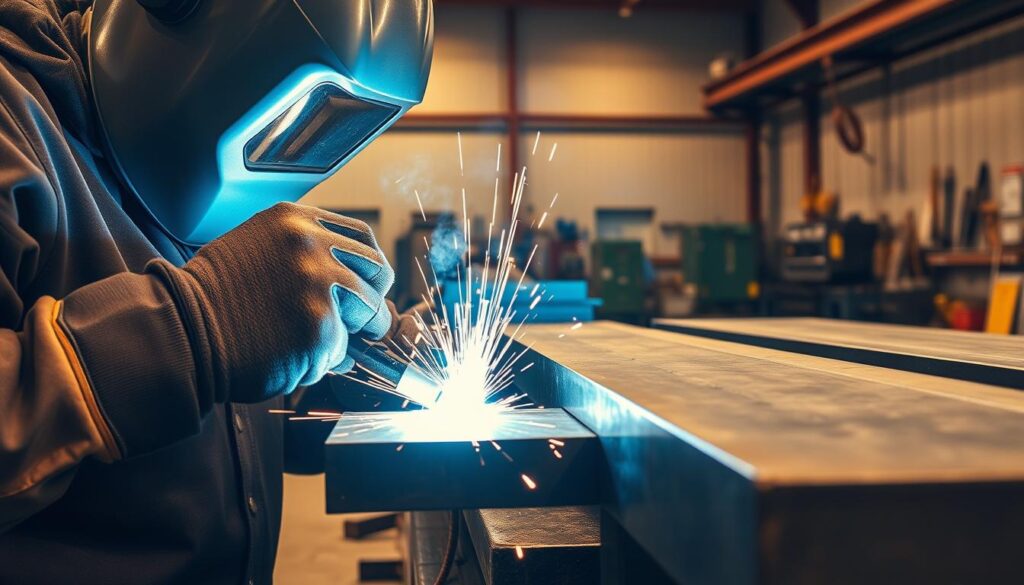
If you want to make great welds in metalwork, you need to know how to tack weld. It’s a long process with steps, tools, and important technical information.
Step-by-Step Tack Welding Procedure
The method of tack welding has several main steps:
- Getting the metal surfaces ready for joining
- Component alignment and placement
- Tack weld application in key locations
- alignment confirmation and any required adjustments
This guarantees that the metal components are held firmly in place prior to permanent welding.
Equipment and Tools Required
Tack welding requires certain tools and equipment, such as:
Welding Machines
The primary instrument for tack welding is a welding machine. Depending on the task and material, they may be stick, TIG, or MIG welders.
Accessories and Safety Equipment
Safety glasses, gloves, and welding helmets are essential for shielding the welder from welding hazards.
Measuring and Alignment Tools
Accurate alignment of the metal components is ensured by the use of tools such as alignment clamps and calipers.
Critical Technical Parameters
Travel speed, welding voltage, and welding current are important technical factors in tack welding. Strong tack welds require careful handling of these.
Important factors include:
- Welding voltage and current settings
- Speed and method of travel
- Type and thickness of the material
Welders can produce high-quality, standard-compliant tack welds by adjusting these parameters.
Materials Commonly Used in Tack Welding Applications
The quality of the weld is largely dependent on the materials used in tack welding. Numerous metals and alloys can be processed using this method. Each has characteristics and applications of its own.
Ferrous Metals and Alloys
In tack welding, ferrous metals—which contain iron—are frequently utilized. They are durable and robust. These metals are magnetic and have good heat tolerance.
Carbon Steel
One of the best materials for tack welding is carbon steel. It is robust and reasonably priced. This makes it ideal for a wide range of projects, including automobiles and buildings.
Stainless Steel
Because of its appearance and ability to withstand corrosion, stainless steel is widely used. It is utilized in industries like food and medicine where hygienic conditions are crucial.
Cast Iron
Cast iron is renowned for its ease of casting and ability to reduce vibrations. Because of its durability, it is utilized in automobile and machine parts.
Non-Ferrous Metals
Metals that are not ferrous, or, without iron, are also used in tack welding. They’re picked for their special qualities like being conductive, resistant to corrosion, and light.
Aluminum and Its Alloys
The metal aluminum is a favorite for tack welding, mainly in places where less weight is needed. This includes aerospace and cars.
Copper, Brass, and Bronze
The metals bronze, copper, and brass are chosen for their electrical conductivity, resistance to corrosion, and strength. They’re often in electrical parts and marine gear.
Material Compatibility Considerations
When choosing materials for tack welding, it’s important to make sure they match. You should think about how they expand when they get hot, how well they resist rust, and how well they work. This makes sure that the weld is strong and works.
Types of Tack Welding Techniques

Different industries use different ways to tack weld. The method you choose will affect how fast and well the welding is done.
MIG Tack Welding
Tack welding with MIG (GMAW) is quick and easy. It protects the arc with a wire feed and an inert gas. This method works well with metals like aluminum and steel. MIG tack welding is great for places where speed is very important.
TIG Tack Welding
TIG (GTAW) tack welding is very precise and controlled. It’s great for doing detailed work. It makes high-quality welds with a tungsten electrode and inert gas. TIG tack welding is best for the aerospace and automotive industries, where accuracy is very important.
Stick Tack Welding
Stick (SMAW) tack welding is flexible and easy to move. It works with a lot of different metals and in a lot of different situations. Stick tack welding is great for building and fixing things when you need to move tools around easily.
Specialized and Emerging Tack Welding Methods
More and more people are using new methods like laser and friction stir welding. They give special rewards for doing certain things. These specialized tack welding methods will probably be used more often to make things as technology gets better.
The Four Primary Forms of Tack Welds
In metalworking, tack welds have different forms for various needs. Knowing these forms helps you pick the best method for each job.
Bridge Tack Welds
Bridge tack welds join metal parts that aren’t touching each other. They’re great for putting together things that don’t fit perfectly. Bridge tack welds keep things in line and stop them from bending.
For instance, bridge tack welds fill the space between two metal plates. This keeps the plates in place until the last weld is done.
Bullet Tack Welds
Bullet tack welds are small, round welds that look like bullets. They’re good for strong ties in the area. Bullet tack welds use less heat, which helps keep things from bending.
They also hold things tightly without putting too much stress on them.
Ball Tack Welds
Ball tack welds are bigger and rounder than bullet tack welds. They are more stable. Ball tack welds can be used on a wide range of welding jobs, from thin to thick metal.
Intermittent Tack Welds
There are short tack welds spaced out along a joint that are called intermittent tack welds. They work well for long welds because they don’t bend. Intermittent tack welds help spread heat evenly, which lowers stress and distortion.
These welds keep things straight and stop them from bending when welding long pipes or big structures.
| Type of Tack Weld | Description | Application |
|---|---|---|
| Bridge Tack Welds | Used to bridge gaps between components | Joining metal plates with gaps |
| Bullet Tack Welds | Small, rounded welds for localized bonding | Applications requiring minimal heat input |
| Ball Tack Welds | Larger, rounded welds for added stability | Various welding applications |
| Intermittent Tack Welds | Series of short welds at intervals | Long welds, large structural components |
Using the right tack weld and knowing how to do it well makes the weld stronger and better. Each type deals with a different set of welding problems.
Practical Ways to Ensure High-Quality Tack Welds
To finish a welding project successfully, you need to make sure your tack welds are good. It’s very important to get these first welds right for the project’s strength and appearance.
Surface Preparation Techniques
For tack welds, it’s important to prep the surface well. Get rid of rust, oil, and dirt by cleaning the surfaces well. For this, use wire brushes, grinders, and solvents.
Optimal Spacing and Positioning Strategies
The way you space and place tack welds is very important. It keeps the pieces strong and in line. Put them in the right places so they don’t get distorted and stay in place while you weld.
| Material Thickness | Recommended Tack Weld Spacing |
|---|---|
| Less than 1/8 inch | 1-2 inches |
| 1/8 inch to 1/4 inch | 2-3 inches |
| More than 1/4 inch | 3-4 inches |
Heat Input Management and Control
Controlling heat is important to keep things from warping and to make sure the tack welds are good. Be careful when changing the welding current, voltage, and speed. This helps make tack welds that are always the same and of high quality.
“The key to successful tack welding lies in the control of heat input and the precision of the welding process.” – Expert Welder
Quality Inspection Methods
Before moving on, you need to check the quality of the tack welds. Check them visually for cracks and porosity, and make sure they are well fused.
- Looking for surface flaws with the naked eye
- Checking for internal defects using non-destructive testing techniques
Common Mistakes and How to Avoid Them
Bad surface prep, wrong spacing, and bad heat control are all common mistakes when tack welding. To avoid these, pay close attention to the details and follow best practices.
Welders can make sure their tack welds are great by following these tips. This makes it possible for welds to be strong and last.
Advantages and Benefits of Tack Welding

Tack welding is an important part of metal fabrication that has many benefits. It helps hold parts together for a short time and makes sure they are perfectly aligned. This is essential for the success of many metal projects.
Time and Cost Efficiency in Production
Welding with tack makes production faster and less expensive. It makes it easy to put parts together and line them up quickly. This lets fabricators make any changes they need to before they do permanent welds.
This lowers the risk of having to do expensive work again. As a result, production times get shorter and costs go down.
Improved Final Weld Quality
Welding with tack makes the welds better. It makes sure that parts are lined up and stay in place. This stops the weld from being ruined by distortions and misalignments.
The quality of the final product gets better. It meets all the standards and requirements.
Enhanced Structural Integrity of Finished Products
Tack welding makes things stronger. It keeps parts in the right place while they are being put together. This makes the finished product strong and long-lasting.
This is very important in areas like cars and building things. The structure of the product is very important.
Tack welding makes it easier to make things, makes the welds stronger, and makes the products stronger. It helps companies make better products and work more efficiently.
- Better efficiency in production
- Better quality welds
- Increased structural integrity
- Lower costs of production
- Reduced the need for rework
Manufacturers can improve quality and productivity by using tack welding. Tack welding will continue to be important for success as manufacturing changes.
Limitations and Disadvantages of Tack Welding

There are pros and cons to tack welding. These can change the quality, speed, and cost of welding.
Potential for Defects and Failures
Like other types of welding, tack welding can have problems. Common problems include porosity, lack of fusion, and cracking. To avoid these problems in the last steps of welding, it’s important to make sure that tack welds are done right.
Skill and Training Requirements
A lot of the time, the quality of tack welds depends on how good the welder is. Getting the right training is very important. It helps you learn the right ways to use tools, set up equipment, and work with materials. The chance of making mistakes and failing goes up a lot if you don’t get good training.
Material and Application Limitations
Not all materials or jobs are good for tack welding. Some materials require special tools or methods. To be successful, you need to know which materials work best with tack welding.
Experts say, “The key to good tack welding is knowing what it can and can’t do and using the best methods to avoid problems.” Welders and fabricators can make their work better and more reliable by dealing with and fixing these problems.
Tack Welding vs. Spot Welding: Key Differences

For metal projects, it’s important to know the difference between spot welding and tack welding. Both join metals, but they do it in different ways and with different tools.
Process and Methodology Comparison
Before the final weld, tack welding keeps metal parts in place. It makes small welds at important points to keep everything in line. Spot welding, on the other hand, uses pressure and electric current to join metal sheets at certain points. The main difference is how they are used and what tools are needed.
Application and Industry Usage Differences
Tack welding is used to build complicated structures in construction, cars, and factories. It lets you make changes and make sure everything is lined up correctly before the last weld. People mostly use spot welding to connect metal sheets in cars. It’s also used when you need to weld a small area.
Comparative Strengths and Weaknesses
Tack welding is flexible, so you can make changes while you’re putting things together. But it might not be as strong as a weld that goes all the way through. Spot welding makes strong welds in one place, but it’s not the best way to join all types of metal. The right choice depends on the metal, how strong the weld needs to be, and how the project is going.
In short, both tack welding and spot welding are important for working with metal, but they are very different. Knowing these differences helps you choose the best way to do a project.
Industrial Applications and Custom Metal Part Manufacturing

People use tack welding for a lot of things, like cars, buildings, and custom parts. It is important in many manufacturing steps because it can be exact.
Automotive and Transportation Industry Applications
Tack welding helps put parts together correctly in cars. It keeps the car’s shape and strength while it’s being welded.
Construction and Infrastructure Projects
It’s also important for making big metal buildings. Tack welding makes sure that everything fits together well and is strong enough for more welding.
Custom Fabrication and Specialty Manufacturing
Tack welding is also used to make custom parts and special items. It helps people make complicated metal parts fit together well. This makes it easy to get high-quality, custom parts quickly.
Tack welding is very important in making things today. It helps keep parts in place and line them up correctly. This makes it easier and faster to make things.
Conclusion
Tack welding is very important in metalworking. It has many uses and benefits in many fields. It mostly keeps parts together for a short time, keeps them in line, and gets them ready for permanent welds.
It is flexible because it can be used in a lot of different ways, like MIG, TIG, and stick tack welding. It is also used to make cars, build things, and do custom projects.
In short, tack welding is very important for the safety and quality of metal work. It stops parts from bending, keeps sizes right, and makes hard builds easier. This makes it a must-have for welding.
Knowing how tack welding works helps manufacturers make better products, save money, and do better work. This shows how important tack welding is in full.
FAQ
What is tack welding?
Tack welding is a temporary welding method. It holds workpieces in place before final welding. This ensures they are accurately aligned and positioned.
What is the primary purpose of tack welding?
The main goal of tack welding is to provide temporary fixation. It keeps workpieces in precise alignment. This prepares them for permanent welding.
What are the benefits of tack welding?
Tack welding saves time and money in production. It improves the quality of final welds. It also strengthens the structure of finished products.
What are the common materials used in tack welding?
Various materials are used in tack welding. These include ferrous and non-ferrous metals, and other materials. The choice depends on compatibility.
What are the different types of tack welding techniques?
There are several tack welding techniques. These include MIG, TIG, stick, and specialized methods. Each has its own benefits and applications.
How do you ensure high-quality tack welds?
To get high-quality tack welds, proper surface preparation is key. So is optimal spacing and heat input management. Quality inspection is also important.
What are the limitations of tack welding?
Tack welding can have defects and failures. It requires skilled personnel. It also has material and application limitations.
What is the difference between tack welding and spot welding?
Tack welding and spot welding differ in process and application. They have different strengths and weaknesses. Spot welding is more common in certain industries.
Can you tack weld aluminum or stainless steel?
Yes, aluminum and stainless steel can be tack welded. The right techniques and equipment are needed.
What is the role of tack welding in custom metal part manufacturing?
Tack welding is vital in custom metal part manufacturing. It’s used in the automotive, construction, and specialty manufacturing sectors.
What is a tack welder?
A tack welder is a device for tack welding. It comes in handheld and machine-based forms.
How do you perform tack welding?
Tack welding involves a step-by-step process. It uses specific equipment and tools. It also requires controlling technical parameters.