
What’s Thread Milling? A Detailed Guide
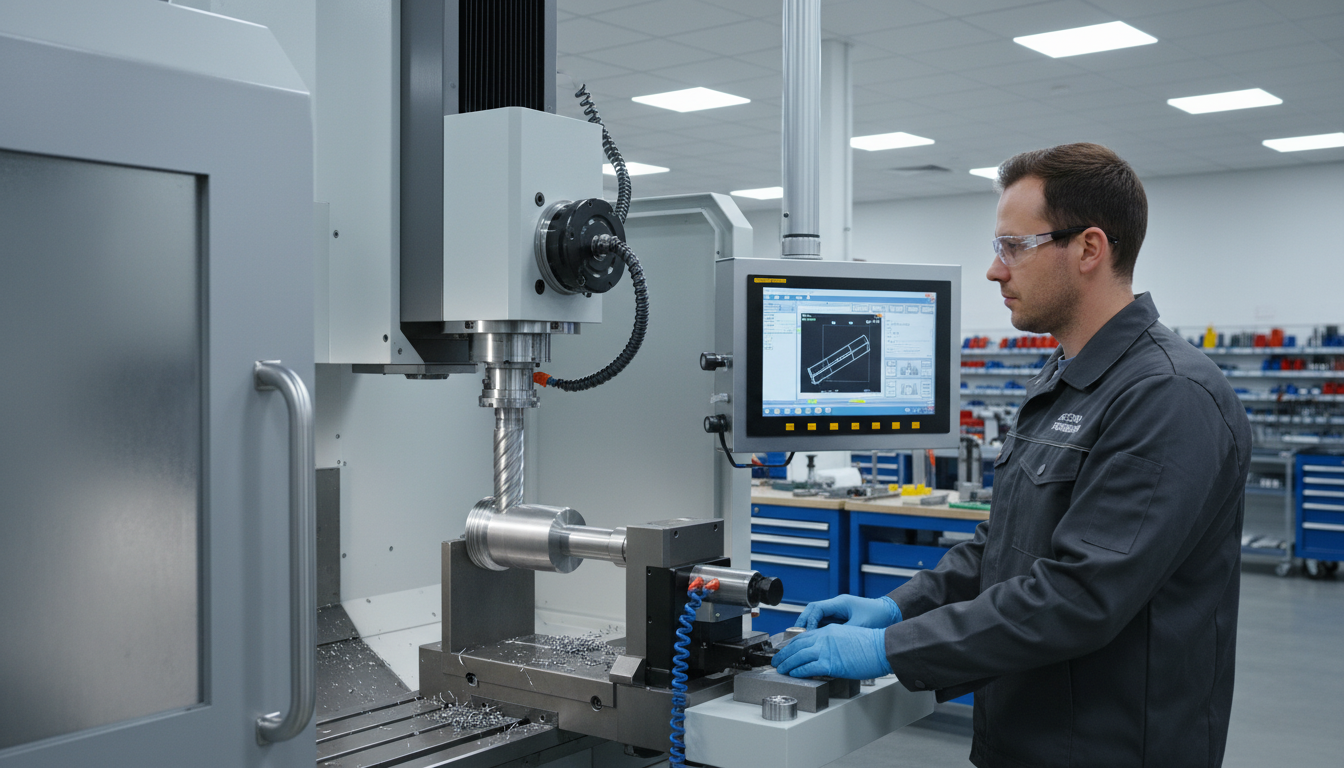
Do you know how to make exact threads in complicated parts? Thread milling is an important part of CNC machining. It helps make threads that are right in a lot of materials.
This method uses a milling cutter that spins and moves in a spiral path around the workpiece. It cuts threads very accurately. People who work with CNC machining need to know about thread milling.
Key Takeaways
- Thread milling is a precise way to cut threads in different kinds of materials.
- It is an important part of CNC machining.
- A rotating milling cutter moves in a helical path during the process.
- Thread milling lets you be very precise and accurate.
- For modern manufacturing, it’s important to know how to thread mill.
Introduction to Thread Milling
Thread milling is a popular CNC machining method because it can thread holes of all sizes accurately. It works great on big holes that other methods can’t handle.
This method can make threads on the inside and outside. Because it can be used in many different ways, it is an important part of modern manufacturing. People value it for how accurate and dependable it is.
Thread milling is very important in today’s world of manufacturing. It works with a lot of different materials, like metals and plastics, and it’s great for threading hard-to-reach places.
We need to look at where thread milling is used and what tools are needed to see how good it is. The table below shows how it can be used and what benefits it has in different fields.
| Industry | Common Applications | Characteristics |
|---|---|---|
| Aerospace | Threading large diameter holes in engine components | High precision, complex geometries |
| Automotive | Threading engine blocks, gearboxes | High volume, precision threading |
| Medical | Threading implants, surgical instruments | High precision, biocompatibility |
The table shows that thread milling is used in a lot of different fields. Every field has its own problems and needs. People love the process because it is accurate, adaptable, and has great threading skills.
In short, thread milling is an important part of CNC machining. It has many advantages, which is why it is so important in today’s manufacturing. It is important for making complicated parts because it can thread holes of different sizes, even big ones.
What Is Thread Milling?
You can make internal or external threads by using a tool that spins around. It’s great for CNC milling because it’s accurate and adaptable.
To cut the threads, a special milling cutter moves in a spiral path. This helical interpolation makes sure that threads are made correctly and with a smooth finish.

You can use thread milling on a lot of different materials, like metals and alloys. You can make both internal and external threads with this tool. This makes it a quick and easy way to make threaded parts.
| Thread Type | Description | Application |
|---|---|---|
| Internal Threads | Threads cut inside a workpiece | Used in parts that require internal threading, such as engine blocks |
| External Threads | Threads cut on the outside of a workpiece | Used in parts that require external threading, such as bolts and screws |
In short, thread milling is a method that is both accurate and flexible. It’s important in modern manufacturing, especially for CNC milling and threading.
How Thread Milling Works
The process of thread milling is not easy. It makes threads on a workpiece with CNC machines. This means knowing how helical interpolation and CNC motion work.
Helical Interpolation & CNC Motion
Thread milling relies heavily on helical interpolation. It lets a CNC machine move a tool in a spiral path around a piece of work. The machine’s axes move together to do this. CNC motion control is important because it makes sure the tool follows the right path for the thread.
The CNC machine tells the tool where to go. It makes sure that the tool moves in a spiral around the workpiece. Depending on the type of thread, this path can be either inside or outside.
CNC Programming & G-Code (G02 / G03)
Thread milling needs good CNC programming. Writing G-Code instructions for the CNC machine is part of it. G02 and G03 are specific G-Code commands for circular interpolation, which is a necessary step in helical interpolation.
G02 is for circular interpolation in a clockwise direction, and G03 is for circular interpolation in a counterclockwise direction. The CNC machine can make the complicated helical motion needed for thread milling by combining these commands with linear interpolation.
Internal vs External Thread Milling
Thread milling can make threads both inside and outside of a hole. The steps are a little different for each.
| Thread Type | Tool Path | Application |
|---|---|---|
| Internal Threads | The tool follows a helical path around the inside of a hole. | Used for creating threaded holes in workpieces. |
| External Threads | The tool follows a helical path around the outside of a cylindrical workpiece. | Used for creating threaded rods or bolts. |
For both cases, the CNC machine’s accuracy and the quality of the tools are very important. They help make threads that are accurate and of high quality.
Thread Milling Tools and Equipment
Thread milling uses special tools to make sure the work is accurate and lasts a long time. These tools are very important for making high-quality threads out of different materials.

Thread Mills (Straight, Helical, Multi-Form)
Different thread mills are made for different purposes. Straight flute thread mills work well for threading in general. Helical flute thread mills make cuts that are smoother and finishes that are better. Multi-form thread mills can cut more than one thread at a time, which makes them more efficient.
The type of thread mill you need depends on the material, the finish you want, and the details of the job. For instance, helical flute mills work best on hard materials. They cut down on vibration and make tools last longer.
Tool Holders and Coolant Systems
Thread milling needs tool holders. They give the right amount of rigidity and accuracy. This keeps the thread mill steady, which cuts down on vibration and bending.
Systems for cooling are also critical. They help cool the tool, extend its life, and improve the finish. The coolant choice depends on the material and operation needs.
The proper tools, holders, and coolants are necessary for efficient thread milling. Selecting the best equipment results in cost savings, increased productivity, and accuracy.
Thread Milling Parameters
Understanding important factors like feed rates and cutting speed is crucial for thread milling. These decisions have a significant impact on the threads’ accuracy, efficiency, and quality.
Cutting Speed, Spindle Speed, and Feed Rates
Feed rates, spindle speed, and cutting speed are all related and need to be carefully selected. Cutting speed, measured in surface feet per minute (SFM), is the rate at which the tool cuts through the material. The tool’s rotational speed, measured in revolutions per minute (RPM), is known as spindle speed.
The feed rate, expressed in inches per minute (IPM), is the tool’s speed as it enters the material. The ideal feed rate is determined by the required thread quality, material, and tool.
- It might be advised to use a higher feed rate and a lower cutting speed for hard materials.
- Higher cutting speeds and lower feed rates may work better for soft materials.
Depth of Cut and Radial Passes
In thread milling, radial passes and depth of cut are crucial. The amount of material removed in each pass is known as the depth of cut. The number of radial passes is the number of times the thread profile is created by the tool moving radially.
For hard or challenging materials, it is typical to use several radial passes. It aids in gradually achieving the required thread depth.
Advantages of Thread Milling
Thread milling is renowned for its efficiency, accuracy, and flexibility. In today’s manufacturing world, it is an essential procedure. This technique satisfies numerous industrial requirements by producing intricate threads with high accuracy.
The benefits of thread milling are:
- Adaptability in creating different thread sizes and forms
- Excellent accuracy and precision when creating threads
- Capacity to process intricate threads in a single operation
- quicker production times than with conventional threading techniques
- minimal workpiece wear, which lessens the need for regular tool replacements
Because thread milling tools can be readily modified to accommodate various thread types and sizes, flexibility is a significant advantage. It is therefore a flexible option for producers. The accuracy of thread milling guarantees that threads are produced in accordance with strict quality standards.

The ability to create intricate threads in a single step is what makes thread milling so efficient. The manufacturing process is accelerated as a result. Thread milling is an excellent option for businesses trying to enhance their operations because it reduces expenses and saves time.
Comparison with Other Threading Methods
Threads can be made in a variety of ways by manufacturers, including milling, tapping, and turning. Every technique has advantages of its own and is most effective for particular tasks.
Thread Milling vs Tapping
A tiny tool that revolves around the hole is used in thread milling. This is not the same as tapping, where the tool moves straight and is the same size as the hole.
Key differences between thread milling and tapping:
- Tool size relative to the hole
- Motion type (circular vs linear)
- Flexibility in thread creation
| Characteristics | Thread Milling | Tapping |
|---|---|---|
| Tool Size | Smaller than the hole | Same size as the hole |
| Motion | Circular interpolation | Linear |
| Flexibility | High; can create various thread sizes with one tool | Low; one tap per thread size |
Thread Milling vs Thread Turning
To create large threads on the outside of parts, thread turning is utilized. Unlike thread milling, which uses CNC machines and is done for inside threads, it is done on lathes.
The following are the primary distinctions between thread milling and thread turning:
- Application (internal vs external threads)
- Equipment utilized (lathes vs. CNC milling machines)
- Limitations on thread size
In the end, picking between thread milling, tapping, and thread turning depends on the project’s needs. This includes the type of thread, material, and the tools available.
Applications of Thread Milling
Many industries use thread milling to create precise threads in hard materials. It works well for cutting through hard materials like titanium alloys and hardened steels.
Because of their extreme hardness or sharp particles, these materials are challenging to work with. Thread milling helps by making threads accurately without needing to change tools often.
This method is helpful in fields like aerospace. Parts are made here from materials that are strong and hard to work with.
It’s also good for sewing through big holes. Old-fashioned tools might not work or break easily.
Some key industries that use thread milling are:
- Aerospace: For parts that need to be strong and exact.
- Medical Devices: For making surgical tools or implants with very thin threads.
- Oil and Gas: For tools that have to work in tough conditions and under a lot of pressure.
The advantages of thread milling include making high-quality threads with a smooth finish. This is true even in materials that are hard to machine.

Thread milling has many uses and is becoming more popular as industries look for better ways to thread.
Manufacturers can make better products if they know what thread milling is good at.
Best Practices and Optimization Tips
To get better at thread milling, you need to know how to plan toolpaths, make sure the surface is smooth, and control the chips. Following best practices is the key to getting great threads. These methods make CNC thread milling more efficient and accurate.
Toolpath Planning & Collision Prevention
Planning the right toolpath is important to avoid crashes and keep things running smoothly. This means:
- Using CAM software to look for possible collisions before the milling process begins.
- Making the toolpath better to cut down on extra movements and save time.
- Setting the CNC machine up with the right G-code (G02/G03) so that it can make smooth helical paths.

Surface Quality and Chip Control
To get the right surface quality, you need to pay close attention to the settings for milling and chip control. Some important things to remember are:
- Choosing the right cutting speed and feed rates to make the finish better and wear the tools less.
- Using smart chip control methods, such as the right coolant and changing the depth of the cut.
- Checking the surface of the thread often for any flaws or bumps.
By focusing on these areas, makers can greatly improve the quality and speed of their thread milling work.
Challenges and Limitations
Thread milling has its problems, such as longer cycle times and the need for special machines. It takes longer for small thread sizes, which can slow down production. This has an effect on how quickly things are made.
Another big problem is that you need a CNC machine that can do helical interpolation. Some places can’t do thread milling because not all CNC machines can do this. Thread milling needs advanced CNC machines because it involves complicated movements.
Experts say that thread milling requires advanced machines and skilled workers. It’s about having the right tools and the right people to use them.
There are differences between thread milling and other threading methods. This table shows these differences clearly:
| Threading Method | Cycle Time | Machinery Requirement | Tool Life |
|---|---|---|---|
| Thread Milling | Slower for small sizes | CNC with helical interpolation | Long with proper parameters |
| Tapping | Faster for small sizes | Tapping machine or CNC | Variable, depends on material |
| Thread Turning | Generally faster | Lathe or CNC turning center | Long, depends on tooling |
The table shows that thread milling has its limits, but so do other methods. Knowing these differences can help you choose the best way to do a job.

To sum up, thread milling has both pros and cons. Manufacturers can plan better and pick the best method for their needs if they know these things.
Conclusion
Thread milling is a precise and flexible way to cut threads. It has a lot of benefits over older methods. This article has demonstrated its accuracy, adaptability, and efficacy across various applications.
This method can make very accurate threads that are of high quality. It’s great for a lot of different fields. Thread milling is an important part of modern manufacturing, from aerospace to cars.
In short, thread milling is the best way to make threads. It is known for its accurate, flexible, and high-quality threads. It has many uses, which is why manufacturers love it. Thread milling will probably become more important as industries grow.
Manufacturers benefit from knowing the basics, tools, and best practices of thread milling. It makes things better and cheaper. This article wraps up our in-depth look at how thread milling is used in modern manufacturing.
FAQs
What is thread milling, and how is it different from other ways to make threads?
Thread milling is a type of CNC machining. It cuts threads into a workpiece with a tool that spins. It can make complicated threads and work with hard materials, which is not possible with traditional methods like tapping and thread turning.
What are the advantages of thread milling compared to other threading techniques?
There are many good things about thread milling. It can make complicated threads, is flexible, and is precise. It’s also great for tough materials and big holes.
What kinds of thread mills are there, and what do they do?
There are different types of thread mills, such as straight, helical, and multi-form. Each one is for a certain job, like making internal or external threads or working with different materials.
How can I improve the quality of the surface and the life of the tool when thread milling?
Plan your toolpath carefully and avoid hitting things to make thread milling better. Pick the right cutting speed and feed rates to control the quality of the surface. Also, make sure you use the right tool holders and coolant systems.
What are the problems and limits of thread milling, and how can they be fixed?
Thread milling might take longer and require special tools and training. But these problems can be fixed by getting the right tools and learning how to use them. This makes the process faster and more productive.
Can you use thread milling for threading both inside and outside?
Yes, thread milling can be used on both internal and external threads. It cuts threads into a workpiece with a tool that spins. It can be used for a variety of threading needs.
What role does helical interpolation play in the process of thread milling?
Thread milling relies heavily on helical interpolation. It lets the tool cut threads accurately by moving in a helical path. This is done with G-code (G02/G03) and CNC programming.