
What’s Transfer Molding? Process, Variations, and Uses
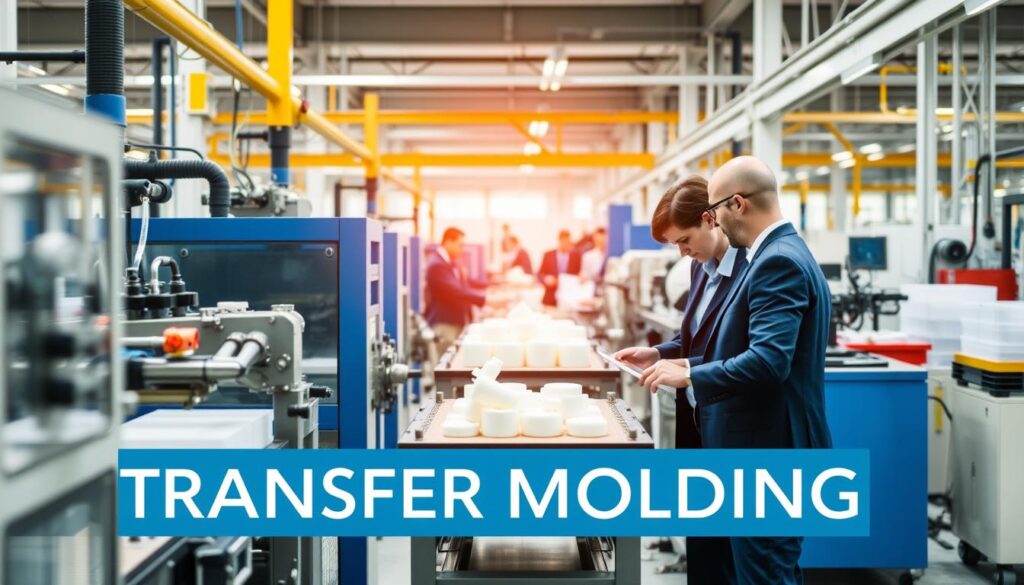
Have you ever wondered how intricate rubber components are manufactured with such accuracy? The key lies in a unique manufacturing process that combines compression and injection methods.
A distinctive method of producing high-quality goods is transfer molding. It is ideal for sectors requiring precise specifications and intricate designs. By pressing a casting material into a closed mold, this technique enables the creation of parts with intricate shapes.
This molding method is important because it makes parts that are very accurate and consistent. It’s a very important part of making things today.
Key Takeaways
- Transfer molding is a mix of injection and compression molding.
- It is used to make complicated parts with a lot of accuracy.
- The process consists of pressing material into a mold that is closed.
- Transfer molding is important in fields that need a lot of detail.
- It makes it possible to make parts that are very accurate and consistent.
Introduction to Transfer Molding
Transfer molding is now an important part of making things. It helps make complicated parts with high accuracy and consistency.
What Is Transfer Molding?
Transfer molding is a method for making parts with intricate designs that are of high quality. It means putting a certain amount of material into a mold and then curing it under pressure. This method works well for parts that have complicated shapes and materials that are hard to mold in other ways.
History and Development
Advances in manufacturing technology and materials science are linked to the origins of transfer molding. It began with a major push in the design and construction of marine vessels following World War II. A significant advancement was made in 1946 when the US Navy ordered the first glass fiber/polyester boat.
Transfer molding kept getting better throughout the 20th century. New equipment and mold designs let for making more complex parts and using more materials.
Importance in Manufacturing
In many industries, transfer molding is crucial. It is capable of creating intricately shaped parts. It’s fantastic because it can create parts with high accuracy and few flaws using a variety of materials, including rubber and plastics.
This method helps manufacturers do their jobs better and more consistently. People often use it to make parts for electronics, cars, and seals and gaskets for factories.
Materials Used in Transfer Molding
Rubber compounds and thermosetting plastics are among the many materials used in transfer molding. The needs and intended functions of the product determine the appropriate material.
Thermosetting Plastics
In transfer molding, thermosetting plastics are essential. As the product cures, they solidify, giving it strength and durability.
Common Thermosetting Resins Used in Transfer Molding
- Epoxy resins are known for being able to resist chemicals and insulate electricity.
- Phenolic resins, which offer thermal stability and are often used in high-temperature applications.
- Polyester resins, providing a balance between cost and performance.
- Silicone, used for its flexibility and resistance to extreme temperatures.

Rubber Compounds
In transfer molding, rubber compounds are essential. Products that must stretch and seal well require them.
It can withstand high temperatures, fuels, and oils by modifying the rubber compound. It is therefore excellent for a variety of industrial applications.
Fillers and Additives
The base materials are improved by fillers and additives. Glass fibers, silica, and calcium carbonate provide stability and strength.
For particular appearances or purposes, additives such as colorants, flame retardants, and release agents are added.
Transfer Molding Process Overview

For manufacturers who want to produce high-quality parts, it is essential to comprehend the transfer molding process. It includes a number of steps that impact the quality of the finished product.
Step-by-Step Process
Making the molding compound is the first step in the process. After that, it is placed in the transfer chamber. The material is forced into the mold cavity by a plunger.
It’s treated with heat and pressure to achieve the desired results. This detailed process helps the material fit into the mold just right. This leads to a component that is both precise and detailed.
The steps in transfer molding are:
- Getting the molding compound ready
- Placing the compound in the transfer chamber
- Forcing the material into the mold cavity using a plunger
- Curing the material under pressure and heat
- Ejecting the final product from the mold
Equipment Used
The tools we use in transfer molding play an essential role. The key components include the transfer chamber, the plunger, and the mold. Mold design plays a crucial role. The shape and quality of the product are determined by this factor.
| Equipment | Description | Importance |
|---|---|---|
| Transfer Chamber | Holds the molding compound before it is forced into the mold cavity | High |
| Plunger | Forces the material into the mold cavity | High |
| Mold | Determines the final shape of the product | Critical |
Mold Design Considerations
The design of molds plays a vital role in the process of transfer molding. Considerations such as mold material, cavity design, and venting systems require thoughtful attention. This helps to achieve optimal performance and high product quality.
Understanding the intricacies of transfer molding allows manufacturers to enhance their production processes. Having the right tools and thoughtfully designed molds is crucial for achieving success in transfer molding.
Comparison with Other Molding Techniques
Understanding the distinctions between transfer molding, compression molding, and injection molding is essential. Every method brings its unique advantages and is suited for specific tasks.
Transfer Molding vs Compression Molding
Transfer molding and compression molding both create intricate parts, yet they operate through distinct processes. In compression molding, the material is placed directly into the mold. In transfer molding, the material is first heated and pressurized, and then it is pushed into the mold.
The main differences are:
- Material Handling: Transfer molding improves the flow of materials, reducing the likelihood of defects.
- The separate chamber in transfer molding allows for a more even application of pressure compared to compression molding.
- Transfer molding excels at creating parts that feature intricate designs and complex shapes.

Transfer Molding vs Injection Molding
Injection molding and transfer molding share certain similarities, yet they also possess distinct differences. Injection molding involves the process of injecting molten material into a mold. In transfer molding, the material is heated and pressed in a separate area before being injected into the mold.
The main differences are:
- In injection molding, we work with molten material, whereas in transfer molding, we start with preheated and pressurized material.
- When it comes to mold design, injection molding typically requires molds that are more intricate compared to those used in transfer molding.
- When it comes to production volume, injection molding is ideal for large-scale manufacturing, whereas transfer molding is versatile enough to handle both small and large batches.
Ultimately, the decision to go with transfer molding, compression molding, or injection molding really hinges on what your project requires. This takes into account the complexity of the part, the material used, and the quantity that will be produced.
Advantages of Transfer Molding
Transfer molding stands out as an excellent option for producing high-quality products. It’s perfect for creating intricate shapes and precise dimensions.
Improved Material Flow and Filling
Transfer molding enhances the movement of materials. This ensures that the mold is filled uniformly, resulting in consistent parts and reducing the likelihood of defects.
The material flows into the mold through a gate. This assists in creating components with intricate designs.
Better Dimensional Accuracy
Transfer molding is recognized for its precise dimensions. It ensures that the product closely aligns with the design.
This is essential for components that require precise measurements, such as in electronics.
Reduced Voids and Defects
It also reduces gaps and imperfections. The managed flow of materials helps to avoid air pockets and other potential problems.
This results in products that are more durable and perform more effectively.
| Advantages | Description | Benefits |
|---|---|---|
| Improved Material Flow | Uniform filling of the mold cavity | Consistent quality, reduced defects |
| Better Dimensional Accuracy | Precise dimensions matching design specs | Critical for applications requiring precision |
| Reduced Voids and Defects | Controlled material flow minimizing air traps | Higher-quality products with improved performance |
Limitations and Challenges
Transfer molding offers a variety of advantages, but it also comes with a few challenges. The costs of tooling and the limitations of materials present significant challenges. Understanding these factors can assist manufacturers in determining whether transfer molding is the right choice for their needs.
Tooling Costs
A significant challenge with transfer molding is the expense associated with tooling. The molds required are intricate and costly to produce. The upfront cost of tools can be quite a challenge for small businesses or those working with tight budgets. However, when it comes to large production runs, the cost for each part decreases since the initial expense is distributed over more units.
Cycle Time Considerations
Transfer molding generally requires more time compared to other techniques such as injection molding. Moving the material into the mold requires some time. To enhance efficiency, focusing on thoughtful mold design and making process adjustments are essential. It’s about finding that sweet spot between creating top-notch parts and maintaining a quick production pace.
Material Restrictions
Transfer molding is limited to specific materials. While thermosetting plastics and certain rubber compounds are widely used, the variety available is not as extensive as what you find with injection molding. This might hold back how well the product can perform. Selecting the appropriate material is essential for fulfilling product requirements and effectively utilizing transfer molding.
Applications of Transfer Molding
Transfer molding finds its application in various areas, ranging from electrical components to common household products. It’s wonderful for creating parts that have intricate shapes and fine details.
Electrical and Electronic Components
Transfer molding plays an essential role in the production of connectors, switches, and insulators used in electronics. It guarantees that these parts are consistently crafted with the same level of quality each time. This aligns with the exceptional standards of the electronics industry.
Automotive Parts
In cars, transfer molding creates seals, gaskets, and other essential parts that contribute to safety and performance. It’s ideal for crafting components with intricate designs and precise fits, essential for modern vehicles.
Industrial Seals and Gaskets
Transfer molding is commonly utilized for producing industrial seals and gaskets. These play an important role across various industries, designed to endure and perform effectively in diverse environments. It creates seals and gaskets that are precisely sized and of the highest quality.
Consumer Goods
It’s also found in everyday products, such as handles, grips, and various components we use regularly. The capability of transfer molding to produce intricate shapes and accurate components is truly beneficial in this context.
The versatility of transfer molding plays a crucial role across various industries. It enables the development of a diverse range of products with impressive precision and quality.
Quality Control and Inspection
In transfer molding, maintaining high quality is essential. We conduct quality control checks to identify any defects and apply the most effective methods to guarantee that all parts are consistent.
Common Defects in Transfer Molding
Transfer molding may experience issues such as voids, air pockets, and surface imperfections. These can negatively affect the strength and appearance of the part.
These issues arise from inadequate material preparation or subpar mold design. Understanding the reasons behind them can lead to solutions.
| Defect Type | Causes | Impact |
|---|---|---|
| Voids | Insufficient material, improper curing | Weakens the part, affects dimensional accuracy |
| Air Pockets | Trapped air during molding, poor mold venting | Surface imperfections, possible cracking |
| Surface Imperfections | Mold surface issues, material contamination | Aesthetic issues, could affect function |
Inspection Methods and Tools
A thorough inspection is essential for uncovering flaws and maintaining high standards of quality. We use various approaches such as looking closely, measuring dimensions, and testing materials. Devices such as coordinate measuring machines (CMMs) and non-destructive testing (NDT) equipment enhance the accuracy of inspections.
Visual inspections are the first step in identifying surface imperfections. Dimensional checks help make sure parts meet the specifications. Material tests assess how strong the parts are.

Best Practices for Consistent Quality
To ensure consistent quality in transfer molding, it’s important to prioritize optimizing the process, maintaining equipment regularly, and providing ongoing training. Enhancing the molding process helps to minimize defects.
Taking care of our equipment and molds is really important. It prevents wear that could lead to defects. Keeping staff trained ensures they stay informed about the latest techniques, which enhances the quality of their work.
- Develop a strong quality control plan
- Take the time to regularly check and care for your equipment and molds.
- Provide training for staff on quality standards and inspection methods
- Keep an eye on and enhance the manufacturing process over time
Recent Innovations and Trends
Transfer molding is experiencing a surge thanks to innovative technologies. These improvements streamline the process, reduce expenses, and benefit the planet. Innovative automation, cutting-edge mold materials, and sustainable practices are paving the path forward.
Automation in Transfer Molding
Automation is making transfer molding more efficient and effective. It helps ensure products are more uniform and reduces labor costs. Automated systems are capable of handling intricate tasks with impressive precision, resulting in products that are of superior quality.
These systems allow us to keep an eye on and make changes as things happen. This improves the entire experience. Experts believe that automation plays a crucial role in producing large quantities of products with consistent quality.
“The future of transfer molding lies in its ability to adapt to new technologies and manufacturing demands.”
— Industry Expert
- Enhanced reliability of the product
- Lowered expenses for workforce
- Improved production efficiency

Advanced Mold Materials
New mold materials are really important in transfer molding. They have a longer lifespan and enhanced performance, improving the quality of products and extending the durability of molds.
Some top materials include:
- Strong steel alloys
- Cutting-edge ceramic materials
- Tailored coatings for improved surface characteristics
Sustainable Practices
Transfer molding now relies heavily on sustainability. Businesses are embracing recycled materials, lowering energy consumption, and minimizing waste.
For example, some people are exploring bio-based materials. People are adopting energy-efficient heating systems. This benefits the Earth and draws in environmentally aware customers.
By adopting eco-friendly practices, transfer molding companies can make a positive impact on the environment. They also attract customers who are passionate about the environment.
Conclusion
Transfer molding offers a versatile and effective approach to creating products. It’s wonderful for crafting detailed components and intricate designs. This approach finds its application in various areas, including electronics, automobiles, and common household items.
This process is essential in today’s world of creation. It’s really about finding the right balance, being effective, and exploring various materials. While there are a few drawbacks, fresh concepts are enhancing it further.
As creators improve their skills in transfer molding, they can craft higher-quality products. They have the potential to save money while also making a positive impact on the planet. This highlights the significance of understanding transfer molding and its applications in today’s world.
FAQs
What is transfer molding?
Transfer molding is a way to make parts with complex shapes and exact sizes. It works by pouring molten material into a mold. Then, it hardens to create the final product.
What materials are used in transfer molding?
It uses thermosetting plastics, rubber, and additives. These are picked for their special qualities like heat resistance and strength.
How does transfer molding differ from injection molding?
Transfer molding and injection molding both make parts, but in different ways. Transfer molding is for materials that set hard and makes parts very accurate. Injection molding is for soft plastics.
What are the advantages of transfer molding?
It’s great for making parts with tricky shapes and high precision. It also reduces defects and is good for parts with small details.
What are the limitations of transfer molding?
It can be pricey because of the tools needed. It also takes time and has material limits. Special equipment and molds are costly to make.
What industries use transfer molding?
It’s used in many fields like electronics, cars, planes, and home goods. It makes things like connectors and seals.
How is quality control maintained in transfer molding?
Checking parts for flaws is key. This includes looking for voids and checking sizes and materials. Keeping molds clean and using the right materials helps too.
What are some recent innovations in transfer molding?
New things like automation and better mold materials are coming. These make the process better, faster, and greener.