
Fasteners 101: Types of Fasteners and How to Choose Them
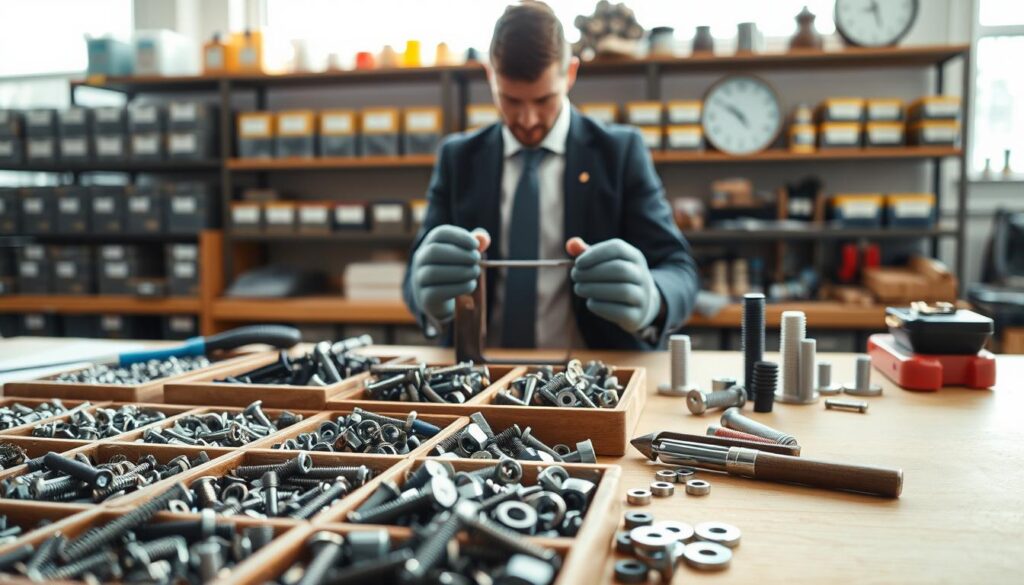
What holds the world together? It’s not just the big things. It’s the small details that keep everything in place. Fasteners are the unsung heroes that join objects together. They create rigid structures essential in construction, manufacturing, and more.
So, what is a fastener? Fasteners are devices or components used to secure connections. They include screws, nails, bolts, anchors, and more. Choosing the right fastener is key for stability and safety.
Key Takeaways
- Fasteners are critical components used to join objects together.
- Various types of fasteners are available, including screws, nails, and bolts.
- The right fastener selection is vital for structural stability and safety.
- Fasteners have diverse applications across industries.
- Understanding fastener applications is key to choosing the right fastener.
What Is a Fastener?
The term ‘fastener’ includes many hardware pieces used to connect objects together. Fasteners are key in construction, manufacturing, and daily use. They help make temporary connections, making it easy to put things together and take them apart. Rivets, though, create permanent bonds.
Fasteners are essential for keeping buildings, bridges, and other structures strong. In making things, they hold parts of machines, cars, and other items together. There are many types of fasteners, each designed for specific jobs and materials.
Definition and Purpose of a Fastener
A fastener is a device that joins two or more objects together. Its main job is to make a strong and reliable connection. This connection must hold up against things like shaking, changes in temperature, and stress.
Experts say fasteners are vital in building and making things. They add strength and durability, making sure structures and products last longer. Choosing the right fastener is key for any project.
Importance in Construction, Manufacturing, and Everyday Applications
In construction, fasteners hold building frames, roofs, and other parts together. In making things, they assemble machinery, car parts, and other products. At home, they’re in furniture, appliances, and more.
- Enable the creation of non-permanent joints
- Provide structural integrity and stability
- Come in various types to suit different applications
Fasteners are very important for safety, reliability, and performance. Knowing about different fasteners helps people choose the right ones for their projects.
The Most Common Types of Fasteners
The world of fasteners is full of variety, with many types for different needs. They are key in building, making things, and daily use. They add strength and durability to structures and machines.

Bolts
Bolts are threaded fasteners used with nuts to make strong joints. There are many types, like hex bolts, carriage bolts, and anchor bolts. Each is made for a specific job. For example, hex bolts are often used in building because they are strong and easy to use.
“Bolts are the backbone of many structural projects,” says an industry expert. “Their versatility and strength make them indispensable.”
Screws
Screws are a key fastener, known for their ability to cut or engage threads in materials. They are versatile and come in many forms, like wood screws, machine screws, and self-tapping screws. Each is suited for different tasks.
- Wood screws are designed for woodwork, providing a strong hold.
- Machine screws are used with nuts or tapped holes for a secure fit.
- Self-tapping screws can create their own threads, making them ideal for metal applications.
Nuts
Nuts are internally threaded fasteners that work with bolts to secure parts. They come in various types, such as lock nuts, flange nuts, and wing nuts. Each type has its own benefits.
Nuts are key for making secure and stable joints. For example, lock nuts add extra security by preventing loosening over time.
Washers
Washers help distribute the load of a fastener, reducing wear on the parts. They come in different types, like flat washers, spring washers, and lock washers. Each type has a specific purpose.
For instance, spring washers provide tension. They help prevent bolts from loosening due to vibration.
Different Types of Fasteners and Their Uses
Knowing about fasteners is key to picking the right one for your project. Fasteners vary greatly, each suited for specific tasks, materials, and loads.
Bolt Varieties and Typical Uses
Bolts are essential for joining parts together. There are many types, each for different needs:
- Hex Bolts: Common and strong, they fit in construction and machinery.
- Carriage Bolts: Good for wood, they have a rounded head for a smooth look.
- U-Bolts: Shaped like “U,” they clamp pipes and tubes.
A leading maker says, “The right bolt is vital for a project’s strength.”
“Bolts are the unsung heroes of construction, providing the strength and stability needed for buildings, bridges, and machinery.”
Screw Types and Their Applications
Screws are vital for joining materials by threading into them. The main types are:
| Screw Type | Application |
|---|---|
| Wood Screws | For woodworking, they have a coarse thread to hold wood well. |
| Machine Screws | Join metal parts with nuts or tapped holes. |
| Self-Tapping Screws | Make their own thread, used in metal and other materials. |
Nut Types and Where They’re Used
Nuts are used with bolts and have different types for various needs:
- Lock Nuts: Prevent loosening, used where stability is key.
- Flange Nuts: Have a washer built-in, used in cars and machines.
- Wing Nuts: Easy to tighten and loosen by hand, for frequent adjustments.
Washer Variants and Specific Uses
Washers spread the load of a fastener, reducing wear. The main types are:
- Flat Washers: Spread the load and prevent damage.
- Spring Washers: Keep the fastener tight under vibration.
- Lock Washers: Prevent loosening, used in critical spots.
Understanding fasteners helps ensure your project is done right. The right fastener makes all the difference.
How to Choose the Right Fastener for Your Applications
Choosing the right fastener is key for a strong and lasting connection. You need to think about several important factors. These factors affect how well the fastener works and lasts.
Material Types and Load Requirements
First, think about the materials you’re joining and the load they’ll face. Different materials need different fasteners. For example, metal and wood need different approaches than metal to metal.
It’s also important to consider the load on the fastener. This includes the type and amount of force it will face. Fasteners must be strong enough to handle these forces without breaking.

Matching Fastener Type and Size to Strength and Environment
The fastener’s type and size must match the application’s strength and environment. For strong applications, use bolts and nuts with high strength grades. For lighter tasks, smaller screws might be enough.
Environmental factors like moisture, extreme temperatures, or chemicals also matter. In tough environments, choose fasteners that resist corrosion. Stainless steel or coated fasteners are good options.
Corrosion Resistance and Fastening Method
Corrosion resistance is vital in harsh conditions. Fasteners that resist corrosion, like stainless steel or coated ones, last longer. Zinc plating or galvanizing adds extra protection.
The fastening method also affects your choice. It must work with the materials and fastener type. Self-tapping screws are great when you can’t pre-drill.
By considering these factors, you can pick the right fastener. This ensures a strong, durable, and reliable connection.
Conclusion
Fasteners are key in many fields like construction, manufacturing, and daily use. Knowing the different types and their uses is vital. It ensures strong, safe, and durable connections.
Choosing the right fastener is critical for any project. It’s important to think about the material, load needs, and if it can resist corrosion. This helps pick the best fastener for the job.
Choosing the right fastener is very important. It affects how long and strong the joined parts will last. With the knowledge from this article, readers can make smart choices. They can meet their project needs with confidence.