
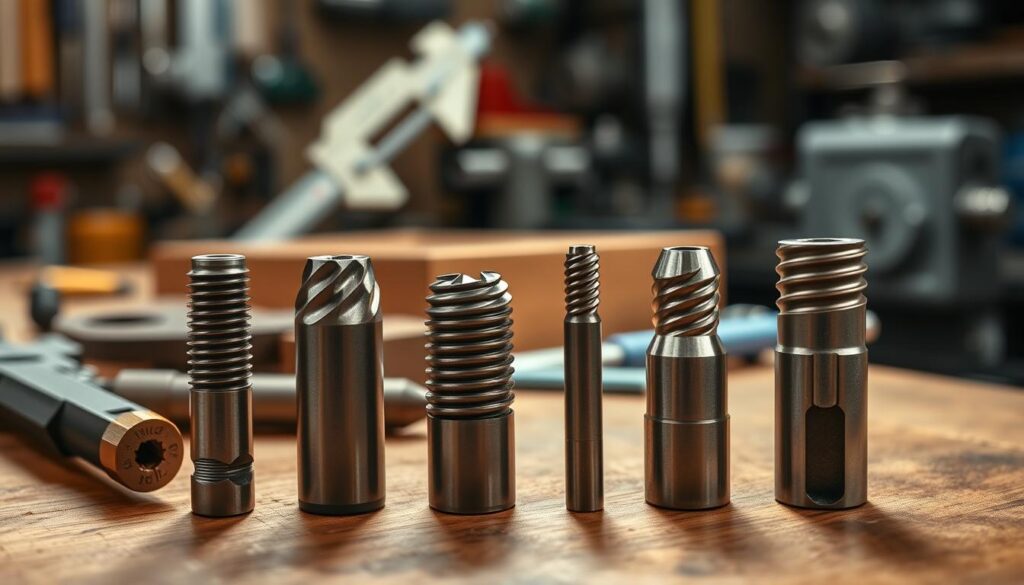
Are you having trouble picking the perfect thread tap for your project? It can be tough with so many choices out there.
Thread taps are key for making internal threads in different materials. They’re important in fields like manufacturing, construction, and engineering.
There are many thread taps to choose from, but knowing the differences is essential. Each tap is made for specific materials and uses. It’s important to understand their features.
Key Takeaways
- Understanding the different types of thread taps is key to making the right choice.
- Thread taps are used for creating internal threads in various materials.
- The right tap depends on the material and use.
- Using the correct thread tap improves the quality of the threaded hole.
- Choosing the wrong tap can damage threads or the material.
What’s Thread Taps?
Thread taps are tools that help create internal threads. They are used to make holes that can hold screws or bolts. This makes it easier to put parts together and take them apart.
Definition and Purpose of Thread Taps
A thread tap is a tool with a threaded part. It’s used to make internal threads in a hole. The main goal is to create holes that can hold screws or bolts.
Thread taps remove material to make threads. This is important in many fields like manufacturing and construction. It helps with putting parts together and taking them apart.
How Thread Taps Cut or Form Internal Threads
Thread taps work by rotating and moving forward. As they move, their edges cut into the material. This creates the thread needed for screws or bolts.
The success of this process depends on the tap’s design and the material being used. There are different types of thread taps for various materials and jobs. This ensures threads are made accurately and efficiently.
The table below summarizes the key aspects of thread taps and their functionality.
| Tap Type | Functionality | Application |
|---|---|---|
| Cutting Taps | Remove material to create threads | General machining, metalworking |
| Forming Taps | Displace material to form threads | Sheet metal, thin materials |
| Specialized Taps | Designed for specific materials or applications | Hard materials, composites, plastics |
Standard Tap Markings
The markings on a thread tap are more than just identifiers; they contain key details about the tap’s specifications. Understanding these markings is essential for selecting the right tap for your project.

What markings tell you about tap size and thread type
Thread taps are labeled with specific markings that indicate their size and thread type. For instance, a tap marked with “M10x1.5” signifies that it is a metric tap with a diameter of 10 mm and a pitch of 1.5 mm. A tap labeled “1/4-20 UNC” is an imperial tap with a diameter of 1/4 inch and 20 threads per inch, following the Unified National Coarse (UNC) thread standard.
These markings are key because they help you match the tap to the required thread specification. Using the correct tap size and thread type ensures a proper fit and prevents damage to the material or the tap itself.
Key information provided by tap markings includes:
- Tap size (diameter)
- Thread type (metric, imperial, etc.)
- Pitch or threads per inch
- Thread standard (UNC, UNF, etc.)
Pitch diameter and tolerance markings (H1, H2, etc.)
In addition to size and thread type, tap markings may also include information about the pitch diameter and tolerance. The pitch diameter is the diameter of the thread at the point where the thread width is equal to the space between threads. Tolerance markings, such as H1, H2, etc., indicate the acceptable deviation from the nominal pitch diameter.
For example, a tap marked with “H2” has a slightly looser tolerance than one marked “H1.” Understanding these tolerance markings is vital for ensuring the correct fit between the threaded hole and the corresponding bolt or screw.
- H1: Tight tolerance, used for applications requiring precise fit.
- H2: Looser tolerance, used for applications where a bit more deviation is acceptable.
By paying attention to these markings, you can ensure that your thread tapping project is successful and meets the required specifications.
Types of Thread Taps
Knowing the different types of thread taps is key to picking the right tool for your project. Thread taps vary by design, function, and material they work with.
Chamfer Based Taps
Chamfer based taps are divided into three types: Taper, Plug, and Bottoming taps. Each is made for different threading tasks.
- Taper Taps: These taps have a gradual taper. They’re great for starting threads in materials. They’re perfect for tapping through holes.
- Plug Taps: With a less sharp taper than taper taps, plug taps are versatile. They work well for both through and blind holes.
- Bottoming Taps: These taps have a very short taper. They’re used to tap threads to the bottom of blind holes.
Flute and Point Design Taps
The design of a tap’s flute and point greatly affects its performance. It also impacts the quality of the threads it makes.
- Straight Flute Taps: Good for tapping through holes and some blind holes. They’re versatile but might not work well in materials that produce long, stringy chips.
- Spiral Point Taps: Also known as “gun point” taps, these are for tapping through holes. They’re great in materials that produce long chips.
- Spiral Flute Taps: Ideal for tapping blind holes. They help push chips out, reducing clogging risk.
“The right tap can make all the difference in threading operations, improving efficiency and reducing tool wear.”
Specialized or Material-Specific Taps
Some tapping jobs need taps made for specific materials or uses.
| Tap Type | Material/Application | Characteristics |
|---|---|---|
| High-Speed Steel (HSS) Taps | General-purpose tapping in steel and other materials. | Durable, resistant to wear. |
| Carbide Taps | Hard materials like cast iron, high-strength steel. | High hardness, excellent wear resistance. |
| Coated Taps (e.g., TiN, TiAlN) | Various materials; coatings enhance tap life. | Improved lubricity, increased tool life. |
Understanding the different thread taps and their uses can boost your threading work’s efficiency and quality.
Thread Tap Sizing Table
Thread tap sizing tables are key for finding the right pilot hole sizes. They offer a quick guide for tap drill sizes for different thread types. This ensures accuracy and efficiency in threading.
Standard Pilot Hole Sizes for Metric & Imperial Threads
It’s important to know the difference between metric and imperial threads. Metric threads are in millimeters and used worldwide. Imperial threads are in inches and mainly used in the U.S.
To find the pilot hole size for metric threads, use the formula: tap drill size = major diameter – pitch. For example, for an M10x1.5 thread, the tap drill size is 10 – 1.5 = 8.5 mm.
For imperial threads, the calculation is based on threads per inch (TPI). You can find the tap drill size using charts or a formula related to the thread’s major diameter and TPI.

How to Interpret Common Sizing Charts
Sizing charts are easy to understand once you know what they show. They list the thread diameter and pitch (for metric) or TPI (for imperial) along with the recommended tap drill size.
- Thread Diameter: The nominal diameter of the thread.
- Pitch or TPI: The distance between threads, either in millimeters (pitch) or threads per inch (TPI).
- Tap Drill Size: The diameter of the hole to be drilled before tapping.
By using these charts, you can pick the right tap size for your threading needs. This ensures a precise and durable thread.
| Thread Size | Pitch/TPI | Tap Drill Size |
|---|---|---|
| M10 | 1.5 | 8.5 mm |
| 1/4″ | 20 TPI | 5.1 mm |
Thread Tap Tolerance Table
Thread tap tolerance tables are key for getting the right fit in threaded connections. They help engineers and technicians make sure connections meet the needed standards.
Tolerance codes and internal thread tolerance classes are vital. Tap tolerance codes show the allowed variation in tap dimensions. Internal thread tolerance classes set the limits for the internal threads.
Tap Tolerance Codes and Internal Thread Tolerance Classes
Tap tolerance codes use letters and numbers to show the tap’s tolerance range. For example, “H1” means a certain tolerance level for the tap’s size. Internal thread tolerance classes, like “6H” or “7G,” show the allowed limits for the internal threads.
Here’s a table showing how tap tolerance codes relate to internal thread tolerance classes:
| Tap Tolerance Code | Internal Thread Tolerance Class | Description |
|---|---|---|
| H1 | 6H | Tight fit for precision applications |
| H2 | 7G | Medium fit for general applications |
| H3 | 8H | Loose fit for applications where ease of assembly is critical |
How Tolerance Affects Fit and Performance
The tolerance of threaded connections greatly impacts their fit and performance. A tighter tolerance means a more precise fit, which is important for high-precision applications. On the other hand, a looser tolerance makes assembly easier but might affect the connection’s performance and reliability.
By using thread tap tolerance tables correctly, engineers and technicians can make sure their threaded connections work well and reliably.
How to Choose the Right Thread Tap for Your Project?
Choosing the right thread tap is key to a successful project. It’s all about finding a tap that fits your needs perfectly.
Considerations: Material, Hole Type, Fit Class
The first thing to think about is the material you’re working with. Different materials need different taps. For example, tapping metal is different from tapping plastic or wood.
The hole type is also important. You need a tap that works well with blind or through holes. Blind holes need taps that don’t go through, while through holes offer more options.
The fit class is another key factor. It determines how snug the threads are. You can choose from loose, medium, or tight fits.

| Material | Recommended Tap Type | Typical Fit Class |
|---|---|---|
| Metal (Soft) | Spiral Point Tap | Medium Fit |
| Metal (Hard) | Spiral Flute Tap | Tight Fit |
| Plastic | Straight Flute Tap | Loose Fit |
Matching Tap Type to Application
After considering material, hole type, and fit class, match the tap type to your project. Different taps are made for different jobs. For instance, bottoming taps are best for blind holes.
The flute design of the tap is also important. Spiral point taps are good for through holes because they push chips forward. Spiral flute taps pull chips out, making them better for blind holes.
By carefully choosing based on these factors, you can ensure your threading goes smoothly.
Pro Tips for Efficient Thread Tapping
Thread tapping is key in many fields. It needs precision and the right methods. Using the tool correctly and keeping it in good shape are essential for quality threads.
Best Practices for Chip Control
Managing chips well is vital in thread tapping. Chips can block the tap’s flutes, causing damage. Choose a tap that fits the material you’re working with.
Spiral point taps are great for through-holes because they push chips out. For blind holes, spiral flute taps are better as they pull chips out. Always clear chips from the tap and workpiece. Use cutting oil or tapping fluid to help chips move and reduce friction.
Avoiding Common Tapping Mistakes
Mistakes like misalignment and wrong tap choice can ruin threads. Make sure the tap is aligned with the pilot hole. A tapping guide can help keep it straight.
Picking the right tap for the material is important. Taps for hard materials like steel are different from those for soft materials like aluminum. The right lubricant also helps prevent wear.
| Material | Recommended Tap Type | Lubrication Recommendation |
|---|---|---|
| Steel | Coated carbide tap | High-viscosity cutting oil |
| Aluminum | High-speed steel tap with spiral point | Low-viscosity cutting oil or tapping fluid |
| Cast Iron | Carbide tap with straight flute | Dry or with minimal lubrication |
By following these tips, you can improve thread tapping quality. Keep your taps in good shape and use the right lubricant. This will help your tools last longer and threads stay consistent.
Conclusion
Choosing the right thread taps is key for precise threading in many materials. We’ve looked at different types, like chamfer-based and flute design taps. We also talked about specialized taps for certain materials.
It’s important to know about standard tap markings and sizing charts. This helps ensure the right fit and performance of threaded connections. By considering material, hole type, and fit class, you can pick the best thread tap for your project.
Good tapping needs attention to detail and following best practices. This includes proper chip control and avoiding common mistakes. By doing this, you can create high-quality threads and make your tapping work more efficient.
In tapping, the right thread taps are essential. By summarizing the main points from this article, you’re now ready to tackle your threading projects with confidence. Whether you’re using metric or imperial threads, the principles here will help you succeed in your thread taps projects, leading to a successful conclusion.