
What Is Ultrasonic Welding: Working Principle, Applications, and Pros
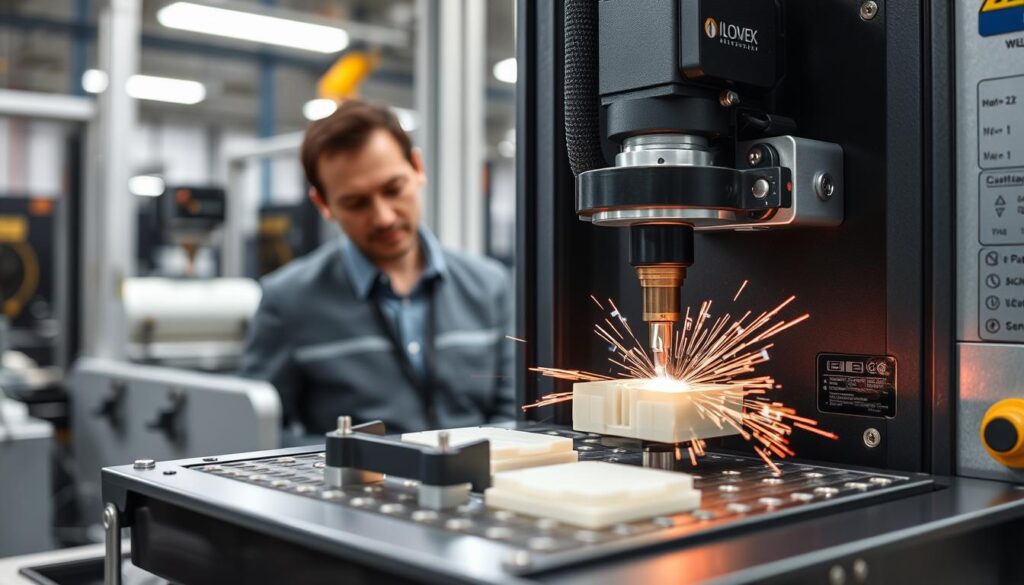
Ever wondered how plastic parts can be joined without visible fasteners or adhesives? The secret is ultrasonic welding.
This method uses high-frequency vibrations to create heat. This heat melts the plastic, making a strong bond. But how does it work, and what can it be used for?
Ultrasonic welding is a favorite in many industries for its efficiency and dependability. It helps make a variety of products, from medical tools to car parts.
Key Takeaways
- Understanding the working principle of ultrasonic welding.
- Exploring the various applications of ultrasonic welding.
- Identifying the pros and cons of using ultrasonic welding.
- Learning about the industries that benefit from ultrasonic welding.
- Discovering the advantages of ultrasonic welding in manufacturing.
Introduction to Ultrasonic Welding
Ultrasonic welding started in the 20th century. It has become a key welding method. Before it, arc welding was used for plastics, but it made parts heavy and hard to move.
Ultrasonic welding changed the game. It’s cleaner, more efficient, and precise. It uses high-frequency vibrations to create heat and weld parts together without needing outside heat.
The history of ultrasonic welding shows big steps in welding tech. It began in plastics and now helps many industries. Ultrasonic welding is known for being versatile and reliable.
As manufacturing needs get more precise, ultrasonic welding will play a bigger role. It can weld different materials and make strong bonds. This makes it a key part of modern manufacturing.
What Is Ultrasonic Welding?
Ultrasonic welding uses ultrasonic waves to join materials. It’s great for welding plastics and thin metals without needing extra heat.
This method works by turning electrical energy into high-frequency vibrations. These vibrations create heat through friction. This heat melts the materials, making them bond strongly.
Key Characteristics of Ultrasonic Welding:
- High-frequency vibrations (typically 20 kHz or 40 kHz)
- Generation of heat through friction
- Suitable for thermoplastics and thin metals
- No external heat source required

Ultrasonic welding is popular in many fields because it’s efficient and produces strong welds. It’s clean, quick, and doesn’t need extra materials like adhesives.
| Industry | Applications |
|---|---|
| Automotive | Welding of plastic components, dashboard trim, and other interior parts |
| Medical | Assembly of medical devices, packaging of medical supplies |
| Electronics | Welding of connectors, switches, and other electronic components |
In short, ultrasonic welding is a flexible and efficient method. It’s great for many industries because it makes strong welds without extra heat.
Working Principle of Ultrasonic Welding
The ultrasonic welding process turns high-frequency electrical signals into mechanical vibrations. This method joins materials by creating heat and pressure at the weld site.
Ultrasonic welding machines use high-frequency electrical signals, usually between 20 kHz and 40 kHz. These signals are turned into mechanical vibrations by a piezoelectric transducer. The vibrations are then focused on the parts to be welded, creating friction heat.
High-Frequency Vibrations & Friction Heat
The high-frequency vibrations from the ultrasonic welding machine make the molecules at the weld interface vibrate fast. This fast vibration creates friction heat, which is enough to melt the material. This allows the parts to be joined together.
- The frequency of the vibrations is typically beyond human hearing range.
- The amplitude of the vibrations is carefully controlled to achieve the desired weld quality.
- The pressure applied during welding ensures intimate contact between the parts.
Solid-State Welding Mechanism
Ultrasonic welding is a solid-state welding process. It doesn’t melt the materials completely. Instead, the friction heat softens them, allowing them to bond under pressure. This method is great for welding dissimilar materials and thin materials without distorting them.
The solid-state welding mechanism also makes the weld clean and strong. The process doesn’t use fluxes or fillers, so the weld area stays clean. This ensures a strong and reliable bond.
Key Components of Ultrasonic Welding Equipment
Ultrasonic welding machines have several important parts. Each part has a special role in the welding process. These include the ultrasonic generator, transducer, booster, and horn. Together, they help create high-quality welds.

Ultrasonic Generator / Power Supply
The ultrasonic generator turns electrical power into high-frequency energy. This part is key because it powers the welding process.
Transducer (Piezoelectric Converter)
The transducer changes high-frequency electrical energy into mechanical vibrations. It uses piezoelectric materials that change shape with an electric field. This creates the ultrasonic vibrations needed for welding.
Booster
The booster adjusts the vibration amplitude. It’s important for making sure the vibrations are right for the welding job.
Horn / Sonotrode
The horn or sonotrode touches the parts to be welded. It sends the ultrasonic vibrations to the workpiece. Its shape and size can be changed for different welding tasks.
In summary, the main parts of ultrasonic welding equipment work together for precise welding. Knowing about these parts is key for improving the ultrasonic welding process for many uses.
- The ultrasonic generator provides the necessary high-frequency energy.
- The transducer converts electrical energy into mechanical vibrations.
- The booster adjusts the amplitude of the vibrations.
- The horn transmits the vibrations to the workpiece.
Ultrasonic Welding Process Steps
Understanding ultrasonic welding means breaking it down into its main steps. These include fixturing, applying vibrations, and forming the weld. This process is complex, using high-frequency vibrations and pressure to join materials.
Part Preparation & Fixturing
The first step is part preparation. This means making sure the parts are clean and free of dirt. Next, fixturing is key. It keeps the parts aligned and ready for welding.
Fixturing devices handle the ultrasonic vibrations. They keep the parts in the right spot.
Vibration & Pressure Application
After preparation and fixturing, the next step is applying high-frequency vibrations. The ultrasonic machine creates these vibrations. They are sent to the parts through the horn or sonotrode.
At the same time, pressure is applied. This ensures the parts are in close contact. The vibrations and pressure create heat, welding the parts together.
Weld Formation & Cooling
The heat from the vibrations melts the materials, forming a weld. After welding, the parts cool under pressure. This step is vital for a strong weld.
The cooling process is fast, making ultrasonic welding efficient. It ensures the weld solidifies well.
Materials Suitable for Ultrasonic Welding
Ultrasonic welding works well with many materials, from thermoplastics to thin metals. It’s a key process in many industries. This method is great for materials that can melt or change shape under high-frequency vibrations.
Thermoplastics & Polymers
Ultrasonic welding is often used for thermoplastics and polymers. These materials are popular because they’re versatile and strong. Here are some thermoplastics that can be welded this way:
- Polycarbonate (PC)
- Acrylonitrile Butadiene Styrene (ABS)
- Polyester
- Polyethylene (PE)
- Polypropylene (PP)
These materials are used in many products, like consumer goods, car parts, and medical tools. They need strong, precise welds.
Metals (Thin or Dissimilar Materials)
Ultrasonic welding also works for thin metals and dissimilar materials. It’s good for metals like aluminum and copper, which are hard to weld with old methods. It’s perfect for:
- Thin metal sheets
- Dissimilar metal combinations
- Metals with different thermal properties

Welding thin and different metals makes ultrasonic welding very useful. It’s a big help in the electronics, aerospace, and car industries.
Applications of Ultrasonic Welding
Ultrasonic welding is used in many fields, showing its flexibility and effectiveness. It’s great for joining different materials without overheating them. This is perfect for delicate parts.
Electronics & Electrical Components
In electronics, ultrasonic welding helps put together parts like connectors and switches. It makes sure these small parts are well connected. It’s also used in making batteries, where it welds tabs and other parts together.
Key applications in electronics include:
- Wire bonding and harness assembly
- Connector and switch manufacturing
- Battery production
Automotive & Aerospace
Ultrasonic welding is a big help in the car and plane industries. It’s used to join complex materials in cars, like fuel systems and dashboard trim. In planes, it makes lightweight, strong parts.
| Industry | Applications |
|---|---|
| Automotive | Fuel systems, airbag components, dashboard trim |
| Aerospace | Lightweight components, complex assemblies |
Medical Devices & Healthcare Products
In the medical field, ultrasonic welding is key for making sterile, sealed parts. It’s used for things like catheters and implants. It keeps medical products safe and reliable.
The advantages of ultrasonic welding in medical applications include:
- Hermetic sealing
- Minimal material distortion
- Clean and sterile process
Packaging & Consumer Products
In packaging, ultrasonic welding seals materials, making them tamper-proof. It’s also used in making toys, clothes, and home items. It efficiently joins plastics and other materials.
Ultrasonic welding is versatile and efficient, used in many fields. It creates strong, reliable welds without too much heat. This makes it a top choice for many tasks.
Advantages of Ultrasonic Welding
Ultrasonic welding has many benefits over traditional methods. It’s fast and efficient, making production quicker without losing quality.
This method is also safe. It’s clean and doesn’t use open flames or high heat, which can be dangerous. This makes it great for places where safety is a top priority.
It’s also reliable. Ultrasonic welding gives consistent results, which is important for precise work. Plus, it’s good for the environment because it doesn’t pollute or create waste.
“Ultrasonic welding has changed how we make things, providing a clean, efficient, and reliable way that meets today’s production needs.”
Ultrasonic welding also saves on material costs. It doesn’t need extra stuff like adhesives or fasteners, which lowers costs. It works well with many materials, like plastics, metals, and different materials together.

In short, ultrasonic welding is a big deal in many fields. Its speed, safety, reliability, and cost savings make it more popular every day.
- Speed and efficiency in production
- High level of safety
- Reliability and consistency
- Environmentally friendly
- Minimal material costs
Limitations and Challenges
It’s key for makers to know the limits and hurdles of ultrasonic welding. This method is precise and efficient but has some drawbacks. These issues affect how well it works with different materials and in various industries.
Some main problems include the types of materials it can work with, the size of parts, and the kinds of joints. For example, ultrasonic welding does well with thermoplastics and some metals. But, it might not work as well with harder materials or those needing special surface finishes.
Key Challenges:
- Material Limitations: Not every material can be welded with ultrasonic methods. It’s great for thermoplastics and some metals but not for very hard or brittle ones.
- Part Size and Complexity: The size and shape of parts can be big hurdles. Bigger parts need stronger equipment, and complex shapes might need special tools.
- Joint Design: The type of joint is very important for a good weld. Some joint types just don’t work well with ultrasonic welding, limiting its use in some projects.
- Equipment Calibration: Getting the ultrasonic welding equipment just right can be tough. This is even more challenging in big production settings where keeping things consistent is critical.
To beat these challenges, makers often have to spend on special tools and figuring out new ways to do things. This might mean creating custom horns and fixtures for specific parts and materials. Also, tweaking settings like amplitude, pressure, and weld time is vital for making top-notch welds.

In short, ultrasonic welding has many pluses but also some downsides. Knowing these and adjusting how you use it can help makers get strong, reliable joints in their products.
Comparison with Other Welding Methods
Ultrasonic welding is different from other welding methods like MIG and TIG. It uses high-frequency vibrations to create heat. This makes it special for certain materials and applications.
Key differences:
- Ultrasonic welding uses high-frequency vibrations to generate heat, whereas MIG and TIG welding rely on electrical arcs.
- It is well-suited for welding thin or dissimilar materials, which can be hard with traditional methods.
- The process is faster and more energy-efficient than other methods.
Looking at ultrasonic welding compared to other welding methods, we see many benefits:
- Precision and cleanliness: Ultrasonic welding makes clean welds without extra materials.
- Material versatility: It can weld many materials, including plastics, metals, and composites.
- Energy efficiency: It’s more energy-efficient because it turns electrical energy into vibrational energy.
In summary, ultrasonic welding is unique because of its working principle, precision, and versatility. Its benefits make it a top choice for industries needing high-quality welds on thin or different materials.
Safety Considerations in Ultrasonic Welding
Safety in ultrasonic welding involves many steps. These include wearing the right gear, keeping machines in good shape, and training workers. A safe place to work is key to avoiding accidents and making good welds.
Personal Protective Equipment (PPE) is very important. It keeps workers safe from dangers like high-frequency vibrations and flying particles. Safety glasses, gloves, and ear protection are must-haves.
Proper Machine Maintenance is also vital. Regular checks and upkeep of the equipment help it work right. This means checking the horn/sonotrode, booster, and transducer, and making sure the ultrasonic generator is okay.

Training workers is essential too. Operators need to know how to use the ultrasonic welding equipment. They should know how to set it up, handle materials, and deal with problems during welding.
Some important safety steps include:
- Keeping the work area clean and free from obstacles.
- Checking equipment often for damage or wear.
- Always wearing the right PPE.
- Following set rules for maintenance and repairs.
Following these safety tips helps reduce risks. It makes sure the ultrasonic welding process is safe and works well.
Summary / Conclusion
Ultrasonic welding is a top-notch method for joining materials. It creates strong welds, is easy to use, and safe. This article has covered how it works, its parts, and where it’s used.
This method uses high-frequency vibrations and friction to weld materials together. It works well with thermoplastics, polymers, and thin metals.
In short, ultrasonic welding has many benefits. It’s precise, fast, and doesn’t distort materials much. Yet, it has some downsides, like limited weld area and material choices. Despite these, it’s a key tool in many fields, like electronics, cars, and medical devices.
Knowing how ultrasonic welding works can help manufacturers make better products. As technology gets better, its role in making things will grow even more.
FAQ
What is ultrasonic welding?
Ultrasonic welding uses high-frequency vibrations to join materials. It works by creating friction heat. This makes a solid-state weld, often in thermoplastics or thin metals.
What are the key components of ultrasonic welding equipment?
The main parts of ultrasonic welding equipment are an ultrasonic generator and a transducer. There’s also a booster and a horn or sonotrode. Together, they produce high-frequency vibrations and apply pressure.
What types of materials can be welded using ultrasonic welding?
You can weld thermoplastics, polymers, and thin metals with ultrasonic welding. It’s great for welding different materials, making it useful in many industries.
What are the advantages of ultrasonic welding?
Ultrasonic welding is fast, safe, and reliable. It makes high-quality welds with little distortion. Plus, it doesn’t need consumables or shielding gases.
What are the limitations and challenges of ultrasonic welding?
Ultrasonic welding has its limits. It works best with certain materials and part sizes. You also need to control the process well and maintain the equipment.
How does ultrasonic welding compare to other welding methods?
Ultrasonic welding has unique benefits. It’s great for thin materials and high-speed welding. This makes it a top choice for many industries.
What safety considerations are important in ultrasonic welding?
Safety is key in ultrasonic welding. Wear protective gear, keep the machine in good shape, and train operators. This ensures safe and effective use.
What are some common applications of ultrasonic welding?
Ultrasonic welding is used in many fields. It’s in electronics, automotive, medical devices, and packaging. It helps create high-quality products by welding various materials.