
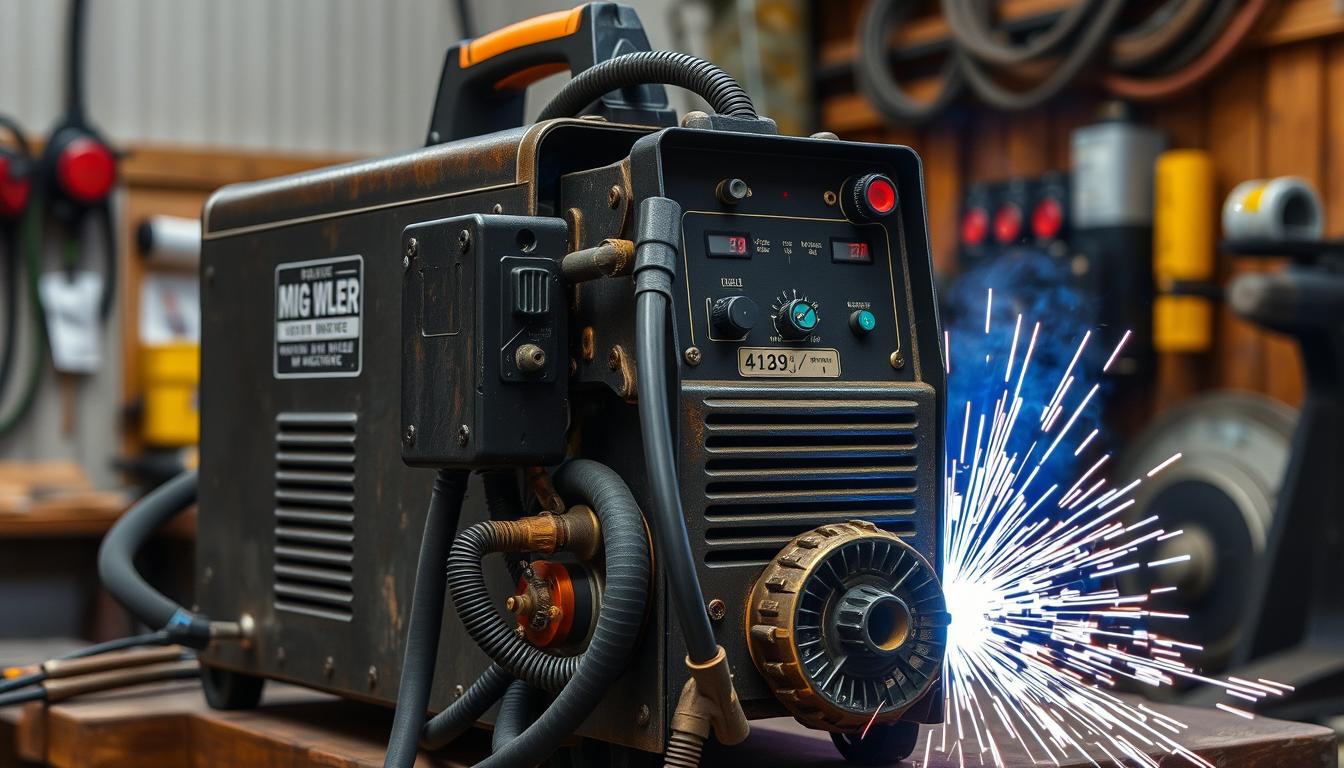
Welding Machine

Welding Machine
Welding Machine

Have you ever thought about how businesses make metal products that last a long time and are very accurate? The welding machine is to blame for everything. These machines are very important in a lot of different fields, like building and making cars.

Celerity Precision makes a wide range of precision welding tools. It can be hard to choose the right welder machine when there are so many options. This article will help you find the best welding solution for your needs.

Key Takeaways

  • Knowing what a welding machine does in manufacturing.

  • Looking into the different kinds of weld machines that are out there.

  • Figuring out what to look for when choosing a mig welding machine.

  • Learning about how welding machines are used in different fields.

  • Learning how to pick the best welding solution for your needs.

Introduction to Welding Machine

Welding machines are very important tools in the world of metal fabrication and construction. Over time, they have changed a lot. These kinds of machines are very important in the construction, automotive, and shipbuilding industries. They help metals stick together well.

What is a machine for welding?

A welder, or welding machine, joins two pieces of metal together. It uses heat, pressure, or both, with or without filler metal. The process melts the metal edges and then cools them down so they can become one solid piece.

There are different kinds of welding machines, such as MIG, TIG, and Stick. Each one is good for a different type of work and material.

What makes welding machines so important for metalworking and manufacturing

In manufacturing and metalworking, welding machines are very important. They connect metals with strength and accuracy. They help make complicated buildings, machines, and tools for a lot of different fields.

For instance, Celerity Precision’s MIG welders are made to weld very precisely. They can do a lot of different welding jobs. This shows how useful and important modern welding machines are.

Types of Welding Machines and Processes

Different Types of Welding Machine

To choose the right welding machine for your job, you need to know about the different types. These machines can do a lot of different types of welding, such as Stick/MMA, MIG, TIG, and Spot welding.

Stick and MMA (Manual Metal Arc) welding machines

Stick welding, or Shielded Metal Arc Welding (SMAW), protects the weld area with a covered electrode. Many jobs, like building and fixing things, are easy with stick welding machines.

MIG (Metal Inert Gas) welding tools

Gas Metal Arc Welding (GMAW), also known as MIG welding, uses a wire electrode and an inert gas to protect the weld. MIG welding machines are simple to use and work quickly, making them great for big jobs in factories.

TIG (Tungsten Inert Gas) welding machines

TIG welding, also known as Gas Tungsten Arc Welding (GTAW), uses an inert gas and a tungsten electrode. TIG welding machines make strong welds that are great for industries that need precise welds, like aerospace.

Spot welding machines and other types that are unique

Spot welding machines use pressure and electricity to join metal. Plasma cutters and multi-process welders are two other types that can do a lot of welding work.

This is a comparison of the different kinds of welding machines:

Welding Process Electrode Type Shielding Method Typical Applications
Stick/MMA Consumable Flux Construction, repair work
MIG/GMAW Continuous wire Inert gas Industrial manufacturing, automotive
TIG/GTAW Non-consumable Inert gas Aerospace, precision welding
Spot welding - Resistance heating Automotive, metal fabrication

We can pick the best welding machine for our needs by knowing what each one does and how it works.

How Welding Machines Work

To make strong welds, welding machines use a number of important parts and rules. When we know these things, we can better understand how complex and useful welding technology is today.

Fundamentals of Welding

Welding connects two pieces of metal by heating them up, sometimes with a filler material. It involves making heat, keeping an arc going, using filler material, and keeping gases away from the weld area.

An electric arc makes the welding machines hot. This arc melts the metal so that it can fuse. The filler material, such as a wire or rod, is melted together with the base metal to make the weld.

Shielding gases, such as argon or helium, keep the weld area clean. This makes sure that the weld is clean and strong.

Important Parts of a Welding Machine

There are a few important parts that make up a welding machine. Some of these are:

  • The power source gives the arc the electrical energy it needs to work.
  • The control system controls things like the voltage, current, and wire feed speed that are used in welding.
  • The electrodes or welding wire that are used up during the welding process to make the weld.
  • The gas supply system gives the shielding gases that are needed to keep the weld safe.
Component Function
Power Source Supplies electrical energy
Control System Regulates welding parameters
Electrodes/Wire Consumed to form the weld
Gas Supply Provides shielding gases

AC and DC welding machines are different from each other

Alternating Current (AC) or Direct Current (DC) can be used by welding machines. The choice depends on what kind of welding you’re doing and what kind of metal you’re using.

DC machines give a steady flow of current, which is good for thin materials and stable arcs. AC machines are used to weld aluminum and other materials that need the AC arc’s cleaning action.

It’s important to know the differences between AC and DC machines so you can choose the right equipment for your welding job.

Key Features & Technical Specifications to Consider

Industrial Welding Machine

When choosing a welding machine, you should look at a few important features and specs. The right machine can make your welds much better, help you work faster, and save you money.

Output Current, Duty Cycle, and Input Voltage Needs

The output current shows how well a machine can weld things that are different thicknesses. Thicker materials need more current, while thinner ones need less. The duty cycle shows how long the machine can weld without getting too hot. For instance, a 60% duty cycle means it can weld for 6 minutes out of every 10.

The input voltage is also very important. For it to work safely and well, it has to match your power supply.

  • Output Current: This is important for figuring out if the machine can weld materials of different thicknesses.
  • Duty Cycle: Shows how long the machine can run without getting too hot.
  • Input Voltage: To work safely and well, it must match the power supply you have.

The MIG160 from Celerity Precision is a portable flux core MIG welder, for instance. It’s light and doesn’t need shielding gas, so it can be used for a lot of different welding jobs.

Portability, inverter technology, and efficiency

Welders who move their tools a lot need tools that are easy to carry. Inverter technology has made machines smaller, used less energy, and made better welds. Efficiency is also important because it affects how well the machine works and how much energy it uses.

“Inverter technology has made it possible to make welding machines that are more portable and efficient, which has greatly improved the welding process.” -Expert in Welding Tech

Works with different types of materials, thicknesses, and joints

A welding machine needs to be able to work with a variety of materials, thicknesses, and types of joints. Different welding methods work best for different materials and jobs. MIG welding works well on steel and aluminum, while TIG welding works better on thin materials and for precise work.

  • Material Compatibility: Make sure the machine can weld the materials you use.
  • Choose a machine that can handle the range of material thicknesses you work with.
  • Joint Type: Think about the kinds of joints you usually weld and make sure the machine can handle them.

You can find a welding machine that works for you by carefully looking at these features and specs. This will improve your welding skills and work efficiency.

Applications

Welding machines are very important in many areas, such as construction, cars, and manufacturing. They are accurate and quick. We’ll talk about how different industries use welding machines.

Where Welding Machines Are Used

Many businesses use welding machines. For instance, Celerity welders are used in tough jobs like building things and working on cars. This shows how flexible and dependable modern welding machines are.

Welding machines are used in construction to make frames and fix tools. The auto industry uses them to make body panels and chassis for cars. Welding machines are also important for building and fixing ships.

Common Parts and Jobs

Welding machines can do a lot of things, like fix pipelines and make frames and chassis. They put together metal parts in manufacturing to make complicated products. Because they are so precise and efficient, modern welding machines are great for these jobs.

People also use welding machines for hobbies and fixing things around the house. However, the needs for welding machines are very different for home use and for use in factories.

Use at home or for a hobby vs. heavy-duty use in industry

Welding machines that are smaller and easier to carry are better for home or hobby use. They are meant to be used only once in a while on small projects. Industrial welding machines, on the other hand, are made to be used all the time. They work with thick materials and do hard tasks. These machines are stronger and have more advanced features that make them more accurate and efficient.

When picking a welding machine, it’s important to know what each one is good for. Whether you’re a hobbyist or an industrial user, picking the right machine can greatly affect your work’s quality and efficiency.

Advantages

Modern Welding Machines

Welding machines have changed the way things are made and worked with metal. They bring more than just accuracy. They also make things work better and make new automation possible. Let’s talk about the pros and cons of welding machines and how they affect work.

Advantages of Modern Welding Machines

The MIG welders from Celerity Precision are a great example. They do precision welding, which makes welds stronger. These machines are made to be efficient, so they can make things faster without losing quality.

  • Accuracy: They help make precise welds, which cuts down on waste and rework.
  • Efficiency: They speed up production, which increases productivity.
  • Automation: They can use automation systems to make production even more efficient.

Automated welding machines can do complicated welds with very little help from people. They’re great for making a lot of things at once.

Things to Watch Out for or Common Problems

There are good and bad things about modern welding machines. These are the cost, the need for training, and how important it is to keep the equipment in good shape.

  • Price: Good welding machines are expensive, so it’s a big investment.
  • Training: People need to know how to use these machines safely and well.
  • Taking care of equipment: Machines will work better for longer if you take care of them.
  • Safety Risks: Welding can be dangerous because of arcs and flames, so you need to be safe.

Industries can get ready to deal with these problems by knowing what they are. This makes sure that welding machines are used to their fullest.

Design & Safety Best Practices

For high-quality welds and to avoid accidents, welding must be done safely and correctly. It is important to set up and use welding machines correctly, as well as prepare and maintain materials carefully.

Setting Up and Using Safely

Follow these best practices to use welding machines safely:

  • To protect yourself from arc radiation, sparks, and heat, wear the right Personal Protective Equipment (PPE), such as helmets, gloves, and safety glasses.
  • To keep from breathing in fumes and particles, make sure the work area has good air flow. If you need to, use fume extractors.
  • Be aware of the risks, such as fire, explosions, and electric shock. Always have fire extinguishers on hand.

Correctly getting the materials ready and designing the joints

To make good welds, you need to prepare the materials and plan the joints correctly. This means:

  1. Cleaning the surfaces that will be welded to get rid of dirt, oil, and moisture.
  2. Getting the edges of the materials ready for the type of weld.
  3. Making sure that the pieces to be welded are lined up correctly and fit together well.

Taking care of, calibrating, and maintaining machines

For welding machines to last and work well, they need to be kept in good shape and calibrated. This includes:

  • Checking and taking care of the machine’s parts, such as cables, torches, and electrodes, on a regular basis.
  • Setting the machine up as the maker says to get the right output.
  • Taking care of the machine and putting it away correctly when you’re not using it.

Following these safety and design tips can make welding a lot safer and better. Celerity Precision stresses the need for proper welding methods and safety steps. It shows the importance of a detailed approach to using and maintaining welding machines.

Selecting & Buying a Welding Machine

Celerity Precision Welding Machine

You need to know the different kinds of welding machines and what they are used for before you buy one. The type of machine you choose can have a big impact on the quality of your welds and the amount of work you can do.

Finding the Right Machine for Your Needs

When choosing a welding machine, think about the jobs you’ll do, the materials you’ll weld, and how much money you have. Different welding methods work best for different jobs. For instance, MIG (Metal Inert Gas) welding makes fast, clean welds. TIG (Tungsten Inert Gas) welding, on the other hand, is great for fine work and thin materials.

Baker’s Gas has welding machines from Celerity Precision, Miller, Lincoln, and ESAB that can meet any need and budget. To get the best results, you need to choose a machine that works for you.

Looking at machine brands, after-sales service, and local support

The name of your welding machine is very important. It has an effect on how well the machine works, how long it lasts, and the help you get after you buy it. People know that brands like Celerity PrecisionMille, Miller, Lincoln, and ESAB are reliable. When picking a brand, think about these things:

  • How good the machines are
  • Availability of support and service after the sale
  • Support and service centers in your area
  • Costs for maintenance and warranties
Brand Quality Rating After-Sales Support
Celerity Precision 9.5/10 Excellent
Lincoln 8.5/10 Good
ESAB 9/10 Excellent

Return on Investment: When a Certain Machine Makes Sense

Think about how much it will cost, how often you will use it, and how it will affect your work and quality. If a more expensive machine makes your work better and saves you money, it might be worth it.

If you often do precise work, a high-quality TIG welding machine might be a good choice. It can help you weld better and make fewer mistakes.

In short, you need to think about a lot of things before you buy a welding machine. Look at the machine type, brand, support, and how it will pay off. By considering these, you can choose wisely and boost your work quality and speed.

Innovations in Welding Machines

New technology in welding machines makes the future of welding look good. This includes welding machines that use inverters and computers. The goal of these improvements is to make welding safer, more accurate, and faster.

Digital and inverter welding machines

The advanced technology in inverter welding machines has changed the game. They make welding faster and more accurate. For instance, Celerity Precision’s MIG welders use inverter technology to make strong welds.

These machines are also smaller, use less power, and give you more control. Digital welding machines go even further. They have smart tools for monitoring and controlling things. This lets welders change what they’re doing in real time to get the best results.

Working together with robotics, automation, and monitoring systems

Robots and automation are now working with welding machines. This is changing the way we make things. Robotic welders do hard work quickly and accurately, which saves money and makes things better.

Monitoring tools can also work with automated systems. These tools check the quality of the weld and find any problems. This makes sure that the welds are always perfect.

“The use of robotics and automation in welding is more than just a trend; it’s the way things will be made in the future.” As technology gets better, we can expect to see welding systems that are even more advanced and combine safety, efficiency, and precision.

Changes in materials, thinner gauges, and welding with new alloys

Welding technology is getting better because of new materials and thinner gauges. These new materials can be used with modern welding machines. This lets us make parts that are very complicated, which we couldn’t do before.

New technology and the need for better results will keep the welding industry growing. By using these innovations, makers can get top-notch welds and stay ahead in their field.

Final Thoughts

Welding machines are very important for building things, making things, and working with metal. The right welder can make a big difference in productivity, accuracy, and long-term dependability, whether you’re doing simple repairs or complicated industrial fabrication. Whether you’re a hobbyist, a growing workshop, or a full-scale production facility, knowing how welding machines work, what kinds are available, and what features are most important will help you make better choices.

As technology gets better, advanced inverter systems, digital controls, and automation keep changing the way welding is done. Companies like Celerity Precision, Lincoln, Miller, and ESAB are making this progress by making machines that make cleaner welds, work faster, and keep operators safer.

Your materials, workload, environment, and budget will all play a role in choosing the best welding solution. You can get more done, make better welds, and get more value out of your machines in the long run if you match them to the right job.

If you’re just starting out or upgrading your setup, spending time doing research and choosing a reliable brand with good after-sales support will make sure your welding machine works well for many years.

Welding Machine FAQs

What is a welding machine, and how does it work?

A welding machine connects two pieces of metal. It does this by using heat and pressure. It works by making an electric arc or flame that melts the metal so that it can be joined together.

What kinds of welding machines are there?

There are a lot of different kinds of welding machines. These are Stick/MMA, MIG, TIG, and Spot welding machines. Each one has its own special uses and features.

What is the difference between welding machines that use AC and DC?

Welders that use AC use alternating current. Direct current is used by DC welding machines. The type of welding and the metal being welded will determine whether to use AC or DC.

What are the most important things to think about when choosing a welding machine?

There are a few things to think about when choosing a welding machine. These are the output current, duty cycle, and input voltage. Also, think about how easy it is to move and how well it works with different materials and thicknesses.

What are the most common uses for welding machines?

Many businesses use welding machines. They are used in building, making cars, ships, and other things. They help with things like making frames, chassis, pipelines, and fixing things.

What are the advantages of modern welding machines?

There are many benefits to using modern welding machines. They offer accuracy, speed, and automation. This makes them perfect for many different types of welding jobs.

What are some of the problems that welding machines often have?

Welding machines are hard to use because they are expensive and need training. There are also risks to safety. With the right training, upkeep, and safety measures, these can be handled.

How do I make sure that a welding machine works safely?

Follow the setup and operation steps to use a welding machine safely. Be aware of dangers like arcs and flames, wear PPE, and make sure there is good airflow.

How do I pick the best welding machine for what I need?

When choosing a welding machine, think about the size of the job, the materials, and how much money you have. Think about the welding process that is needed. Check out the brands of machines, the service they offer after the sale, and the support they offer in your area.

What are the most recent developments and trends in welding machines?

Inverter and digital welding machines are two new trends. There is also a connection to robotics and automation. These improvements make things more efficient, accurate, and productive.

How much money can you make with a welding machine?

The return on investment for a welding machine is different. It depends on the kind of machine, how it is used, and what it is used for. It can be important for companies that do a lot of welding.
Translate »
Scroll to Top

Request Your Quote!

Need something helped in a short time? We’ve got a plan for you.