
What’s Wire EDM Machining? Process and Applications Explained
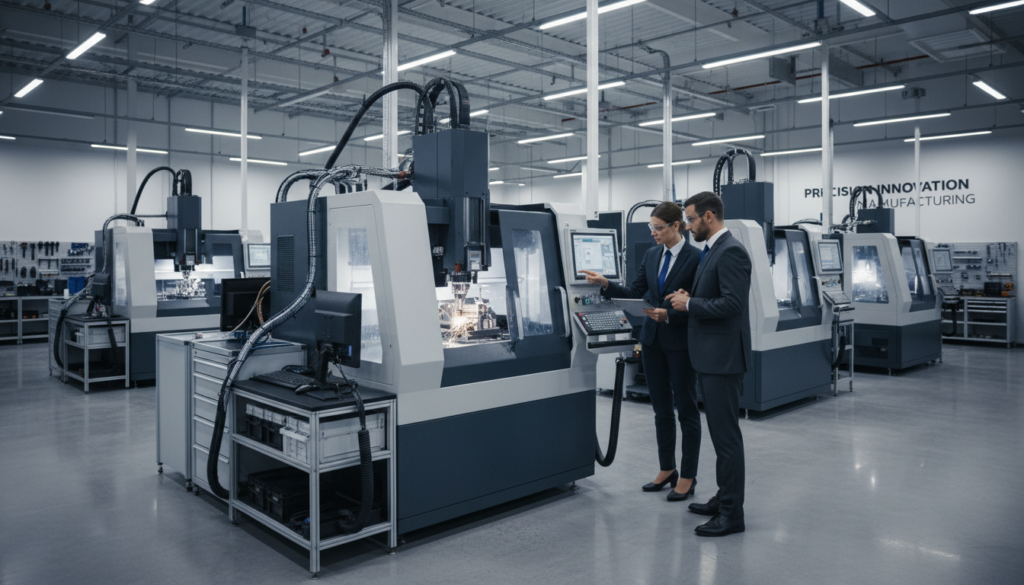
How do makers cut complex shapes into metal parts? The secret is Wire EDM machining. It’s a game-changing method that has changed how we make things.
Wire EDM is a precise machining method. It uses heat to cut away material, making it perfect for detailed cuts. This method is key in many fields like aerospace, cars, and medical devices. It works well with hard, conductive materials.
Key Takeaways
- Wire EDM machining is a precision technique for cutting complex shapes.
- It uses thermal energy to remove material from a workpiece.
- Wire EDM is widely used in aerospace, automotive, and medical manufacturing.
- The process allows for detailed cuts and shapes in hard, conductive materials.
- Wire EDM machining has transformed the manufacturing landscape.
Introduction to Wire EDM Machining
Precision machining has seen a big leap forward with Wire EDM. This method is key in making detailed designs and complex shapes. It’s known for its high precision, making it vital in today’s manufacturing world.
Wire EDM, or Wire Electrical Discharge Machining, is a non-traditional machining process that uses a thin wire to cut through metal. It works by using electrical discharges to wear down the workpiece. This allows for making complex shapes with very tight tolerances. Its ability to make precise parts makes Wire EDM very valuable.
A leading manufacturing expert says, “Wire EDM has changed how we do precision machining. It lets us make complex components with unmatched accuracy.” The key benefit of Wire EDM is its ability to work on hard materials and make detailed designs without old-school tools.
Wire EDM’s strengths include cutting complex shapes, its precision, and working on hard materials. These advantages make it a must-have in many fields like aerospace, automotive, and medical devices.
In short, Wire EDM machining is a critical method in precision manufacturing. It offers unmatched precision and can create complex shapes. Its importance is shown by its use in many industries.
What Is Wire EDM (Electrical Discharge Machining)?
Wire EDM is a precise way to shape materials using electrical discharges. It’s great for making complex shapes in hard materials.
Basic Principle and Spark Erosion
Wire EDM uses spark erosion. It creates sparks between a wire and a workpiece to cut the material. A special fluid helps make sparks and cleans up the mess.
The sparks heat, melt, and vaporize the material. This removes it from the workpiece.
How Wire EDM Works
The process starts with setting up the workpiece and wire electrode. The wire, often made of brass, is threaded through the workpiece. The EDM machine then guides the wire to make the cut.
The machine keeps a steady gap between the wire and workpiece. This ensures sparks are made consistently. The fluid cools everything, cleans up, and helps the process.

| Component | Function |
|---|---|
| Wire Electrode | Generates electrical discharges to erode material |
| Dielectric Fluid | Facilitates spark generation, cools the wire and workpiece, and removes debris |
| CNC Control | Precisely controls the wire’s path and machining parameters |
Knowing how Wire EDM works helps manufacturers make complex parts with great precision.
Components of a Wire EDM Machine
Knowing what makes up a Wire EDM machine is key to understanding its power. It has several important parts that work together. This teamwork makes it possible to do precise and complex tasks.
Wire Electrode Types
The wire electrode is a key part of a Wire EDM machine. There are different types, like brass, coated, and diffusion annealed wires. The right wire depends on the job, the material, and the finish needed.
Brass wire is often used because it conducts electricity well and is affordable. Coated wires improve flushing and can make machining better.
Power Supply and Pulse Control
The power supply and pulse control are essential. They create the electrical discharges that cut the material. The system must send out high-frequency pulses with exact control over energy.
Today’s Wire EDM machines have advanced pulse control. This lets operators adjust pulse duration, frequency, and amplitude. These changes help tailor the machining for different materials and tasks.
| Power Supply Characteristics | Description | Impact on Machining |
|---|---|---|
| High-Frequency Pulses | Enables precise control over energy output | Improves surface finish and accuracy |
| Pulse Duration | Affects the rate of material removal | Influences machining speed and efficiency |
| Pulse Amplitude | Controls the energy released per pulse | Impacts material removal rate and surface quality |
CNC Control and Motion System
The CNC control and motion system guides the wire electrode. Modern machines have advanced CNC systems for precise control.
The CNC system works with the motion system. This includes high-precision servo motors and guides. Together, they ensure smooth and accurate wire movement, even for complex tasks.
Dielectric Fluid System
The dielectric fluid system is vital for Wire EDM. It uses deionized water as a coolant and to remove debris. The fluid’s purity and temperature must be kept just right.
This is important for consistent performance and to avoid damage. In summary, the parts of a Wire EDM machine work together for precise and efficient machining. Knowing about these parts is key to getting the best results.
Wire EDM Machining Process
Understanding the Wire EDM machining process is key to getting high-quality results in many industries. It involves several important steps to make precise and complex parts.
Design and CAM Programming
The first step is designing the part with Computer-Aided Design (CAD) software. Then, a Computer-Aided Manufacturing (CAM) program is made to control the Wire EDM machine. CAM programming is vital as it guides the wire’s path to cut the workpiece.
The CAM program considers the material type, workpiece thickness, and finish needed. This stage is critical to ensure the final product meets the required standards.
Workpiece Setup and Fixturing
After the CAM program is ready, the workpiece is set up on the Wire EDM machine. Proper fixturing is essential to keep the workpiece stable and in the right position during machining.
The workpiece is placed in a dielectric fluid, acting as an insulator until the voltage is high enough to create a spark. The setup must also consider the wire threading and its path.
Wire Threading and Path Control
Wire threading feeds the wire electrode through the workpiece, following the CAM program’s path. Path control is key to getting the desired cut. The wire is guided by rollers and a nozzle to keep its position and tension.

Spark Generation and Material Removal
The actual machining happens through spark generation. When the wire is near the workpiece, a spark jumps the gap, vaporizing material. This process repeats thousands of times per second, shaping the workpiece.
The efficiency of material removal depends on pulse duration, energy per pulse, and wire feed rate. Optimizing these parameters is essential for high-quality cuts and less wire breakage.
| Parameter | Description | Impact on Machining |
|---|---|---|
| Pulse Duration | Length of time the spark is active | Affects material removal rate and surface finish |
| Energy per Pulse | Amount of energy released per spark | Influences the amount of material removed per spark |
| Wire Feed Rate | Speed at which the wire is fed through the workpiece | Impacts the machining speed and wire consumption |
Materials Suitable for Wire EDM
Wire EDM is great for working with many conductive materials. It’s a top choice in many fields. This is because it can make complex shapes without touching the material, which helps avoid damage.
Metals and Alloys
Wire EDM is perfect for cutting metals and alloys. It’s known for its precision and can handle tricky shapes. Here are some common materials it works with:
- Steel and its alloys, known for their strength and durability.
- Titanium alloys, valued for their high strength-to-weight ratio and corrosion resistance.
- Copper and its alloys, often used in electrical applications due to their high conductivity.
- Hardened steel and other hard metals, which can be machined after heat treatment due to Wire EDM’s ability to work with very hard materials.
These metals and alloys are used in many ways. They’re found in tool and die making and in aerospace parts.
Ceramics and Conductive Materials
Wire EDM isn’t just for metals anymore. New tech has let it work with some ceramics and conductive materials too. These include:
- Conductive ceramics, which are used in high-temperature applications and wear-resistant parts.
- Some composite materials that have conductive properties.
This means we can make even more complex parts for new technologies.
| Material | Properties | Applications |
|---|---|---|
| Steel Alloys | High strength, durability | Tool and die manufacturing, construction |
| Titanium Alloys | High strength-to-weight ratio, corrosion resistance | Aerospace, medical implants |
| Copper Alloys | High electrical conductivity | Electrical components, wiring |
| Conductive Ceramics | High temperature resistance, wear resistance | High-temperature applications, wear-resistant parts |
Wire EDM can work with many materials, making it key in today’s manufacturing. It helps make precise and complex parts for many industries.
Applications of Wire EDM
Wire EDM is used in many fields that need precision and detailed work.

Tool and Die Manufacturing
Wire EDM is key in tool and die manufacturing. It helps make complex shapes and precise designs. This is very important for making molds and dies for different manufacturing steps.
The precision of Wire EDM ensures tools and dies are up to the high standards needed for work.
Aerospace and Precision Parts
In the aerospace industry, Wire EDM is used to make precision parts. These parts must meet strict quality and reliability standards. It’s essential for making components for aircraft and spacecraft.
Wire EDM is great for aerospace because it can work with hard materials. This is important for parts that need to last in harsh conditions.
Electronics and Medical Components
The electronics industry uses Wire EDM to make detailed parts for electronic devices. Its precision is key for parts with small details.
In the medical sector, Wire EDM is used for medical components that need high precision and cleanliness. This includes parts for medical devices and implants.
Wire EDM’s use in these fields shows its versatility and importance in making complex and precise parts.
Advantages of Wire EDM Machining
Wire EDM machining is known for its high precision and minimal material distortion. It’s a valuable technique in precision engineering. It’s great for making parts with complex shapes and tight tolerances. This is often needed in aerospace and medical device manufacturing.
Precision and Accuracy: Wire EDM is excellent at achieving high precision and accuracy. This is key for parts that need to fit together perfectly or work within very tight tolerances.
Complex Geometries: Wire EDM is great at machining complex shapes without needing special tools. This makes it perfect for making detailed parts that are hard or impossible to make with traditional methods.
Minimal Material Distortion: The process is non-contact, which means it minimizes material distortion. This reduces the chance of damaging the workpiece. It keeps the workpiece’s integrity and ensures the final product meets the required standards.
| Advantage | Description | Benefit |
|---|---|---|
| High Precision | Achieves tight tolerances and accurate dimensions | Parts fit together perfectly, reducing assembly issues |
| Complex Geometries | Capable of machining intricately designed parts | Enables the production of complex parts without specialized tooling |
| Minimal Material Distortion | Non-contact process reduces material stress | Preserves workpiece integrity, ensuring quality |
In summary, Wire EDM machining has many advantages. It offers precision, the ability to create complex shapes, and minimal material distortion. These benefits make it a top choice for making parts that need high accuracy and detailed designs.
Limitations and Challenges
Wire EDM machining has many benefits but also faces some challenges. One big issue is that it only works on materials that can carry electricity. This means materials like some ceramics and glass can’t be machined this way.
Another problem is wire breakage. This can happen for several reasons like wrong wire tension or bad machining settings. When the wire breaks, it stops the work and costs more to fix.
Wire EDM also moves slower than other methods. This is because it focuses on precision over speed. This slower pace can slow down how fast you can make things, affecting your work flow.
Key Limitations and Challenges of Wire EDM:
| Limitation/Challenges | Description | Impact |
|---|---|---|
| Material Conductivity Requirement | Workpiece material must be electrically conductive. | Limits the range of materials that can be machined. |
| Wire Breakage | Wire can break due to improper tension, incorrect parameters, or material defects. | Increases production costs and interrupts machining. |
| Machining Speed | Relatively slow material removal rate. | Affects production efficiency and throughput. |

Knowing about these challenges helps improve the Wire EDM process. It ensures the final product is precise and of high quality. By understanding these issues, manufacturers can plan better and get the best results.
Process Parameters and Optimization
Wire EDM makes precise parts by adjusting its settings. Getting these right is key for a smooth finish and exact size.
The process has several important settings. These include pulse duration, voltage, wire feed rate, and wire tension. Each setting affects the final product.
Pulse duration and voltage impact how fast material is cut and the finish. A longer pulse can cut faster but might not be as smooth if the voltage isn’t right.
Wire feed rate and wire tension are also vital. A steady feed rate keeps the machine stable. The right tension stops wire breaks and boosts accuracy.
Improving these settings takes a careful plan. Methods like Taguchi methods or response surface methodology help find the best settings for each job.
By fine-tuning the wire EDM settings, makers can make their work better and cheaper. This leads to higher quality products and lower costs.
Safety and Best Practices
To keep the workplace safe, following best practices for Wire EDM machining is key. Safety in Wire EDM covers many areas, like machine upkeep and training for operators.
Machine Maintenance: Keeping the machine in good shape is essential. This means checking the wire electrode, the dielectric fluid system, and the CNC control system regularly.
Operator Training: It’s important for operators to know how to use Wire EDM machines. They should learn about the control systems, how to set up workpieces, and how to fix common problems.
| Safety Aspect | Best Practice |
|---|---|
| Machine Maintenance | Regularly check and maintain wire electrode, dielectric fluid system, and CNC control. |
| Operator Training | Provide thorough training on machine use, setup, and fixing issues. |
| Safety Protocols | Follow safety rules, including wearing the right PPE and knowing emergency steps. |
Following these best practices boosts safety and makes Wire EDM machining better. It ensures a safe and efficient work environment. By focusing on safety and training, businesses can reduce risks and increase productivity.
Safety Protocols: It’s vital to stick to safety rules. This means wearing the right protective gear and knowing what to do in emergencies.
Summary / Conclusion
Wire EDM is a precise machining technique used in many industries. It has changed how we make things, allowing for complex parts with great accuracy.
This method uses a thin wire to cut through materials, all thanks to a CNC system. It’s great for cutting hard materials and making detailed designs.
In short, wire EDM is key for making precise parts. It’s used in aerospace, electronics, and medical fields. Its ability to make complex parts is unmatched.
Wire EDM is now a must-have in modern manufacturing. It helps make parts with detailed designs. Its precision makes it perfect for industries needing exactness.
FAQ
What is Wire EDM machining?
Wire EDM (Electrical Discharge Machining) is a special way to shape materials. It uses electrical sparks to cut through conductive materials. This method is great for making complex shapes with very tight tolerances.
What are the basic principles behind Wire EDM?
Wire EDM works by using sparks to cut away material. A wire electrode and the workpiece create electrical discharges. This process removes material from the workpiece.
What types of materials can be machined using Wire EDM?
Wire EDM can work on many conductive materials. This includes metals like steel and titanium, and even some ceramics and other conductive materials.
What are the applications of Wire EDM?
Wire EDM is used in many fields. It’s great for making precise parts in aerospace and for creating complex designs in tool and die manufacturing. It’s also used in electronics and medical components.
What are the advantages of using Wire EDM?
Wire EDM has many benefits. It offers high precision and can create detailed designs. It’s also good for working with hard or delicate materials.
What are the limitations and challenges of Wire EDM?
Wire EDM has some limitations. It only works on conductive materials. There can be issues with wire breakage. Also, it’s important to consider machining speed and precision.
How can Wire EDM process parameters be optimized?
To improve Wire EDM, adjust parameters like pulse duration and frequency. Also, adjust wire tension. These changes can lead to better surface finish and accuracy.
What safety considerations are important when operating Wire EDM machines?
Safety is key with Wire EDM machines. Keep them well-maintained and train operators. Follow safety rules to avoid accidents and ensure a safe work area.
What are the key components of a Wire EDM machine?
A Wire EDM machine has several important parts. These include the wire electrode, power supply, CNC control, and dielectric fluid system.
How does the Wire EDM machining process work?
The process starts with design and CAM programming. Then, the workpiece is set up and the wire is threaded. Spark generation and material removal follow, completing the process.