
Home » Our Surface Finish Services at Celerity Precision » As Machined: Custom As Machined Surface Finish Services in China
As Machined Surface Finish Supplier In China
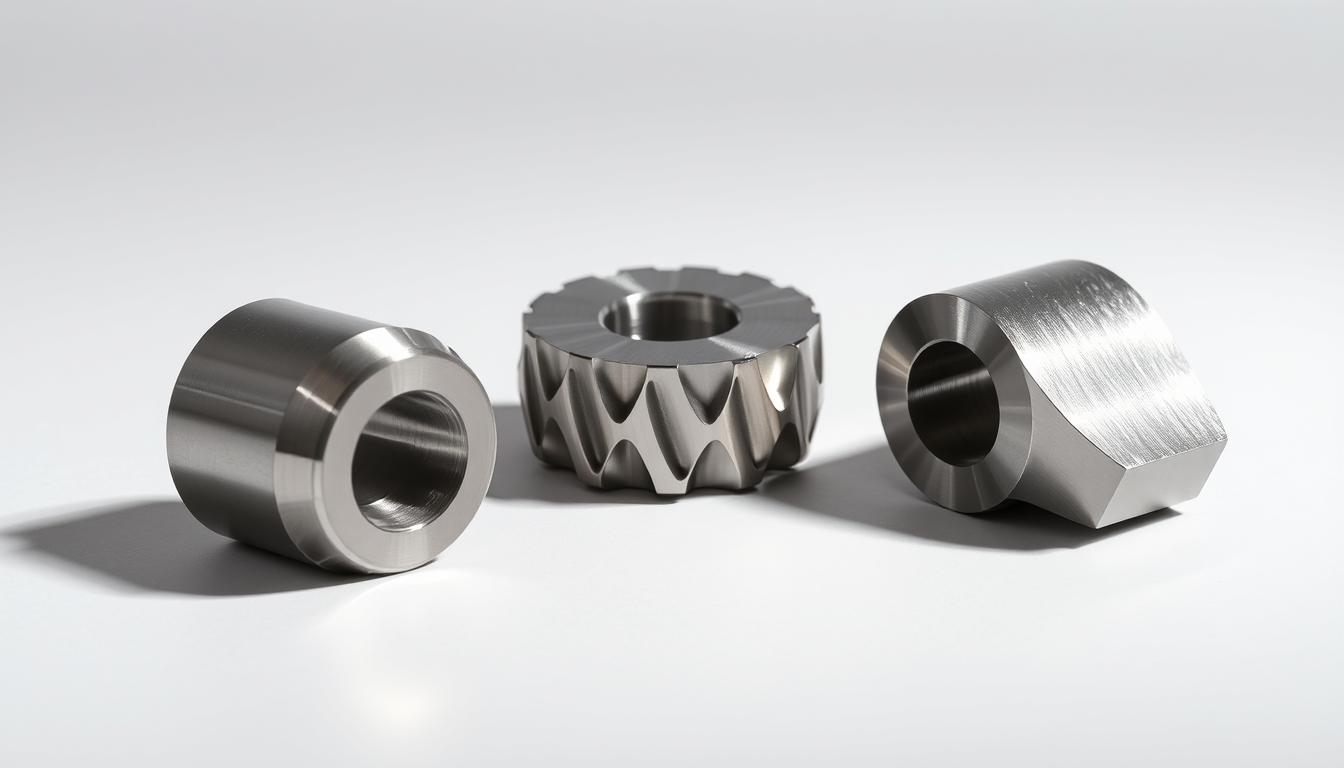
The “As Machined” finish is the standard and most cost-effective surface option available, representing the direct result of our precision CNC machining process. This finish features the fine, visible tool marks inherent to cutting operations, serving as a clear testament to the quality of the machining itself. At Celerity Precision, a leading manufacturing facility in China, we ensure our As Machined parts maintain the tightest possible tolerances as defined by your design, making it the ideal choice for rapid prototypes, functional components, and parts intended for further post-processing.
For a reliable and rapid supply of high-quality As Machined parts directly from the source, contact Celerity Precision today.


Your As Machined Surface Finish Manufacturer
As a dedicated manufacturer, Celerity Precision views the As Machined finish not as a secondary step, but as the fundamental output of our core competency: precision machining. Our factory floor is equipped with state-of-the-art 3, 4, and 5-axis CNC machines operated by skilled technicians. We meticulously control machining parameters—such as tool selection, feed rates, and spindle speeds—to produce a superior As Machined finish with optimized surface roughness and minimal burrs, straight off the machine. This foundational finish provides the perfect, dimensionally accurate base for any subsequent treatments you may require.
Partnering with us means you are working directly with the factory that controls every aspect of production. From initial DFM analysis to final inspection, our ISO 9001-certified quality system ensures every As Machined component is a true reflection of our commitment to precision and efficiency. We don’t just supply parts; we manufacture solutions with full process traceability and accountability.
Upload your design files today to receive a comprehensive quote and experience the manufacturing excellence of Celerity Precision.
As Machined: Technical Specifications
| Feature | Description |
| Surface Roughness (Ra) | Standard: 3.2 μm (125 μin). Can be improved to 1.6 μm (63 μin) upon request through specific toolpath strategies at a slightly higher cost. |
| Applicable Materials | All machinable metals and plastics, including Aluminum, Steel, Stainless Steel, Brass, Copper, Titanium, ABS, POM, PMMA, Nylon, PEEK, etc. |
| Cosmetic Availability | Functional. This finish is not intended for cosmetic purposes. Minor imperfections from the machining process may be present. |
| Visual Appearance | Characterized by visible, fine concentric lines (tool marks) on turned parts and parallel or contoured lines on milled parts. |
Advantages of As Machined Surface Finish
Maximum Cost-Effectiveness
As the standard finish with no secondary operations, it is the most affordable option.
Fastest Turnaround Time
Eliminating post-processing steps allows us to deliver your parts in the shortest possible lead time.
Highest Dimensional Accuracy
The part's geometry is not altered by any subsequent processes, preserving the tightest tolerances achieved during machining.
True Representation of Machining Quality
The finish directly reflects the precision of our equipment and the skill of our operators.
Ideal for Prototyping and Fit-Checks
Provides a perfect, low-cost method to verify the form, fit, and function of a design.
Excellent Foundation for Post-Processing
Creates a clean, unaltered surface that is ready for painting, anodizing, plating, or other finishes.
As Machined Design Considerations
Tool Mark Direction
Be aware that tool marks will be visible and their direction is determined by the manufacturing process (e.g., circular on turned faces, linear or parallel on milled faces).
Potential for Sharp Edges:
Parts will have sharp edges and corners as-machined. If deburring or edge breaking is required, it must be specified as an additional step.
Surface Finish Consistency
The roughness (Ra) can vary slightly across different surfaces of the same part depending on the tools and operations used.
No Protective Properties
This finish offers no inherent protection against corrosion or wear. For parts exposed to harsh environments, a secondary protective finish is highly recommended.
FAQ
What exactly does "As Machined" finish mean?
It is the natural surface finish that results directly from a CNC machine’s cutting tool interacting with the material. No secondary finishing processes are applied.
How smooth is a standard As Machined finish?
Our standard As Machined finish has a surface roughness (Ra) of approximately 3.2 μm (125 μin).
Is it possible to get a smoother As Machined finish?
Yes, upon request, we can employ specialized tooling and machining strategies to achieve a smoother finish, typically down to Ra 1.6 μm (63 μin), before it would be classified as a different finishing process.
Is this the fastest and cheapest option?
Absolutely. Because it requires no additional labor or processing time after machining, it is our most rapid and cost-effective finishing option.
Will my parts have burrs?
We take measures to minimize burrs during the machining process. However, some minor burrs may remain on the finished part. Specific deburring can be requested as a separate operation.
Does the As Machined finish provide any rust protection for steel parts?
No, it offers no corrosion protection. Carbon steel parts with an As Machined finish will rust quickly if exposed to humidity and should be protected with oil or a subsequent finish.
Why should I choose an As Machined finish?
It’s the perfect choice for functional prototypes, parts where aesthetics are not a concern, internal components, or as a dimensionally accurate base for a finish you plan to apply yourself.
Will the appearance be uniform?
The appearance will show the path of the cutting tool. It will be consistent in its texture but not smooth or uniform like a blasted or painted finish.
Can I get an As Machined finish on any material?
Yes, this finish is available for every metal and plastic that we can machine in our facility.
How do I specify an "As Machined" finish on my technical drawing?
You can simply note “Finish: As Machined” in your drawing’s title block or general notes. Specifying a maximum surface roughness value (e.g., Ra 3.2 μm) is also a common and effective method.
Machined Surface Finish Services - Celerity Precision

Is it true that changing the metal finishes on a product may truly make a major difference in how good it is?
Celerity Precision offers excellent post-processing services for CNC parts. Our sophisticated machined surface finish can suit a lot of applications. Parts can appear and operate better with the correct surface finish.
It’s important to know about surface finish symbols and charts. This information will help you acquire the look you want, such a chrome finish or other metal finishes.
Important Points
- Full range of post-processing services for CNC parts
- Advanced skills for finishing machined surfaces
- Better looks and function
- It’s important to know how to read surface finish charts and symbols.
- There are several different metal finishes to choose from.
Introduction
Today’s manufacturing relies heavily on as-machined surface treatments. They find a balance between accuracy and speed. This finish is perfect for sections that need to be very precise, since it skips additional processes.
What does “As-Machined” mean for a Surface Finish?
“As-machined surface finish” is a word that characterizes the texture of items that have been machined. This includes turning, milling, or drilling, but no extra finishing. The machining gives it its texture.
Why it Matters (Price, Tolerance, and Function)
There are a few reasons why the as-machined surface quality is significant. It cuts down on production expenses by skipping processes. It also changes the tolerances of the pieces, which changes how well they fit together. The quality of the finish can also effect how parts work, since some textures are better for performance than others.
Boundaries and Limits
The as-machined surface finish offers several benefits, such saving money and speeding up manufacturing, but it also has some drawbacks. It might not work for parts that need to look great or be very precise. Knowing its constraints can help you figure out if it’s suited for a project.
Fundamental Concepts of Surface Texture

To acquire the appropriate finish in machining, you need to know how to read the texture of the surface. It has lay, waviness, and roughness. These things change the quality of the surface and how well it operates.
Roughness, Waviness, and Lay
There are three key aspects to a surface finish: roughness, waviness, and lay. Roughness is the little bumps on the surface that happen when you machine anything. Waviness is the greater waves that happen when machines shake. The machining method sets the pattern direction for lay.
The tool, material, speed, and feed rate are just a few of the things that can change these traits. A quick feed rate, for example, can make the surface rougher. A dull tool can make things even more wavy.
Parameters for Surface Texture
Ra and Rz are two of the parameters used to measure surface texture. Ra tells you how rough the surface is on average. Rz indicates the highest and lowest points. Other measurements, such Rt and Rq, give more information.
These measures help keep the surface finish of items in check. They make sure that items are of good quality and perform as they should.
Symbols and Standards
International standards say how to measure and describe surface texture. Some of these are ISO and ASME. They set the rules for drawings and specs, including symbols and parameters.
For example, ISO 4287 defines terms and parameters for surface texture. ASME B46.1 tells you what symbols mean and how to use them. Everyone can talk about surface texture more clearly if they know these standards.
Mechanisms Affecting As-Machined Surface Finish
You need to know how cutting tools and machine stiffness work to produce the proper surface finish. There are a lot of things that can affect the finish of a machined product.
The Shape of the Cutting Tool
The shape of the cutting tool is very important for the finish of the surface. Some important aspects of the tool are:
- Nose Radius: A larger nose radius can smooth out the surface by lessening the height of peaks and valleys.
- Rake Angle: The rake angle impacts how well the tool removes material and how smooth the finish is.
- Clearance Angle: The appropriate clearance angle keeps things from rubbing and makes the surface smooth.
Feed, Speed, and Depth of Cut
The surface finish depends on the feed rate, cutting speed, and depth of cut. For example:
- Rate of Feed: If you feed faster, the surface may become rougher, but if you feed slower, it may become smoother and work may take longer.
- Cutting Speed: Higher speeds can make the surface smoother by cutting down on edge accumulation, but they can also wear out the tool faster.
- Depth of Cut: The depth of cut changes the cutting forces and the surface texture, which changes the finish.
Vibration, Chatter, and Rigidity of Machine Tools
The surface finish is also affected by how stiff, vibrating, and chattering the machine is. Some important points are:
- Machine Tool Rigidity: A machine that is stiffer keeps the proportions right and the surface smooth.
- To get a smooth finish, you need to lower vibration and chatter.
Properties of the Workpiece Material
The surface polish also depends on the substance of the workpiece. Different materials behave differently when they are machined, and knowing this is important for getting better results.
By keeping these things in mind, manufacturers may increase the surface finish to fulfill quality standards and make the parts better.
Typical Roughness Ranges for As-Machined Surfaces

The finish of a surface after machining is very important in production. Different materials and methods result in different levels of roughness. Knowing these ranges makes it easier to make pieces that look and operate good.
Metals
People typically use machines to work with metals like steel and aluminum. The way they are machined changes how rough their surfaces are. For instance, turned items usually have a smoother finish than milled parts made of the same material.
- Steel: The usual Ra values are between 0.8 and 3.2 µm.
- Aluminum: The usual Ra values are between 0.4 and 1.6 µm.
Plastics and Polymers
Different types of plastics and polymers also have different levels of roughness on their surfaces. Because they are softer, they usually have smoother finishes than metals.
- Polycarbonate: The normal Ra values are between 0.2 and 0.8 µm.
- For ABS, the usual Ra values are between 0.4 and 1.6 µm.
Differences by Process
The surface roughness is strongly affected by the machining process. diverse finishes come from diverse procedures, including as turning, milling, and drilling.
| Process | Typical Ra Range (µm) |
|---|---|
| Turning | 0.8 - 3.2 |
| Milling | 1.6 - 6.4 |
| Drilling | 1.6 - 12.8 |
The differences in surface roughness are shown in charts and examples. You may rapidly compare different as-machined surfaces with a surface finish chart.
Manufacturers can choose the proper machining process and material by knowing the usual ranges of roughness. This makes sure that the surface finish is what you want.
Measurement and Evaluation Methods
There are a few ways to verify the finish on machined parts. Every strategy has its own benefits. The proper decision depends on the part’s size, material, and use.
Contact Profilometry
Stylus profilometry, sometimes called contact profilometry, is a frequent method. It utilizes a stylus to follow the surface and write down its outline. This method works well on a lot of surfaces and offers you a lot of information about how rough and wavy they are.
Contact profilometry has some benefits, such as being able to measure varied textures and being less expensive. But it can be sluggish and could harm soft surfaces.
Non-Contact Methods
Optical interferometry and other non-contact technologies are further options. They use light to figure out the contour of a surface without touching it. Optical interferometry works well on surfaces that are exceedingly smooth or when contact is not allowed.
Non-contact technologies are fast and can securely measure fragile surfaces, which are two of its benefits. But they can cost more and take longer to set up and calibrate.
Sampling Length, Cutoffs, and Filtering
When measuring the finish of a surface, think about the sampling length, cutoffs, and filtering. The distance between the samples called the measurement length. Cutoffs get rid of some wavelengths. Filtering gets rid of data that isn’t needed, such waviness, so you may focus on roughness.
For reliable measurements, it’s important to use the correct parameters. Standards like ISO and ASME help you choose sampling lengths and cutoffs based on how the surface looks and what it’s used for.
Interpretation of Measurement Results
It’s crucial to know what surface texture characteristics like Ra, Rz, and Rt mean. These numbers tell you how rough, wavy, and other things the surface is.
To properly understand findings, you need to compare them to the standards that are needed. It’s also important to know what the method can and can’t do and what mistakes it might make.
Advantages, Disadvantages and Applications

A common way to make things is to use the as-machined surface finish. It finds a good balance between cost, time, and effectiveness. We’ll talk about its pros and cons and where it is employed.
Cost and Time Benefits
One important benefit of as-machined surface finish is that it costs less. It reduces down on the number of steps needed to produce something. This is useful for sections that don’t need a smooth finish.
Some of the main benefits are:
- Less time needed to produce items because there are fewer steps
- Costs are lower since fewer workers and resources are needed.
- Making things more efficiently
Functional and Aesthetic Use Limitations
But there are limits to how well an as-machined surface finish works. Parts that demand a smooth surface or look attractive won’t work with it. Parts that are under stress or required to fit perfectly could need more work on the surface.
The restrictions are mostly about:
- The roughness of the surface can change how well it works and how long it lasts.
- It doesn’t look good enough
- It could cause extra wear and tear or friction in particular situations.
Where It’s Acceptable
As-machined surface finish is fine for pieces that go inside or prototypes. It’s also good for parts that will be worked on more or put together in a way that the surface doesn’t matter.
When Further Finishing is Required
But the as-machined finish isn’t good enough, further work needs to be done. This is the case for items that need to fit perfectly, have smooth surfaces, or appear a certain way.
The following table shows the pros and cons of as-machined surface finish:
| Characteristics | Advantages | Disadvantages |
|---|---|---|
| Cost | Lower production costs | Potential for additional costs if further finishing is required |
| Time | Reduced production time | Possible delays if additional processing is needed |
| Functionality | Suitable for non-critical applications | May not be suitable for applications requiring high precision or smooth surfaces |
| Aesthetics | Can be acceptable for internal or non-visible parts | May not meet aesthetic requirements for visible parts |
Strategies to Improve As-Machined Surface Finish
The most important thing is to make the surface of machined pieces better. It changes how well they work, how long they last, and how they look. You can get a superior finish by changing the machining parameters and methods.
Optimize Cutting Parameters
Changing the cutting parameters is a top strategy. This means changing the speed, feed rate, and depth of the cut. For instance, making the feed rate lower can make the surface smoother.
It’s also crucial to know how fast to cut. Faster speeds can make the finish better, but they can also wear out the tool faster. The depth of the cut is also important; shallower cuts can make the finish better. But these parameters have to work with the tool and the substance.
Use Better Tool Paths or Smaller Stepovers
Another wise thing to do is to optimize tool paths or cut down on stepovers. You may cut down on extra cuts by making tool paths that fit the contour of the part. When milling, smaller stepovers might help make the surface smoother.
Use Advanced Tooling
For a better surface polish, you need advanced tools. Tools with particular forms or coatings can make the surface much better. For example, tools with a TiAlN coating last longer and make the surface smoother by reducing friction.
Tools with certain forms, like a bigger nose radius, are also helpful. They make the surface less abrasive.
Calibration and Maintenance of Machine Tools
It’s very important to keep machine tools in good repair. The accuracy of the machine tool has a direct effect on the surface polish. Regular maintenance and calibration stop problems like vibration and chatter, which can damage the finish.
Using these methods, manufacturers may make the surface finish of their parts much better. This makes them work better and look better.
How Celerity Precision Optimized Surface Finishes
In this part, we’ll look at some real-world instances of how the as-machined surface finish influences goods. We’ll look at how different finishing methods and settings change the final output.
Let’s look at parts that were manufactured using different types of machining. An aluminum part for aerospace, for instance, might need a different polish than a steel part for vehicles.
Our first example shows how as-machined surfaces on aluminum pieces manufactured with different tools compare. The finish changes a lot depending on the shape and material of the tool.
We modified the cutting parameters in another investigation to observe how they effect the finish of a steel part. We produced a smoother finish by changing the speed and feed rate.
| Parameter | Before Change | After Change |
|---|---|---|
| Feed Rate (mm/min) | 100 | 50 |
| Cutting Speed (m/min) | 200 | 150 |
| Surface Roughness (Ra) | 1.2 | 0.8 |
Changing these settings made the finish better. This is important for parts that need to fit tightly and work smoothly.
We also looked at how the finish changes when we use different materials, such as aluminum, steel, and titanium. The finish you may get depends a lot on the qualities of the material.
Next, we looked at different machining centers side by side. The finish is greatly affected by how stiff and accurate the machine is.
We discover what affects the finish of as-machined surfaces by looking at these examples. We can determine the finest ways to get the end we want.
Standards, Specifications and Drawing Notation
ISO, ASME, and ANSI standards are very important for determining the quality of machined surfaces. They check that items are created to exact specifications. This makes them work better and last longer.
Standards for ISO Surface Texture
The ISO has a lot of rules for surface texture. ISO 4287 and ISO 4288 tell you how to measure the texture of a surface. They talk about roughness, waviness, and lay.
These rules make sure that the texture of the surface is measured the same way everywhere. This makes it easier for diverse companies to fulfill the same quality criteria.
Standards from ASME and ANSI
In the U.S., ASME and ANSI set the rules for surface texture. ASME B46.1 is a very important standard for the texture of surfaces. It has rules for roughness, waviness, and laying.
These requirements are very important for creating parts that endure a long time and work well. They assist meet certain criteria for surface roughness.
How to Draw Symbols and Say “As-Machined”
On drawings, it’s crucial to properly portray how the surface feels. Standard symbols help make sure that specs are apparent. This helps keep things clear.
Ra and Rz are the symbols indicating surface texture. It’s important to say what roughness levels are okay when you ask for a “as-machined” surface. This makes sure that the surface is of the right grade.
What Tolerance Means
The tolerance of a part is affected by its texture. A surface that is too rough might not fit right. This can make it hard for parts to function together.
People who design and manufacture things need to know how the roughness of a surface influences tolerance. They may make parts that operate better and endure longer by choosing the proper texture and tolerances.
Final Thoughts

Machined surface finish services in China are now an important aspect of making things with accuracy. A good surface finish not only makes CNC-machined parts look better, but it also makes them work better, last longer, and be more reliable. Surface finishing is no longer only a cosmetic process; it’s a technical need that affects the quality of the product as industries seek higher precision and tighter tolerances.
China is a world leader in this area because of its cutting-edge CNC technology, highly trained workers, and tight quality standards. Manufacturers like Celerity Precision offer full post-processing services to make sure that every machined product has the right surface roughness, texture, and function. Clients can customize their components for both performance and design by choosing from a wide range of finishing options, such as as-machined finishes, polished, anodized, or plated surfaces.
But to get a high-quality finish, you need to know important things like cutting settings, tooling shape, and material qualities. To keep production consistent, it’s also important to do regular equipment maintenance, use accurate measurement methods, and follow standards like ISO 4287 and ASME B46.1.
In conclusion, organizations may find the correct balance between cost, accuracy, and looks by hiring the proper machined surface finish services in China. The appropriate finish provides significant value to parts for aerospace, automotive, medical, and consumer industries. It makes them look and work better.
Manufacturers can make sure that every part they make meets the highest standards of engineering excellence and surface perfection by collaborating with professional surface finishing companies like Celerity Precision.
References
We have a list of things you can read if you want to know more about machined surface finishes. These links can help you learn more about the things we talked about in this essay.
ISO 4287:1997 says that knowing about surface texture is very important. It’s crucial to have the correct finish on the surface.
“The finish on a machined part’s surface can have a big impact on how well it works, how long it lasts, and how well it works in general.” ASME B46.1-2019
Take a look at these resources:
- Surface Finish: A Key to Improved Performance by the Society of Manufacturing Engineers
- Surface Texture (Surface Roughness, Waviness, and Lay) by ASME
- ISO 1302:2002, “Geometrical Product Specifications (GPS) — Indication of surface texture in technical product documentation”
These materials, together with what we’ve already shared, will help you get started. They’ll make it easier for you to grasp machined surface finishes.
We hope these sources are useful to you. They’ll help you learn more about as-machined surface finishes and how to use them.
FAQs
Why is the surface finish important in machining?
When machining, the finish on the surface is very important. It changes how the finished product looks, works, and performs. A good surface finish can make the part last longer, look better, and wear less.
What are the basic ideas behind surface texture?
Surface texture consists of flat, waviness, and roughness. These words talk about the surface of a part. They are important for how it works and how well it works.
How do you measure and judge the surface finish?
There are both contact and non-contact ways to quantify surface finish. A stylus is used in contact methods, and light is used in non-contact methods. The best way to do it depends on the surface and how precise you need it to be.
What are the usual roughness ranges for surfaces that have been machined?
Different materials and machining processes have different roughness ranges. The Ra of metals is usually between 0.1 and 100 µm. The Ra of plastics and polymers is between 0.1 and 10 µm.
How can the surface finish of as-machined parts be better?
Use better equipment and change the cutting parameters to get a better as-machined finish. It also helps to keep machinery in good shape and calibrate them often.
What are the pros and cons of a surface finish that is as-machined?
The as-machined finish saves time and money by skipping unnecessary finishing stages. But it could not suit all of your functional or aesthetic objectives, so it needs more polishing.
How can I show “as-machined” on my drawings?
To show “as-machined” on drawings, use ISO, ASME, or ANSI symbols and notation. To meet both functional and aesthetic objectives, it is important to understand what tolerance means.
What are the rules and requirements for surface texture?
ISO, ASME, and ANSI standards tell you how to measure and evaluate surface texture parameters. They make sure that things are the same and work together across industries.
How do I change the units of surface finish?
Use tables to change units, such as µm to micro-inch or Ra to Rz. These tables enable you compare and change the values of surface finishes.